
Lea and I met in an English class at university, during the first week of the second term, I think. We saw each other for a couple of weeks, and then came lockdown. The first real conversations I remember having with her were on WhatsApp.
We weren’t even in the same course, but we studied the same thing, just in different languages. I specify this because I think language, or languages, is a pivotal theme for both of us. Technically, there was very little reason for our lives to overlap beyond that room. But they did.
I think there are people you meet and understand relatively quickly. You learn where they are from, what they like, what they do, who they love, what they are afraid of, and after a while you can assemble something that feels reasonably complete.
Lea has never felt like that to me. I knew her through fragments. Venice. Verona. Croatia. Books. Languages. Family stories. A very private Instagram account I remember once trying, unsuccessfully, to find. Things she would tell me, and things I suspected I still knew absolutely nothing about.
She was one of those people who made me curious almost immediately.
Then, as sometimes happens with people who once occupy a very particular place in your life, we lost each other. Years passed.
Recently, somehow, we found each other again.
When I started Palomita Office, Lea was one of the first people I thought about interviewing. I asked her, as I ask everyone, to send me photographs of a few things from her life. She sent me far more than a few. I asked for three or four maximum. She sent more. And then she asked: enough? More? Less?
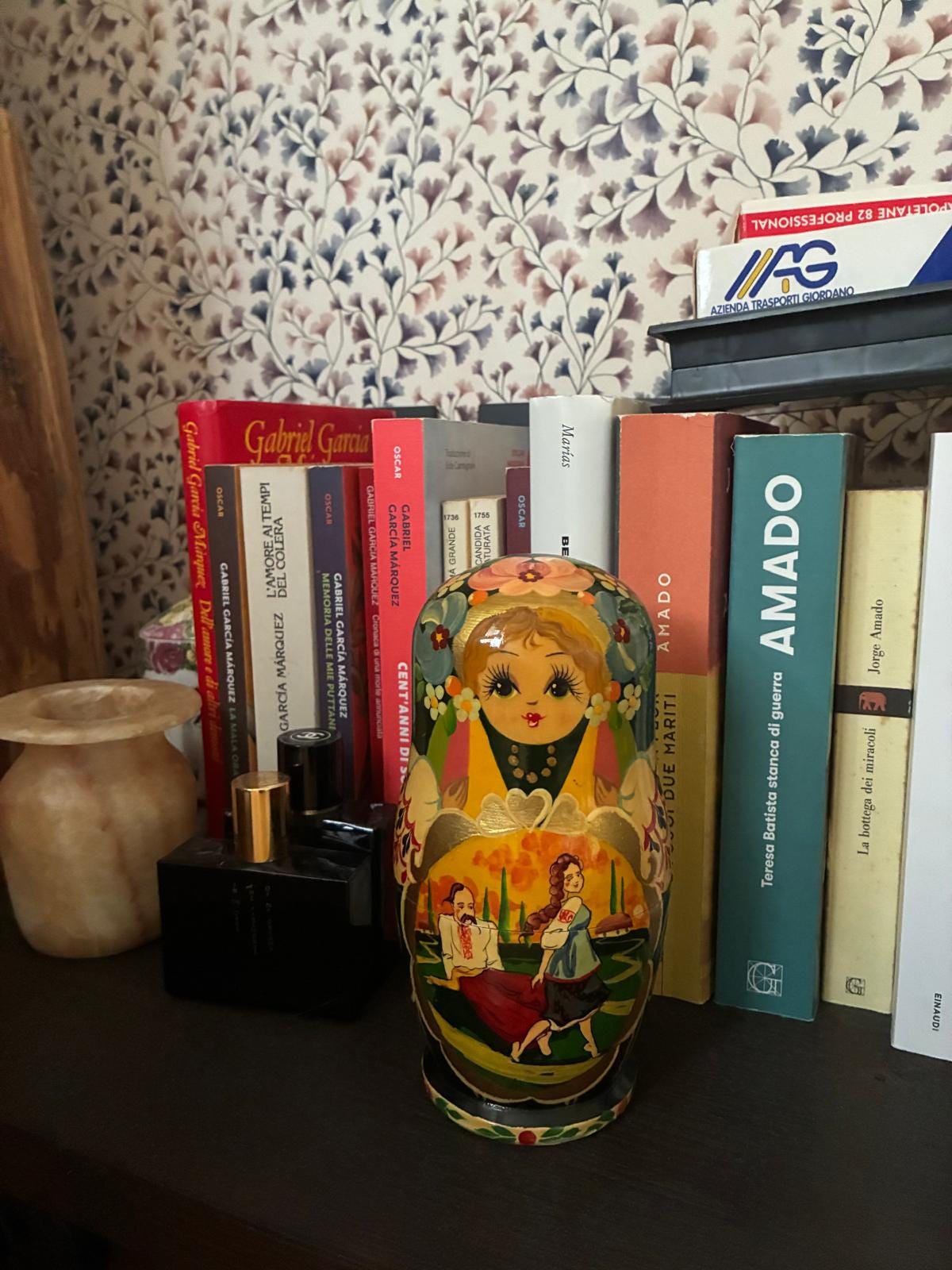
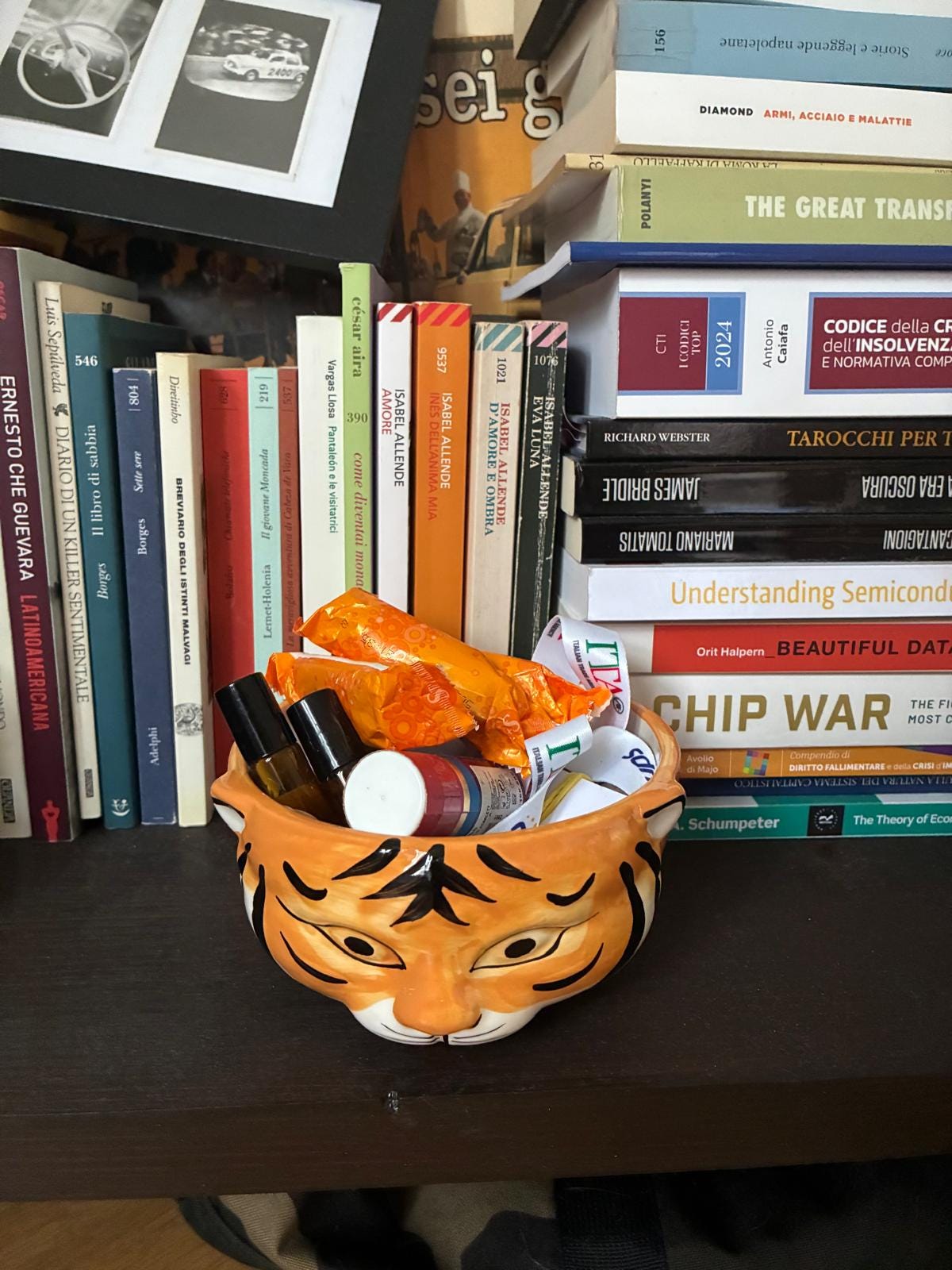
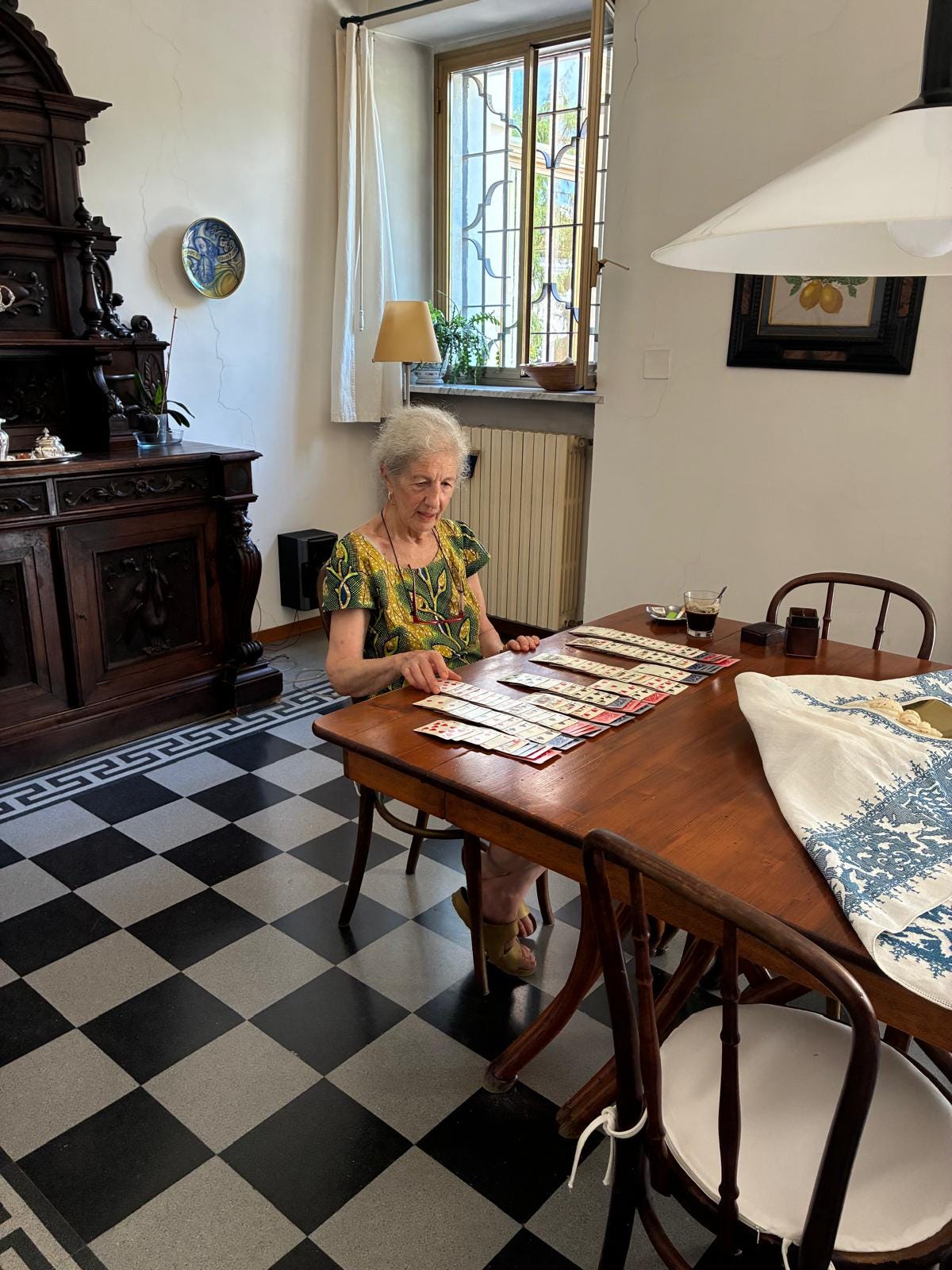
A Julio Iglesias CD. A green fan, accompanied by a note about how surprisingly difficult it is to find a good fan. A list handwritten in a notebook categorising the clothes she owns, her answer to the question “your most organised drawer.” A matryoshka that has moved with her from place to place. A tiger bowl everyone apparently thinks is ugly. Her nonna doing what Lea described as the trillionth solitaire of her life. A tree.
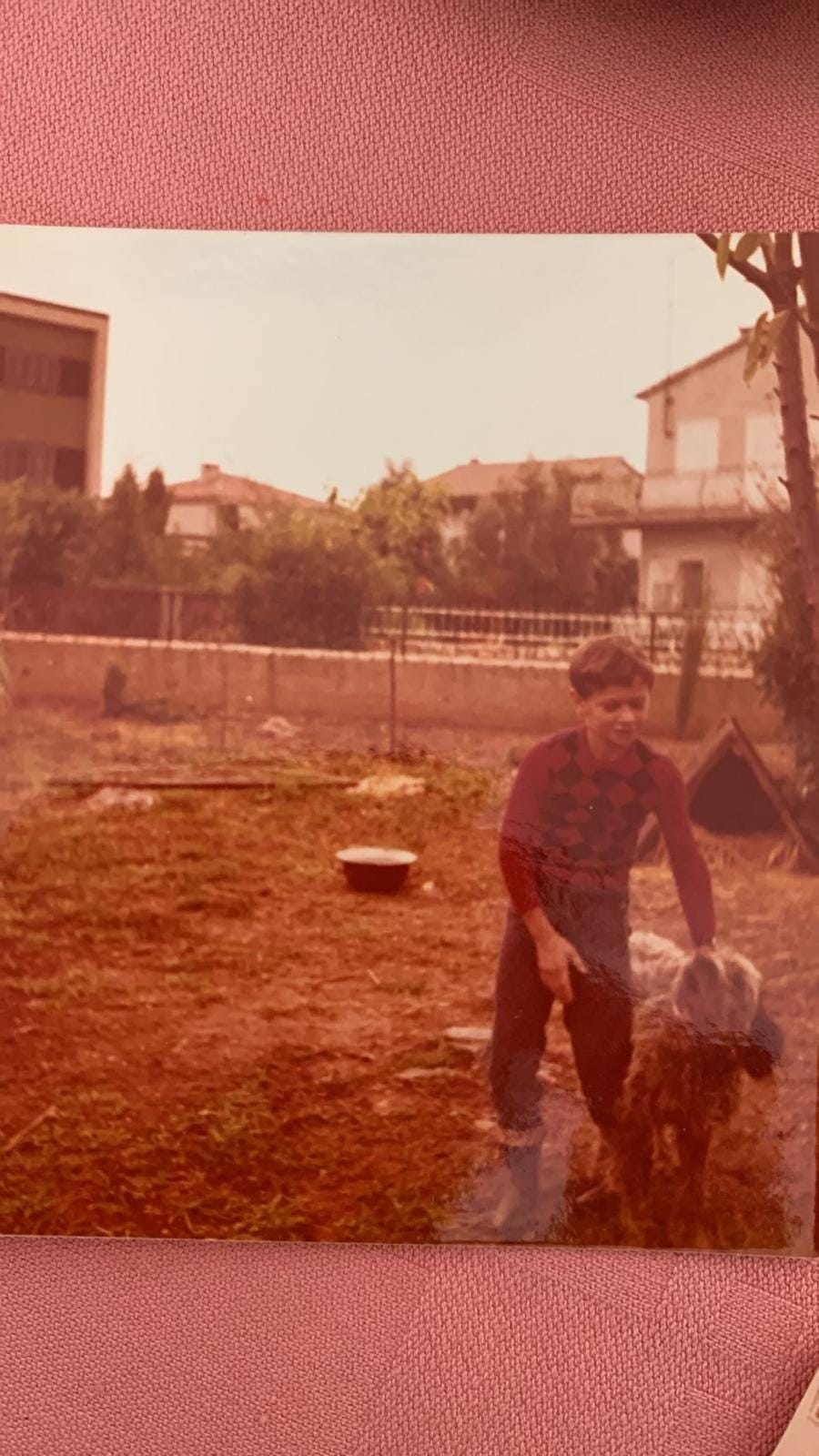
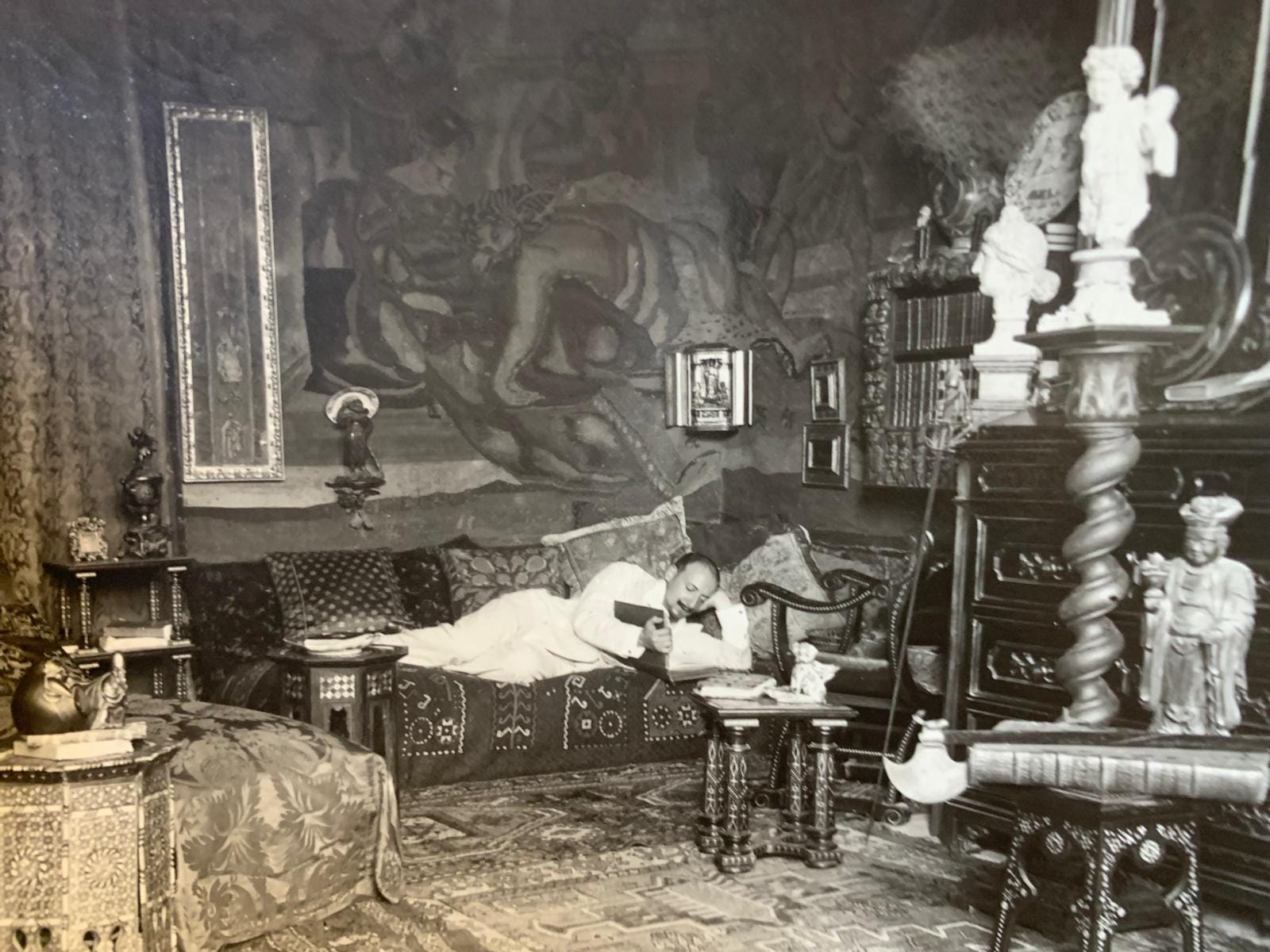
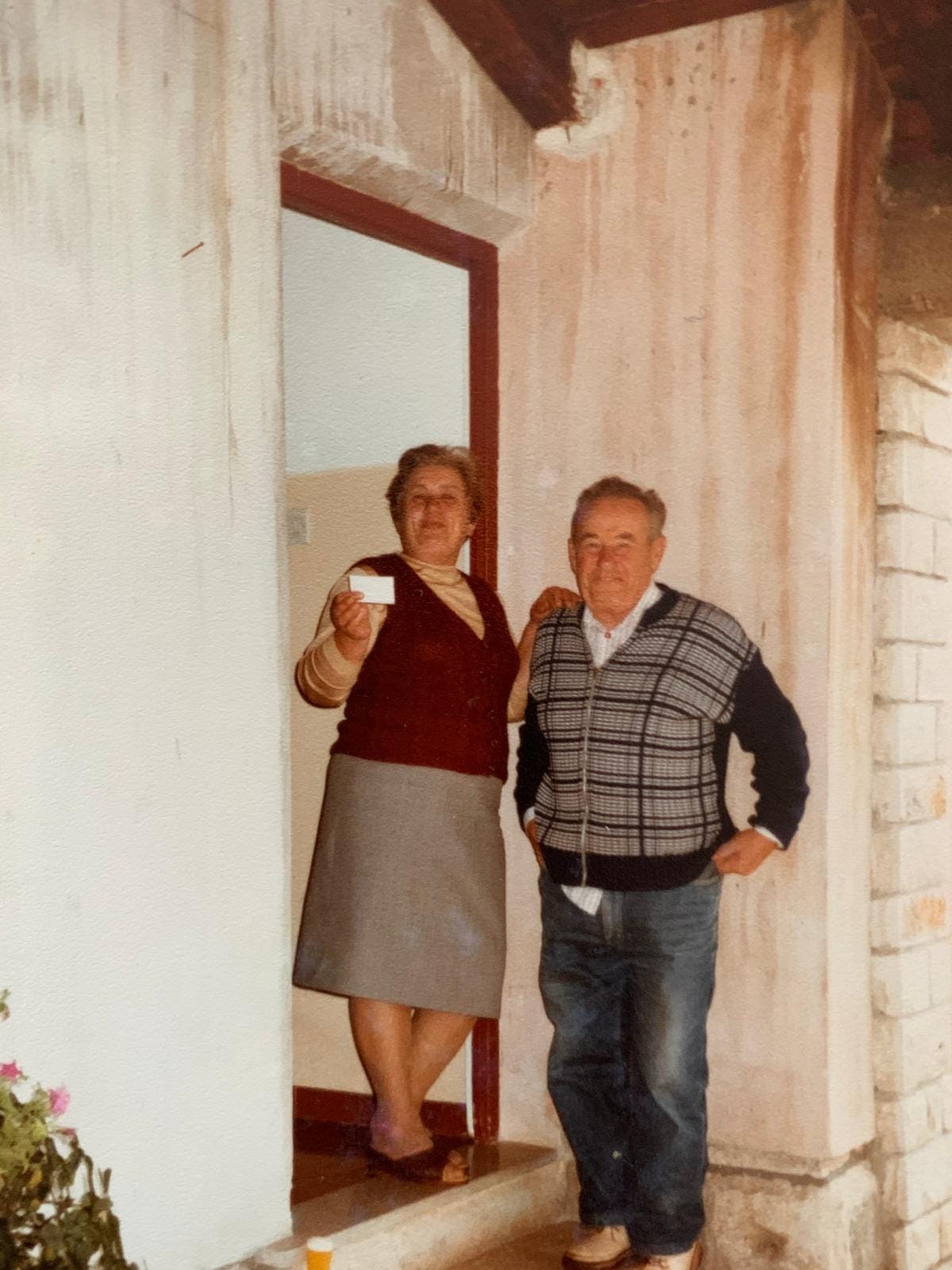
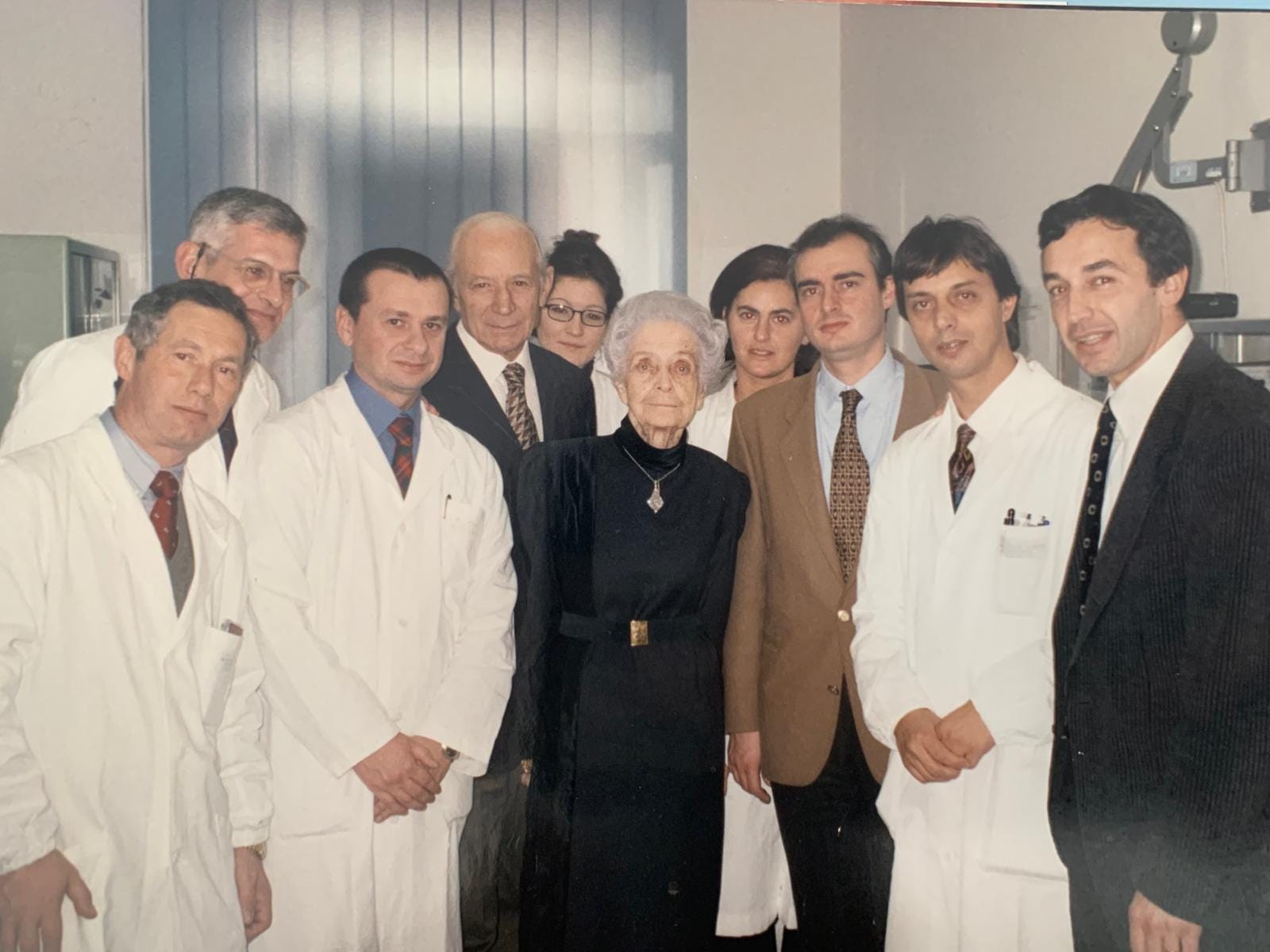
Her father in Yugoslavia. Her father during his military service in the Yugoslav army. Her father working in the team of Nobel Prize winner Rita Levi-Montalcini. Her grandparents building the tourist house that would eventually allow her father to study at university in Italy. D’Annunzio. Frescoes. The entrance hall of her family home. Her maternal grandfather, whom she described as the last great gentleman to ever exist.
And then there is her name. Lea Cerin. Pronounced Zérin. Or, optionally, Lea Cerin dei marchesi Martinetti Bianchi e dei baroni Zambra di Rocca Morice. Which raises, among many other questions, the obvious one: when does one deploy the optional part?
There is a lot of history around Lea. Family history, European history, histories contained in houses and photographs and surnames and objects that have travelled from one place to another.
Honestly, I don’t want to interview an archive. I want to know the person who lives among all of it. The woman who reads the books, keeps the matryoshka, defends the tiger bowl, sorts the dresses and went looking for a good fan.
We meet for a video call, I’m in my living room in Paris, she’s calling me from her bedroom in Verona,
LEA: Eccola!
YASMINA: Ciaooo!
LEA: You’re blonde!
YASMINA: And I thought you were blonde!
LEA: No, but when I was at university I used to lighten it much more.
YASMINA: At the hairdresser or by yourself?
LEA: At the hairdresser… but also by myself.
YASMINA: My roots are growing out.
LEA: Yes, but please get them done at the hairdresser.
I tell her I went blonde in Sri Lanka two months ago.
YASMINA: I went to Sri Lanka two months ago on this pseudo-spiritual trip with a friend.
I haven’t spoken to Lea in maybe four years. We had had some kind of communication problem. I tell her that the friend I went to Sri Lanka with is also from Veneto, and that, somehow, Veneto has become quite a big part of my life.
LEA: I mean, it’s a great region. With great representatives.
I update her on some gossip from my life. Not seeing a friend for four years isn’t exactly nothing. I mention, again, my strange ongoing relationship with Veneto.
LEA: Actually, technically, I’m not even Venetian in that sense. Neither of my parents is from Veneto. I’m the only one who was born there, in Venice.
YASMINA: Weren’t you born in Verona?
LEA: No! I was born in Venice and I grew up in Venice.
YASMINA: So how did you end up in Verona?
LEA: Because of my father’s job.
YASMINA: I completely missed this. What? I got it all wrong. So there’s nothing particularly Veronese about you?
LEA: No. I’m Venetian!
YASMINA: Okay, wow. Then I think there was a question about Verona somewhere and we’re going to have to completely rework that one.
LEA: I saw it and I was like, what??
We somehow end up back on hair.
LEA: Regarding the hair, I went back to my natural colour, which is this blondish-reddish colour. You can’t really see it properly because there isn’t much light.
But I have the red gene. My grandfather was ginger. Proper ginger. We have the red gene. My sister got the skin. My mum has the skin. I got the hair.
YASMINA: I remember when I was little reading something by Paolo Guzzanti about how rare, almost precious, redheads were. Or at least that’s how I remember it.
LEA: It’s true. My latest ex is a proper, proper redhead. He’s British. Red everywhere. Blue eyes.
In the UK there are so many, but in Italy it’s so rare that whenever there’s a redhead everyone is like, wow.
I can’t really explain it… It’s a colour. Like, a colour, you know?
There are hair colours and then there are colours. You can be blonde, you can have dark hair. But if you have really black hair, people notice it. They go, wow. It’s the same with red hair. Your hair becomes a colour, if that makes sense.
YASMINA: I mean, I’m yellow now…
I tell her I’m using purple shampoo to try to tone it.
LEA: I missed an entire chunk of your life. What were you doing? I knew you were following your dad with his stationing? I remember you going to Thailand for a while?
YASMINA: Yes, for like two or three months. But now I’m in fashion. I’m working at Balenciaga. But in a month i’m going to a indie shoe brand.
I explain to Lea what I’m doing, what Palomita Office is, why I started it. It occurs to me that I haven’t even asked her what she does. I like that. I like the idea that we’re not defined by our jobs.
I tell her I have different reasons for starting Palomita Office, and that I give everyone a different one.
LEA: What reason are you going to give me?
YASMINA: I think for the past few months I was obsessing over one person, and then I moved the obsession onto another person.
She interrupts me immediately. I’m kind of shocked.
LEA: How can you obsess over one person?
YASMINA: What?
LEA: Yeah.
I hesitate.
YASMINA: Like… they take up your whole world. All your mental space. You think about them all the time. And it’s not even necessarily things like stalking them or checking their photos. It’s more like: this person is my world. I want to be seen by this person. I want to crawl into this person’s name.
LEA: That’s so strange. It kind of gives me the creeps a little bit.
I’m immediately curious.
YASMINA: Why?
LEA: I like space. You know?
Il faut savoir quitter la table
There’s something almost opposite in the way we react to absence. Mine seems to make the other person expand. Lea’s makes her pull back.
YASMINA: For me, to give you context, it was like: my first thought in the morning was this person. Rereading conversations with them. I was obsessed with an ex-boyfriend, and then I met someone else, and the void I felt when the first person left, I put another person into it.
I don’t know whether it was me or whether something about that other person caused it. I don’t think I’ll ever know.
LEA: Maybe the other person wasn’t present enough. I think that can trigger what you felt.
YASMINA: Right. I was constantly like: where are you when you’re not answering me? When you’re ghosting me for days?
This guy would tell me, “Sorry, I’m disconnecting from my phone,” and I’d be like: okay, but WHERE? And HOW?
LEA: Disappearing and not shooting someone a text can drive you insane. But that doesn’t make me obsessed. It makes me mad, and that’s a different kind of mad.
For me it becomes: I’m not being treated with respect.
It doesn’t make me think, Oh, he could be in A, B or C place. Wherever he is, okay. If he’s with me, he should be able to shoot me a text. You’re in London. You’re not in the middle of the fucking desert.
YASMINA: It feels like you know your boundaries. Which I don’t. At least especially with men.
LEA: I mean, with relationships I’m working on it too. I’ve had my share of terrible relationships. Some were horrifying. Manipulative, controlling.
I was a very secretive person, and that made it hard. When one of them ended, I was proprio con il culo per terra. Like, what the fuck just happened?
He had pretty much gaslit me, and gaslit the people around us into thinking we were nothing.
Ass on the ground.
Also, I’m Catholic and I follow the precepts, so in some ways it’s quite easy for me to know where certain boundaries stand. A friend of mine from middle school is becoming an abbot, and he’s the person I call when I need a spiritual refresher on the principles.
And I get really mad when I’m with someone and they don’t respect me.
So no, I don’t develop an obsession.
I develop rage.
YASMINA: I need rage.
I’m so… una sottona, basically, a complete pushover when it comes to men. Ai massimi livelli. I think it’s the perfect word.
But I’ve also been playing a lot of characters for the past few years. Mostly this very good girl. A guy would ghost me and I’d be like: “It’s fine, no worries. What are you doing tonight?”
LEA: Yes.
YASMINA: And I’m not even sad about it now. I’m just confused by why I did that.
I recognise my potential. My friends literally tell me, “Girl, you can do better.” And then I’m like… naaaah. I kind of want him.
How do I find the rage?
LEA: I don’t think anybody can give it to you.
I can do a clean cut with a guy. I can unfollow him, block him, whatever. Never see him again. Throw away all the stuff related to him.
I can do that.
But there’s this Charles Aznavour song, Il faut savoir—
YASMINA: Quitter la table…?
LEA: Sììì! That one!
YASMINA: Okay, I know the sentence and I didn’t know where it fucking came from.
Now I know where it fucking comes from.
LEA: There’s this line in Il faut savoir, about holding back the cries of hatred because they’re the last words of love.
And I think that’s it. If someone isn’t treating you properly, at some point you just stop, because they’re disrespecting you.
Maybe there’s still affection for the guy. And maybe it’s natural to be a little wobbly at the end. To be mad, to block him, unblock him, write the paragraph.
Because those are still the derniers mots d’amour.
But then you can cut them off.
YASMINA: This also makes me think about us. Me and you.
I don’t think I ever really held a grudge against you. It was more like… what happened? Who did the wrong thing? Was it me who avoided her? Did she avoid me?
My memories of how we parted ways are very flou. Blurry.
I’m interested to know how you lived it, because I missed you.
There were so many times when I wanted to talk to you. I remember thinking, I wish I could just text her. But then I’d think: I don’t know if I have the courage. Maybe she’s mad at me. Maybe it would be weird.
And I kept wondering: did we ever even have a clean cut?
LEA: I don’t think so.
Maybe the group dynamics were difficult.
And we were younger.
LEA: I felt for a while that you were mad at me, but I didn’t know why.
YASMINA: I think the group dynamics mattered. There were things happening around us that probably affected the way I read you, and the way I behaved with you.
Looking back, I think I was reacting to a dynamic that was bigger than the two of us, without really separating our friendship from everything surrounding it.
LEA: But the people I carry in my heart as friends can call me anytime, and I’ll cancel whatever I’m doing.
And that’s how I always felt about you.
Sentences and concepts
YASMINA: I find it funny that we’re both Italian and we’re having this conversation in English.
We both speak a lot of languages, and fairly well. But I’m struggling so much with Italian right now. You know how I asked you what question you’d like to ask me, or what you’d like to know about me, and I said I would answer? Some people sent me questions in Italian, and I struggled so much to write the answers.
Have you ever had that kind of conflict with a language? Where it’s technically your language, but somehow you struggle with it?
LEA: There are so many more subtleties in Italian.
I’m either a two-line person or I’ll write ten emails. And I find that annoying.
I like English because it feels more like concepts. Sentences and concepts.
But at the same time, when I was in this relationship with a British guy, it definitely affected my relationship with the language.
The relationship itself was complicated for a variety of reasons, and the kind of British guy I was dating was also very peculiarly English.
There’s a language barrier in a way. Italian is made to express feelings, I think, rather than concepts. Rational concepts.
What can you say in English when you’re mad? You can say, “I’m pissed,” or “I’m mad.” But in Italian there’s a whole range of ways to express that emotion. I’m mad. I’m disappointed. You can use all these different words without people thinking they’re particularly big words.
YASMINA: Do you journal?
LEA: Never.
YASMINA: Do you talk to yourself?
LEA: No! I don’t.
YASMINA: I do it all the time. I bought this object—
I show her the recorder. She laughs.
—and I bring it with me when I walk, and I just talk to it.
And I talk in English. Or in French.
I don’t understand where the Italian me has gone wrong.
LEA: I don’t know! I’d rather speak to you in English than in Italian.
With my grandma, for example, I speak Italian, English, French and German. She’s from South Tyrol, so she’s bilingual, but she also speaks English because she studied in the US, in New York, for a year.
And then French and Russian.
So with her, I speak this mix of languages.
When I was a kid, obviously I spoke Croatian as well. And I’m used to having another person in the house, like my dad, speaking Croatian.
I am amazed.
So it doesn’t confuse me. Languages don’t mash together in my head.
There are certain things I prefer doing in different languages.
Everything Is Classified
LEA: I read in French. I almost never read in English. I hate it, unless it’s a classic. I would never read anything other than a classic in English.
I read in Italian too, but mostly I read in French because the books are so much cheaper. I go straight to the French section of bookstores and look for the French edition.
I bought Tristes Tropiques by Claude Lévi-Strauss. The French version was eight euros and the Italian one was twenty, so I was like, fuck it.
I’m a sucker for Folios.
YASMINA: I’m so lucky because I moved into my friend’s apartment. She studied philosophy at the Sorbonne and now she’s in New York, but she left me all her books.
So now I basically have a full stock of philosophy books for the year. I couldn’t be more grateful. So, so lucky.
LEA: I hate sharing my books.
I’ve been reading a lot since I was a child, so I have everything stacked in my room. Everywhere.
I hate people borrowing my books.
And whenever I read something, I have to bring it back to where it belongs. Every once in a while I reorder all my books by theme.
She starts showing me the room.
LEA: In front of you, there’s the Torah and the Bible, among other things. Religion.
I have a lot of Qur’ans because every time I go to an Arabic-speaking country, I pick one up at a mosque. I have ones from Egypt, Morocco…
Then I have Arabic literature.
Some first editions that I bought in Venice.
Everything is classified.
Here I have my classics. Seneca, things like that.
History of Venice.
That pile right there is French books. The pile behind it is Italian.
Latin America.
At the back there are the learning books. Economics, things like that.
Here I have my table books…
They’re everywhere.
THE BEST BOOK STORE IS IN A TRAIN STATION
YASMINA: For me, books are such a part of how we bonded. I remember we met in person in class, and three or four weeks later we were confined to our houses and our cities for lockdown.
And I remember, you know, during lockdown I was going through shit. My eating disorder, big time. It was bad.
I remember receiving tons of photos of book recommendations from you… and it would give me some light.
I remember asking you, like, “What are you reading? What are you watching?” And you would send me tons of things.
I remember so many classics. And I remember philosophy.
LEA: I’m not a fan of philosophy.
When I was in high school, my highest grade was Latin and my lowest was behaviour. I went to an Italian school, il classico.
At one point, I basically selected the subjects I didn’t want to learn. And when we got to Kant, I stopped.
I was just like, okay, this subject is useless.
So I would bring a book, sit at the back of the class and read my book instead of listening to philosophy.
YASMINA: Do you have a reading routine? How does it fit into your day? I’m very interested in trying to read more in my daily life, but it’s hard. Now I have a dog, I have a job, I’m working on this project, I do sports… it’s hard.
LEA: I mean, I don’t know, because as you can tell from the way I classify my books, I just read based on my current obsession.
Like, I don’t always read. Maybe I’ll read five books in a week about one topic and then stop for months.
Right now I’m in an obsession with the Middle Ages, but I can’t find some of the books because the only place where you can find those books is the bookstore in Termini.
YASMINA: Oh.
LEA: THAT IS THE BEST BOOKSTORE.
YASMINA: I’m always late when I have to get a train there, so I never went in. And also I feel like I wouldn’t know how to recommend a bookstore in Rome.
But I think I have a problem with Rome in general where I have, like… amnesia.
LEA: I still have your list.
YASMINA: You should share it with me. I wonder what I liked years ago.
LEA: For books in Rome, I would definitely shop at the bookstore in Termini. They have an amazing history section.
It’s weird because it’s a bookstore in a train station. I know. It’s not aesthetic, but still, they have a lot of good stuff.
I don’t even know the name of the place.
I Google it. It’s Borri Books.
LEA: Yes! Borri Books International.
YASMINA: Well, good to know.
LEA: Amazing bookstore.
YASMINA: Do you remember the last book that entered your house?
LEA: Il nome della rosa. I got that at the beginning of summer.
Reading is curiosity. And when I find something else that I’m curious about, it’s not guaranteed that I’ll read anymore.
Right now I’m really into programming shit on the computer, and I find that more entertaining. A lot of my friends have side projects like this, so I help them with their websites, programming, CRM, stuff like that.
YASMINA: I’m using Substack now. I could move to a bigger platform, but I love the social element of Substack.
LEA: I’ve never downloaded Substack, but maybe I will for you.
The thing is, I bought Il nome della rosa because I was like, okay, Middle Ages-related, I need to relax, so read a novel.
But I brought it everywhere with me. To Croatia. To the beach in Croatia. I brought it to my grandma’s house, to the beach at my grandma’s house.
It was this huge thing that I carried everywhere just to read two chapters.
I couldn’t even show it to you because I left it at my grandma’s. I was like, I’m not fucking carrying that.
She’s shipping it to me.
Because of the books thing, sometimes I need the books around me. And I need people to ship them to me because I need them to be organised.
THE OBJECTS THAT FOLLOW US
YASMINA: You told me you’re going to be travelling a lot now. London. Then Singapore for a month. Are you currently not bound to anywhere?
LEA: I’m not. Beginning of May, I’m always at the beach. That’s the only thing I’m bound to. I come back to the cities only when I’m sure the temperature there is bearable.
I HAVE SUPER LOW BLOOD PRESSURE.
And actually, this makes me think about the question I pre-read from you about the object I can’t live without.
I was thinking about it because after Singapore I think I’ll move out, and the object that’s coming with me for sure is my blood pressure monitor.
It’s ESSENTIAL.
My blood pressure can get so low, and my chest tightens, and I can’t move, and I feel fucking weird. And the only way to reassure myself that I’m not dying of a heart attack is to measure my blood pressure.
So I cannot live in a house that doesn’t have one of those machines.
YASMINA: I’m curious to know more about the objects that you sent me.
LEA: I sent you a lot.
The Julio Iglesias CD, one of my friends got it for me during my phase when I had just discovered flamenco and the first Rosalía album.
And then I went down this rabbit hole of Spanish music and discovered Julio Iglesias. I was sixteen, seventeen, and I knew Julio Iglesias songs by heart.
I was at the bookstore with one of my friends for my birthday and there was this Julio Iglesias CD, and he was like, “You have to have this.”
It’s the only CD I own.
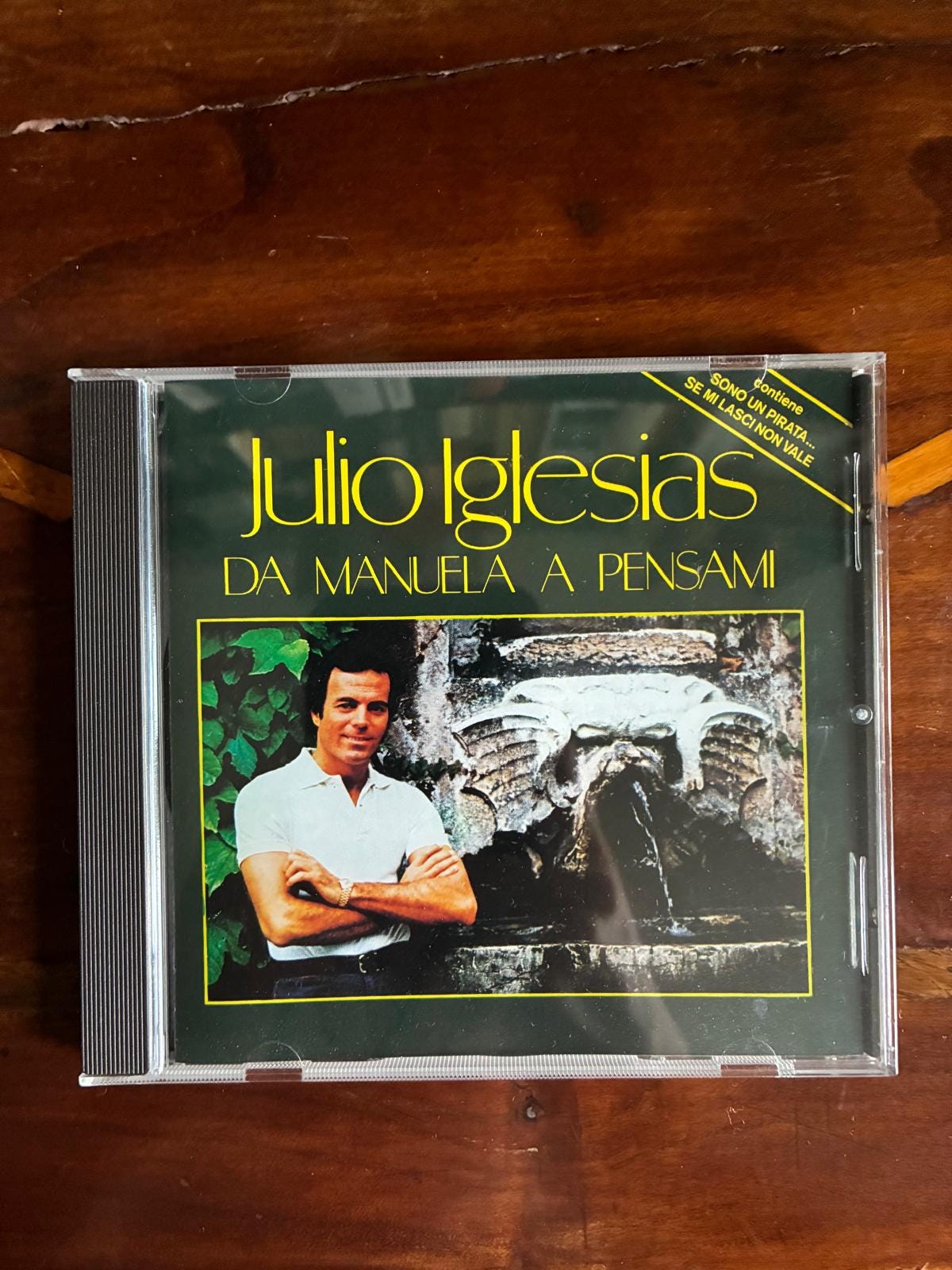
I don’t even have a CD player!
So it’s like a relic.
YASMINA: Someone I know has VHS tapes but doesn’t have a VHS player, and I find it very nice as a concept.
You don’t have the means to use the objects, but the objects are there.
LEA: I might have my dad’s player, but that’s a forbidden object.
A FAMILY OF FORBIDDENNESS
YASMINA: What was something that was forbidden growing up?
LEA: Plenty of things.
I come from a family of forbiddenness.
I can’t even recall.
My dad’s record player was forbidden. My dad’s current music setup is forbidden. Everything related to my mom is absolutely forbidden.
YASMINA: Did that ever make you feel like you were being denied something?
LEA: No. I accepted it.
My family is very strict. Few families are as strict as mine.
Even when I sit in front of my grandma at the table, I’m twenty-five and I’ll still get scolded over the size of my bites.
Too big of a bite! Too big of a portion! You’re sitting wrong!
I was constantly annoyed by this kind of stuff. Things you shouldn’t do. It was always there.
And also my grandad, the one I talked to you about, was very irascible.
My grandad used to take a nap religiously every afternoon. One afternoon, I was playing with a toy that made a lot of noise, and my grandad picked it up and threw it down the stairs.
So the concept wasn’t foreign to me.
And I hate it because even now, I’m the same way.
I hate the word chill.
You move my stuff. No, it’s not chill!
Don’t touch my stuff. Don’t move my bag.
YASMINA: This makes me think of something related to control.
I laugh.
Do you feel there are, I mean, I’m sure there are because we’ve shared this in the past, areas of your life where you’re over-controlling?
LEA: I’m getting better at not over-controlling things.
I’m good with people. I’m getting better with situations.
What is absolutely still lacking is the space.
I cannot not control the space.
I hate people moving my things. Stuff needs to be organised in a certain way for me not to feel stressed.
But I never feel like it’s over-controlling.
—
YASMINA: I think I need some advice.
I don’t want to make this about me, but I’m a very messy person. And it’s affecting a lot of things.
All my life I was like, no, I’m messy because I’m creative.
But now it’s affecting my mental sanity, and I think I’ve gone through very bad periods because of how my space was, or wasn’t, organised.
I wish I was somewhere close to being neat and organised, and I’m not.
What are your tips? Stupid question.
LEA: People stress about being neat and organised.
The thing is, I love the things I own.
It’s something I’ve always thought about because my dad, growing up, wasn’t very rich, so his things lasted three decades.
And my mom had to secretly replace his things.
Like a Lacoste shirt, three decades old. My dad doesn’t want to throw it away, so my mom will have to buy the exact same one.
When I break my stuff, my dad is like, “Ah, you broke your stuff.”
And I’m like, but it lasted ten years!
So I’ve inherited this thing about caring for objects.
It’s a trait that I hate in other people when they’re careless with objects.
So I just don’t want to ruin my things. And that helps me stay organised.
For my dad it was a matter of money, but for me as well.
I hate spending money on something, or getting a gift, just for it to be thrown on the floor.
I’m the person who cleans her shoes between seasons because I don’t want them to get ruined.
I bought them, and I like them, and I don’t want them to be ruined.
But it’s weird because my best friend is the messiest person alive.
And every time I go to her house, I try to organise her stuff.
She’s an artist. She keeps all the little things that could become something.
I throw shit away.
And sometimes she has to go through the bin to recover something that I’ve thrown away.
I throw away a lot of stuff.
I feel ashamed to admit that, as I glance across the room and see my dog Paloma sleeping on the YSL bag.
YASMINA: If you lived here, I would beg you and pay you to come to my house for one hour a week and be like, okay dude, what can we throw away?
I accumulate so much shit, and my house is just so messy. I have so much going on.
You remind me so much of my sister.
And that’s exactly what she does. She’ll come in and be like, okay, this is out.
The wardrobe list
LEA: I used to accumulate a lot of stuff too. I used to shop a lot. I sent you that photo of a notebook page where I’d written down all of my clothes.
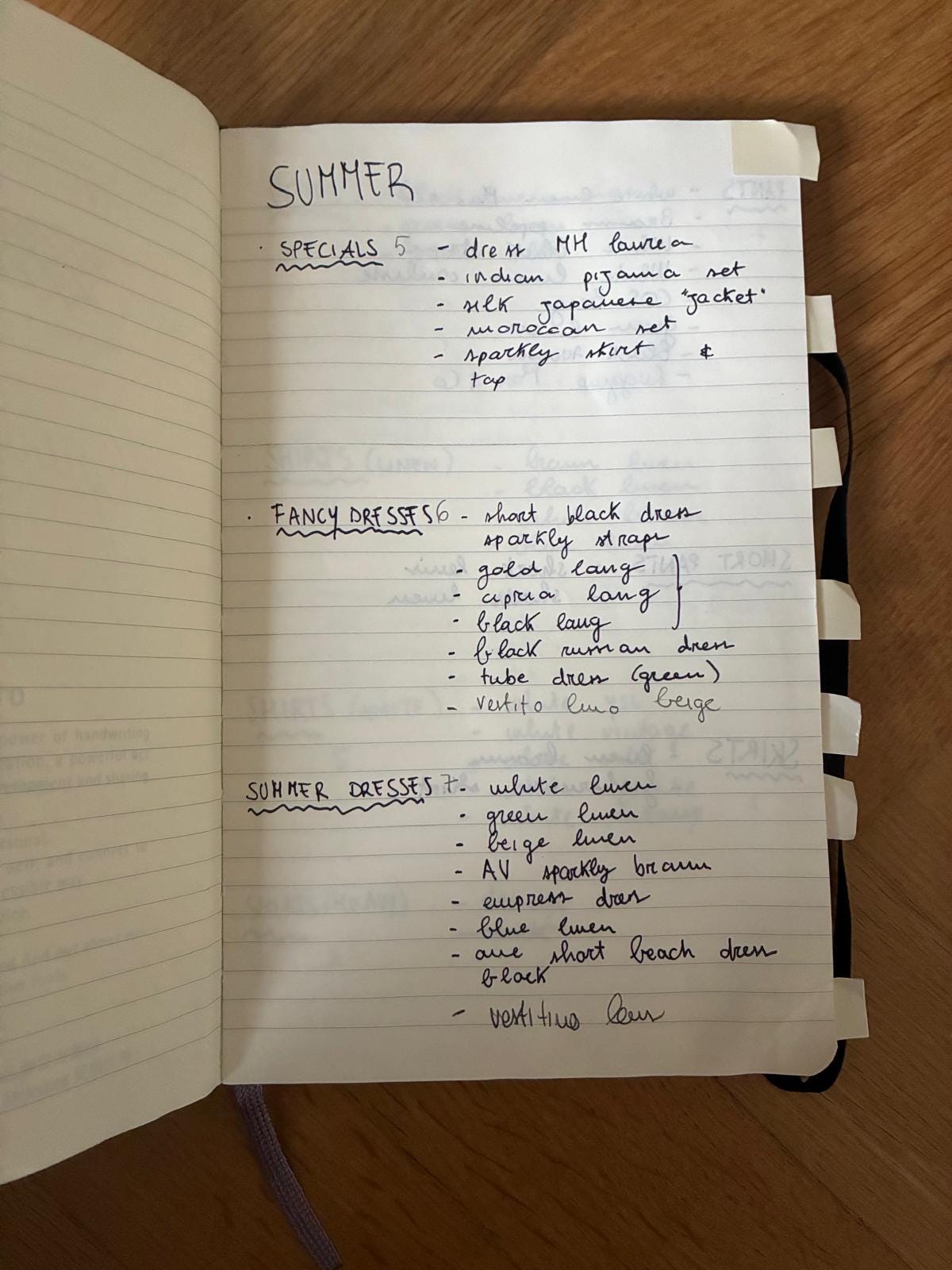
Now I keep a list so that I don’t overbuy. Especially in winter, when you feel like you have nothing to wear and you start convincing yourself that you need more jumpers. But you don’t.
Jeans are the most complicated thing, I think.
I mainly wear beige, brown and white. And in the summer, two colours: this green that you see, and this blue. Full stop. Then everything goes together. I have a few special pieces, but they still work with everything else.
And fortunately, I have a dad with very short legs, so I get all of his Levi’s. But they’re not modern Levi’s, they’re the original Made in the USA ones.
Those enter my wardrobe and never leave.
Obviously, having a sister really helps too. I used to hold onto pieces just because they were Ganni, even if I never wore them. Or I had this pair of Gucci loafers that were red and pink, with the monogram logo. Now, if I don’t wear something anymore, I just pass it down to my sister. I don’t keep it in my wardrobe just because it’s a piece.
And then I donate a lot. Stuff that doesn’t fit anymore, or things that I’ve worn to death.
When I don’t feel good in a piece anymore, that’s when I’ll pass it down. It’s as simple as that.
What I struggle with now is changing my wardrobe for the season. My wardrobe is either summer or winter. I hate mixing the two.
I made this list and realised that I hate all of my winter coats because I’m very tiny, so a jumper and a winter coat? I look weird.
But I love a good fur coat. And a leather bomber jacket.
But I can’t just wear that.
YASMINA: What’s something you’re looking forward to wearing this winter?
LEA: My fur coat! It was my great-grandmother’s. It’s so long. A proper fur coat.
YASMINA: I remember your beige coat.
LEA: I gave it away.
YASMINA: Where do you shop for clothes?
LEA: I don’t shop fast fashion, that’s for sure. When I turned fourteen, my mom banned Zara. It was her decision. She was like, “You’re not wearing that. And your sizes are not going to change.”
I rarely shop now, but I like Vinted. And for tank tops and things like that, honestly, the children’s section at the supermarket. What you’re seeing is a twelve-year-old boy’s tank top.
Oh, and Petit Bateau. Of course.
I haven’t bought a new piece in ages.
The last things I bought were two very expensive dresses, but those are dresses that you keep.
NO INSTAGRAM PERSONA
YASMINA: I sent you so many questions. I’m afraid we’re not going to have time to go through all of them. So I’m asking you: what do you want to be asked?
LEA: I don’t know. You made such a long list. I’m sure you asked me the ones that came out naturally in conversation. But was there one you really wanted to ask me?
YASMINA: Yes. When I met you, I remember I couldn’t find you on Instagram. There was no way. And lately I looked you up and you’re not even on LinkedIn.
LEA: I’m not on LinkedIn.
YASMINA: Your Instagram is so private! And you’ve had this photo forever of this dog that looks like my dog, but giraffe-printed?
LEA: I opened my account when I was eighteen. I didn’t have Instagram as a teenager, like, ever. And it’s mainly for me.
YASMINA: It’s your private account, but you also share things in a very candid way. Not always private things.
LEA: I get a lot of questions about my Instagram.
YASMINA: I ask everyone questions about their Instagram because I have a very weird approach to mine. I post, I change, I archive. I’m blonde. Then I’m brown. Then I’m young. Then I’m older. Then I’m in Paris. Then I’m in Sri Lanka. You cannot know anything in real time.
LEA: I don’t have an Instagram persona. When I do something and feel really proud of it, I just post it.
We look at her Instagram and comment on her latest posts together. A candid photo of her playing dead in the sea. A mirror selfie. Her grandma. Unhinged selfie side quests.
YASMINA: Your grandma is so present. I love that.
LEA: She’s the only grandparent I have.
YASMINA: How do you know when it’s time to post?
LEA: When I’m proud of it.
The last three are for memory, because I’m at my grandma’s.
The first one is my grandma. You have to sneak photographs of her, otherwise she won’t appear.
She’s a beautiful woman, and she has been her whole life. My grandad used to photograph her all the time, but you had to sneak photographs of her.
She has a very old-school bedroom with this chaise longue, and I’ve always wanted one. And she has this mirror where, no matter what you wear, you look amazing.
And this is the dress I bought for a family aperitivo.
The last post is about my aunt, who’s a great bridge player. There are four players in bridge, and one of them is called the dummy, il morto in Italian, and there’s a whole strategy around how to play if you’re the dead man.
So she was reading a book about strategy, about how to play the morto.
YASMINA: Do you look at your old Instagram from time to time?
LEA: Yes. To remember, for example, what I was doing last summer.
YASMINA: Your sister is gorgeous too. And I love that she mentions you in her bio.
LEA: Because she’s not a photograph person, and I’m her Instagram manager!
DIFFERENT WAYS TO USE A FAN
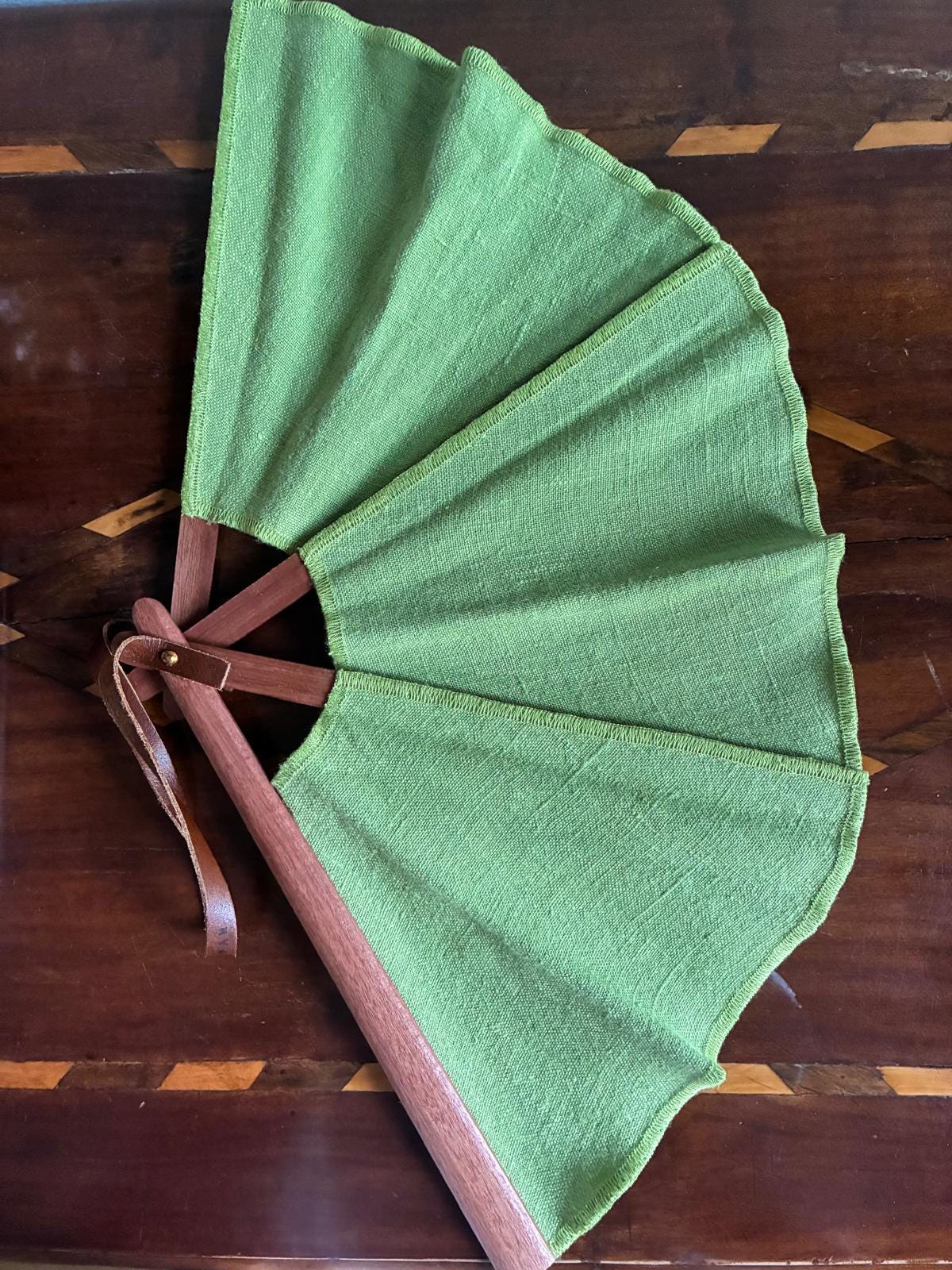
Among the photographs Lea sent me before the interview was a green fan.
It was her latest purchase, accompanied by a very Lea observation: finding a good fan is surprisingly difficult.
There are objects we buy without ever really considering what would make them good. A fan is one of them. It either works or it doesn’t. Until, apparently, you start paying attention.
The right size. The right resistance when it opens. Something you can actually carry around. Something that moves enough air. Something that doesn’t look horrible while doing it.
And then there is everything else you can do with one.
Hold it in front of your face. Point with it. Hide behind it. Dramatically open it in the middle of a conversation. Give yourself something to do with your hands.
A fan is technically practical. It just happens to come with an entire vocabulary of gestures.
Lea went looking for a good one.
Rapid fire
YASMINA: Ready?
LEA: Yes.
YASMINA: The last thing you ate?
LEA: Il panino col burro e lo speck.
YASMINA: The first thing you touched this morning?
LEA: My Stanley Cup.
YASMINA: Something you’re trying to understand?
LEA: Why my backhand is so floppy. In tennis, my timing on the ball is always fucking wrong!
YASMINA: Something you’ve recently changed your mind about?
LEA: Letting people freely choose their boyfriend and ruin themselves through that relationship.
YASMINA: Something you’ll never change about yourself?
LEA: My nose!!
YASMINA: What would you like to be remembered for by the people who know you?
LEA: Kindness.
YASMINA: Before, when we were talking about the logistics of this call, your last text to me was, “Don’t be afraid.” What are you afraid of?
LEA: Almost nothing.
YASMINA: Russian literature or French?
LEA: French.
YASMINA: Raphael or Michelangelo?
LEA: Raphael, all day.
YASMINA: Sea or mountains?
LEA: Mountains in the winter. Not in the summer.
YASMINA: To remember or to be remembered?
LEA: To remember.
YASMINA: Voice note or paragraph?
LEA: Paragraph. And fuck everyone who sends voice notes.
YASMINA: One question you wish people asked you more often?
LEA: Not a fan of questions.
YASMINA: A word for Venice?
LEA: Playground. But not in the bad sense.
YASMINA: A word for Lea?
LEA: I don’t know! Lea! I was always obsessed as a kid that my parents called me Lea and nothing else.
YASMINA: And your favourite word?
LEA: Thank you.
More Palomita Office photo evidence: