
carlotta
Carlotta never really planned to start a fashion brand. Giglio Tigrato began almost accidentally, in her grandmother’s atelier, during a period when the rest of the world seemed to have stopped moving. First came the hand-painted vintage jackets, then the pop-ups, the collections, a fashion show, and eventually a store in Milan.
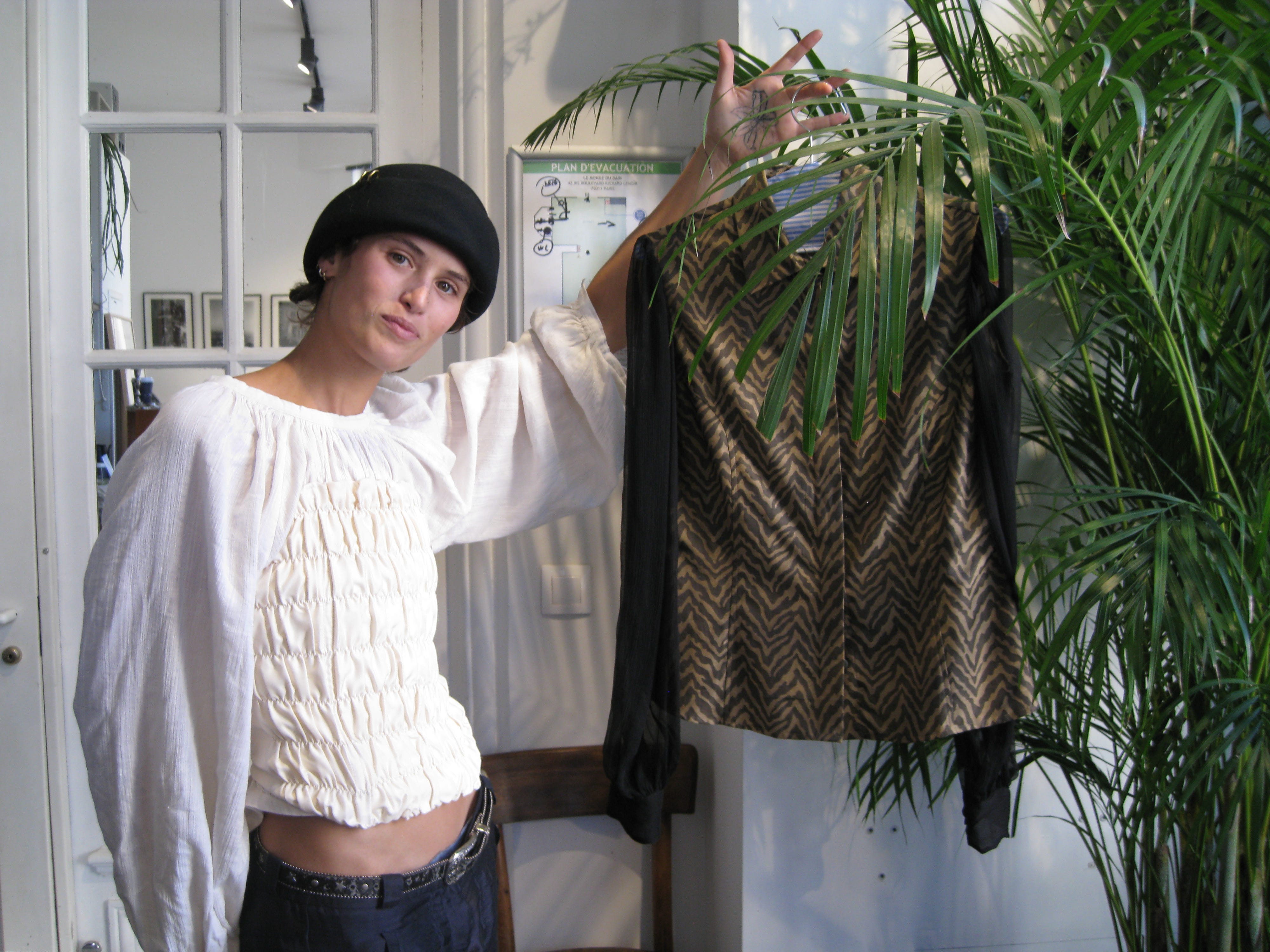
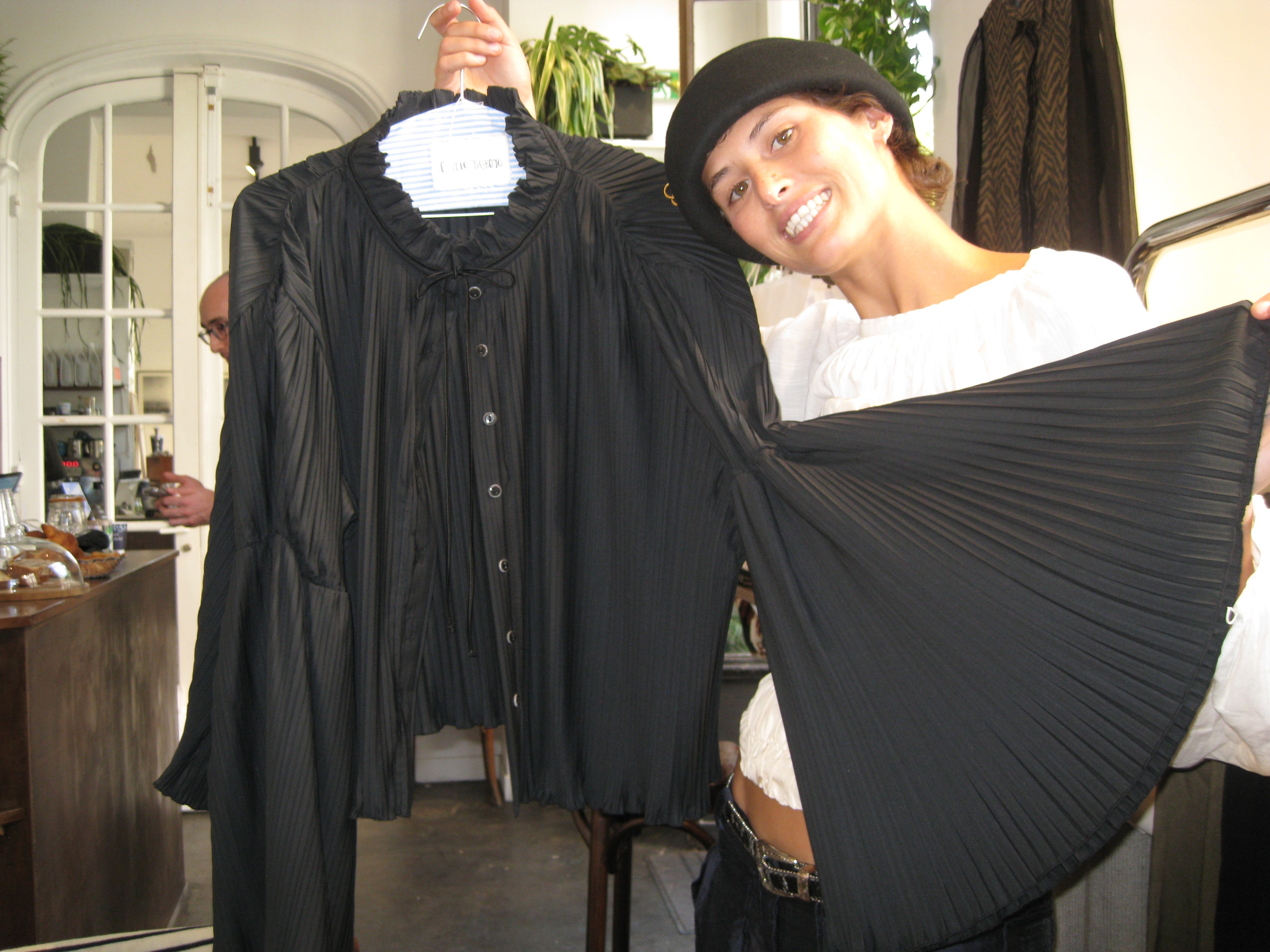
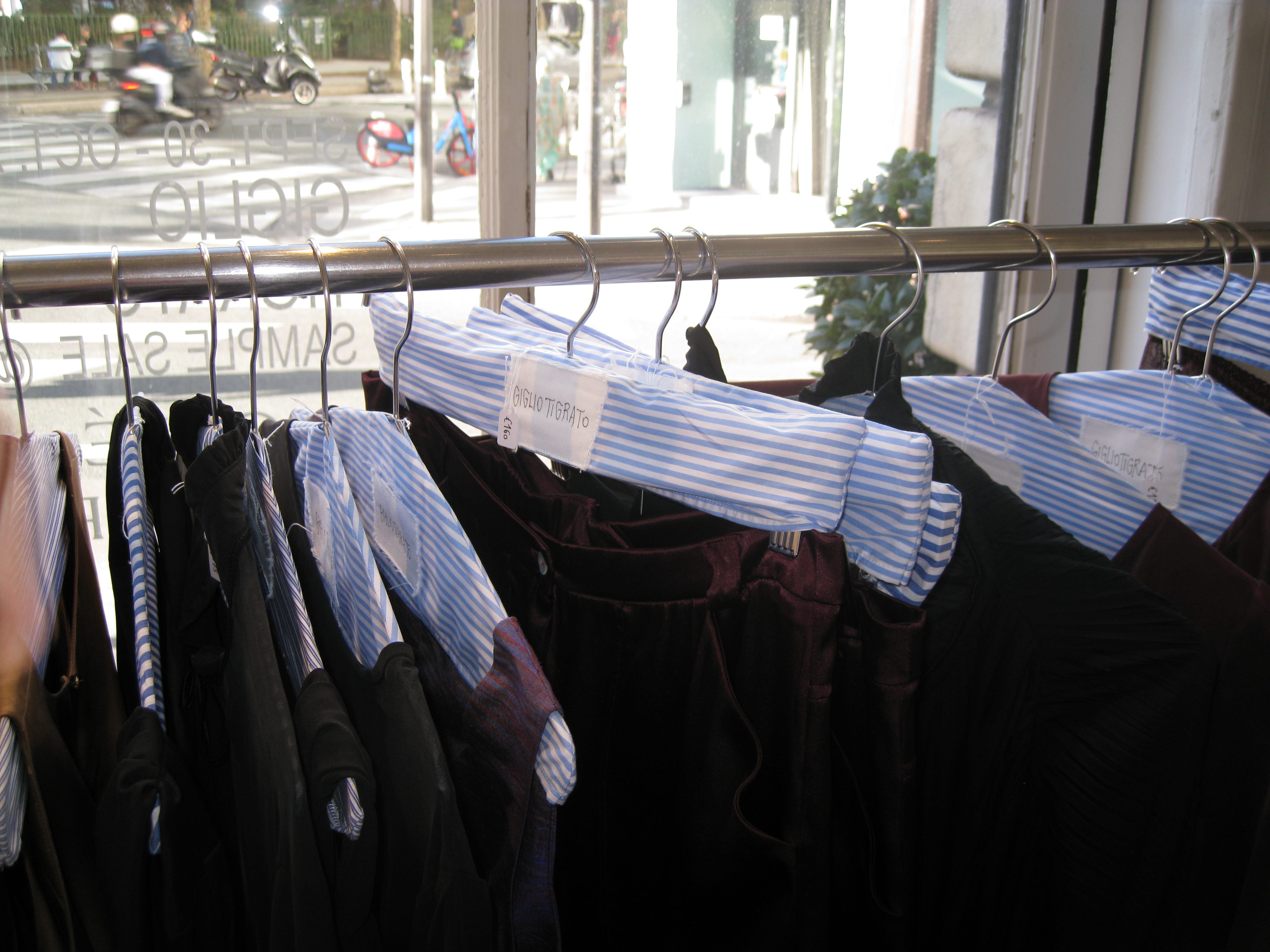
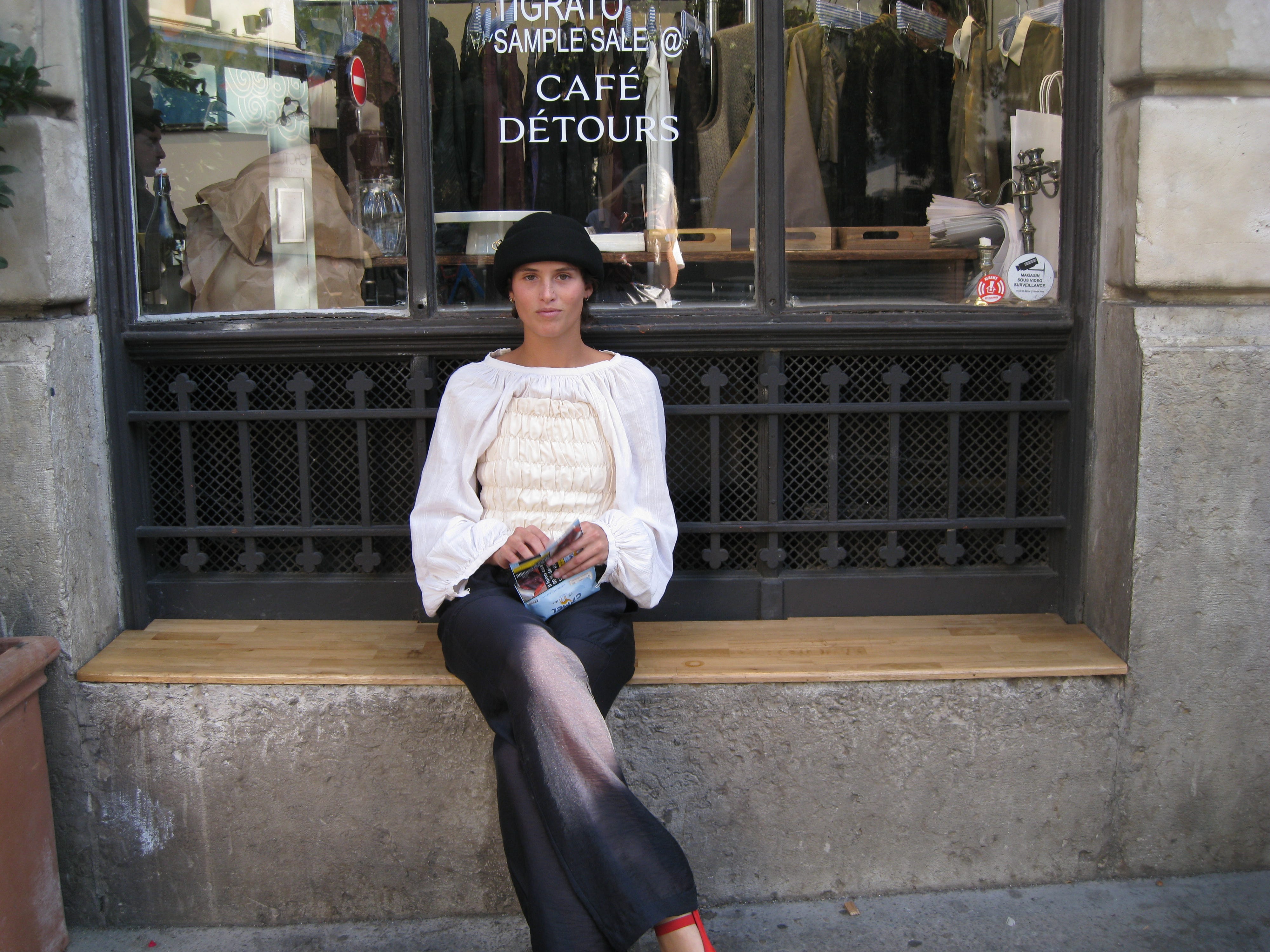
We meet in Paris, where Carlotta has returned for a pop-up after two years away. Surrounded by archive pieces, unusual fabrics, hats, and an impressive number of patterns, she tells me about a project that was never particularly interested in resembling anything else.
Her motto is responsible and rebellious. Two apparently contradictory words that, for her, describe the same approach to life: taking responsibility for your choices while refusing to be afraid of being different.
We talk about clothes that change with your mood, postage stamps as love letters, forgotten fabrics, imaginary trips, the differences between Milan and Paris, and a rather extraordinary lamp shaped like a pufferfish.
Because perhaps the most interesting thing about Giglio Tigrato isn’t the clothing, but everything that would remain if the clothes disappeared.
From Grandma’s Atelier to the World
Y: You’re based in Milan, right? What brings you back to Paris?
C: This pop-up was actually a bit of an excuse to visit a dear friend of mine who worked with me for two years. I hadn’t been back to Paris in a while.
I’ve done at least five pop-ups here throughout Giglio’s history, including when I was just starting out. I’ve also been to London, New York, and Copenhagen. But for one reason or another, I hadn’t returned to Paris in about two years.
Y: And you studied design in Milan before coming to Paris?
C: I studied at the Politecnico di Milano and then did my Erasmus in Paris. It was a completely different environment.
At the Politecnico, everything was much more structured, and I received a really strong technical education. In Paris, there was much more freedom to experiment creatively. I loved experiencing both sides.
I studied fashion design and specialized in jewellery and accessories.
When I graduated, it was Covid. I didn’t particularly want to do a master’s online, so I decided to start working while developing Giglio Tigrato.
And just when I was ready to officially launch Giglio, I found a job. So I started living this double life.
I worked in a brand’s design department, then with a Milanese designer who had a boutique in the Cinque Vie district. I was her assistant, but I did absolutely everything, from working in the store to social media and carrying things around. Later, I became a social media manager for an interior design and architecture company.
Y: And now you work exclusively on Giglio?
C: For the past two years, yes. And last year we opened the store.
Y: The Island. I love that name. Where does it come from?
C: Tiger Lily is a character from Peter Pan’s Neverland.
When I opened the store, I didn’t want it to be exclusively a Giglio Tigrato boutique. I wanted to give other emerging designers an opportunity to showcase their work, whether through consignment or temporary pop-ups.
Calling the store Giglio Tigrato felt a little limiting.
So it became The Island. Tiger Lily’s island, but also a space where other designers could bring their own worlds.
There Was Never a Master Plan
Y: When did you realize that Giglio could become something bigger than a personal project?
C: I don’t think there was ever one particular moment.
Everything happened very gradually, without rushing. I never started with the ambition of creating a brand. That wasn’t necessarily my dream.
Ever since I started studying at the Politecnico, I’d been interested in finding my own approach to upcycling, creating something that felt distant from trends.
It started in my grandmother’s atelier, as something extremely personal and intimate.
Then came the first pop-ups, and suddenly I was exposing my work to other people’s opinions. You begin receiving criticism, compliments, comments. I’ve always seen that as an opportunity to learn.
Of course, there have been moments when I realized something important was happening. This year’s fashion show, for example.
Having twenty naked people walk in a fashion show was certainly one of those moments when I thought, okay, we’re doing something big.
But I think Giglio has always been for other people as much as it has been for me. I wanted to offer an alternative way of buying clothes and invite people into my world.
Y: Do you remember the very first pieces you made?
C: Absolutely. My first pop-up was entirely vintage and upcycled.
I had about thirty jackets: leather coats, bombers, suede jackets, blazers. All hand-painted.
There were lots of postage stamps, which have become something of a symbol for Giglio.
A stamp is something you put on a letter when you’re travelling, when you’re sending something home or to someone you love.
For me, painting a stamp onto a jacket meant turning that garment into the carrier of a message, a journey, or an experience happening somewhere else.
There were always tigers, too, and lots of Eastern influences.
Then I started introducing small collections of tailored pieces. I remember one of my first designs was this reversible little bolero or waistcoat, with upholstery jacquard on one side and a sort of fluffy lambswool on the other.
When I look back at those pieces now, I find them so funny.
Responsible, Rebellious, or Both?
Y: Something that really caught my attention about Giglio is the combination of two words: responsible and rebellious. They almost contradict each other. Are you personally more responsible or more rebellious?
C: I’m exactly the combination of the two, because I am Giglio.
They’re contrasting ideas, but in everything I do, they coexist.
Being responsible doesn’t necessarily mean being the sensible girl who follows the rules. It means being responsible for my own actions and conscious of the choices I make.
I want everything I do to reflect who I am.
Being rebellious, on the other hand, isn’t about breaking rules simply for the sake of breaking them.
It’s about not being afraid to be different, to take risks, to move away from what everybody else is doing.
For me, it’s a complete rejection of conformity.
And that doesn’t only apply to fashion. It applies to everything, from the perfume you buy to the café where you drink your coffee.
So many people follow the crowd without really questioning whether something reflects who they are.
I want to make choices because they genuinely feel like mine.
Y: And in your personal life, when are you more responsible and when are you more rebellious?
C: I’m responsible in my relationships with people.
I have strong principles, and I like maintaining solid relationships. I meet new people almost every week through my work, and I try to approach those relationships with a sense of responsibility and respect.
I’m definitely more rebellious in how I make decisions. I’m instinctive, sometimes impulsive.
Y: There’s such a fine line between being instinctive and being impulsive.
C: Exactly. But sometimes you just feel something in your stomach, and you know.
Some Days a Berliner, Others a Can-Can Dancer
Y: You talk a lot about resisting conformity. How does that translate into the way you dress?
C: I change every single day.
One morning I might wake up feeling like a Berliner emerging from the most underground club, completely dressed in black.
The next day, I might feel like a can-can dancer.
And today I’m somewhere in between.
It depends entirely on my mood.
Sometimes, when I’m going through a period of uncertainty, I can see it reflected in how I dress.
When I travel, it’s easy. I pack four outfits for four days and know exactly what I’m going to wear.
But in Milan, when I open my wardrobe and have too many choices, I sometimes end up wearing the same jeans and striped long-sleeved T-shirt.
If you see me dressed like that for several days in a row, you can probably tell I’m going through a strange period in my life.
Y: What’s the strangest or most eccentric piece in your wardrobe?
C: Probably my Giglio chaps. Not everybody has cowboy chaps hanging in their wardrobe.
But I love accessories, so I have a lot of unusual things: cuffs, extravagant hats, vintage shoes.
Even this bowler hat I’m wearing today is quite eccentric.
Y: Did you build this wardrobe gradually?
C: Yes, and I’m still building it.
I’m obsessed with vintage, and a lot of my research starts with vintage archives.
London is probably one of my favourite places to look. Paris has some extraordinary pieces too, but sometimes you pay far too much for something simply because it’s vintage or has a particular label.
I think the interesting thing is finding pieces that genuinely speak to you.
An Imaginary Moodboard
Y: Let’s imagine a moodboard of Carlotta and Giglio Tigrato. You have to choose a person, a film, a magazine, a building, and a city.
C: A person? Vivienne Westwood. Today, at least. Tomorrow I might give you a completely different answer.
I think I woke up feeling a little Vivienne.
A film would be Paris, Texas.
A magazine, Mental Athletic.
For a building, I’d choose something like an old farmhouse in the Tuscan countryside. Something very bucolic.
And a city? Actually, today I don’t think I’d choose a city at all. I’d rather be in a small village somewhere.
Milan Doesn’t Try So Hard
Y: You know both Milan and Paris really well. They’re two major fashion capitals, but they have such different identities. What do you think Paris could learn from Milan, and vice versa?
C: I think they’re two parallel worlds.
In Paris, people sometimes exaggerate the fashion character they’re trying to embody. There’s this almost theatrical effort to look a certain way.
You can see it in how people dress on the street, especially in particular neighbourhoods.
Sometimes I prefer the naturalness of Milan. People seem to try a little less.
At the same time, Paris can be incredibly interesting because you encounter people with such distinctive personal styles.
There are outfits that make you stop and look.
In Milan, that happens to me less often. People tend to dress in a more relaxed way.
But I should also say that I’m quite detached from the fashion world itself.
Most of my friends don’t work directly in fashion. Some work in art, some in events, some move between different creative industries.
I like being able to look at fashion without feeling that I have to belong completely to that world.
Y: I love that. And today you’re a little romantic, a little pirate.
C: Exactly. I’ve got the hat with piercings, a slightly transparent pair of trousers, a corset, and this pirate shirt.
Sometimes I only realize what mood I was in after getting dressed.
I look at myself and think, okay, apparently this is who I am today.
The Fabric Comes First
Y: When you take something that already exists and turn it into a Giglio piece, at what point does it become yours?
C: Today I don’t actually work with finished vintage garments anymore.
I work with fabrics.
In the beginning, I would take existing vintage pieces and modify them. Now I create garments from scratch, but I still use vintage and deadstock fabrics.
My design process always starts with the material.
I have to understand what fabrics are available before I can imagine what to make.
If I find a particular cotton, a gauze, a silk, I need to know what I have in front of me before designing.
The fabric comes first, and the design follows.
I think the piece becomes mine when I start developing something new from those existing materials, especially when I begin creating the first prototypes.
Y: So how much of your work is actually research?
C: A huge part of it.
Researching materials, but also looking for inspiration.
I spend a lot of time at the store too. I want to be physically present because I think there’s something quite unusual about walking into a boutique and speaking directly to the person who designed the clothes.
And then, unfortunately, I also have to deal with the financial side of things.
Y: The glamorous side of having your own brand.
C: Exactly.
I have people helping me with product development and art direction, and I also work with interns.
But running an independent brand still means doing a little bit of everything.
Don’t Start a Brand Just to Start a Brand
Y: What would you tell someone who wants to launch their own fashion brand?
C: I’d tell them to do it when they genuinely feel they have an idea that can last.
Today, so many people launch brands simply because they want to have a brand.
And I’ve seen quite a few small brands close after only a few years.
Sometimes it’s because the idea didn’t work. Sometimes there wasn’t enough determination, or enough passion behind it.
It’s difficult. We’re already surrounded by products.
If you want to create something new, you have to know why it needs to exist.
You need determination, a solid idea, and probably a certain degree of financial stability too.
Y: Describe Giglio Tigrato in three words.
C: Independent. A traveller. Free.
If the Clothes Disappeared
Y: If you took all the clothes away from Giglio Tigrato, what would remain?
C: A community, I think.
A community of people, friends, and people who have become friends over the years.
There would still be the stories we’ve created, the projects, the experiences.
And I hope that people who have followed Giglio would retain that desire to dare, to step outside expectations, and to resist conformity.
That’s what I would want to remain.
The Trips That Haven’t Happened Yet
Y: Is there something you believed in when you started that you’ve since changed your mind about?
C: I’ve experimented with so many different ideas.
At one point I wanted to release just one collection a year. But I realized that was quite complicated, because people still want something new. You either have to constantly reinvent the way you present the collection or it can become monotonous.
I also thought about creating two separate lines, one more elaborate, almost haute couture, and another simpler one.
Eventually, I realized that would make the project too big for what we are today.
Then there’s another idea I haven’t abandoned, just postponed: the Giglio trips.
Y: Wait, what are the Giglio trips?
C: I imagined collections inspired by specific journeys, where you could almost buy a suitcase prepared for that particular trip, with clothes and accessories designed for it.
But more importantly, I imagined travelling together with a small group from the Giglio community.
Not a huge organized tour. Something intimate and adventurous.
It could be a journey to the Amazon, to India, or somewhere else where we could learn about a place, visit workshops, document something, or contribute in some way.
I want it to connect to the social and environmental responsibility behind the brand.
But I want to do it in a cool way.
Sustainability has acquired such an unattractive image. People often associate it with something boring or uncool.
I think being responsible can be incredibly cool. You just have to know how to communicate and experience it differently.
Y: So this project is still happening, eventually?
C: I hope so. We need a slightly bigger team first.
But I genuinely think that the brands that will matter in the future are the ones offering experiences, not just products.
And I don’t mean another exclusive dinner or breakfast in a store, even though those things can be lovely.
I’m thinking about trips, conversations, experiences that go beyond buying something.
Things that actually bring people together.
A Pufferfish Lamp and Other Important Possessions
Y: Time for some rapid-fire questions. You can steal anyone’s wardrobe for twenty-four hours. Whose would it be?
C: A stylist I know called Emma. I’d be so curious to see what’s actually inside her wardrobe.
Y: The best object in your house? Not necessarily the most beautiful.
C: At my family’s countryside house, there’s an inflated pufferfish that’s been turned into a lamp.
You switch it on, and the whole fish lights up.
It’s genius. It always makes me smile.
Y: I absolutely need a photograph of this. Is it a real pufferfish?
C: Yes, it’s an actual preserved pufferfish.
Y: Something you’ve seen recently that made you think, I wish I’d made that?
C: I don’t really think that way. I’m not jealous of what other people create.
Y: Something you collect without meaning to?
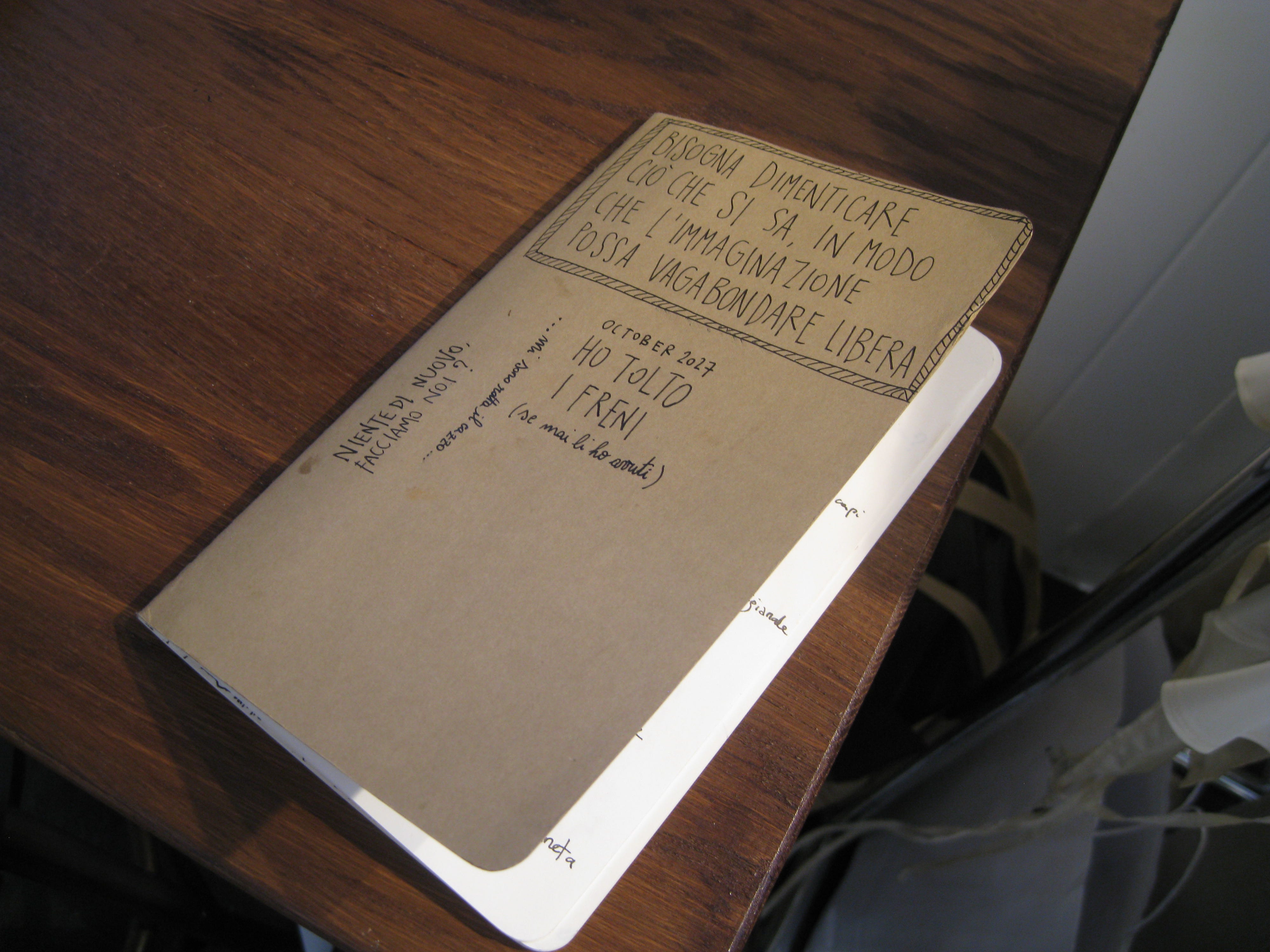
C: Little notebooks.
Y: Your current obsession?
C: Lace.
Y: A film you’d like to live inside?
C: Once Upon a Time in Hollywood. The whole atmosphere of that period.
Y: A song that immediately changes your mood?
C: It changes all the time, but right now it’s Love Show by Skye.
I found it on my father’s old iPod. It makes me feel like a girl in the 2000s.
Y: The best compliment someone could give you?
C: That I’m unique.
Y: Somewhere you go when you need to think?
C: It used to be the little atelier at my grandmother’s house. I’ve just rented a new studio, so I think that will become my new place.
Y: Your favourite word?
C: Marmellata.
Carlotta’s Milan Address Book
Y: A bar where you can disappear for a little while, somewhere nobody knows you?
C: Milan is so small that it’s difficult not to run into someone you know.
But I recently discovered a little place near my new studio. It’s full of vintage details and has this wonderful atmosphere.
Actually, one place I love is Forno Cantoni.
Y: Your favourite place for a proper Milanese meal?
C: Trattoria Milanese.
I’ve known the people there for years. I love being able to order a risotto alla milanese, a scaloppina al Marsala with mashed potatoes, all those traditional dishes.
It feels like home. I can go there alone and feel completely comfortable.
Another place I love is Nuova Arena.
My mother’s waters actually broke while she was at that restaurant, just before I was born.
So I guess that place is part of my story, whether I like it or not.
Y: An underrated neighbourhood in Milan?
C: I think Milan is becoming so popular everywhere that it’s difficult to find a genuinely underrated neighbourhood.
Isola isn’t underrated anymore, neither is NoLo. Porta Romana and the area around Lodi have some really interesting new bars.
Maybe Giambellino is still a little overlooked.
There’s a lovely place there called Bicchierino Bar that I go to quite often.
I love moving around Milan on my scooter. The city is small enough that you can cross it in twenty minutes.
That’s one of the things I like about living there.
A Tattoo That Was Never Finished
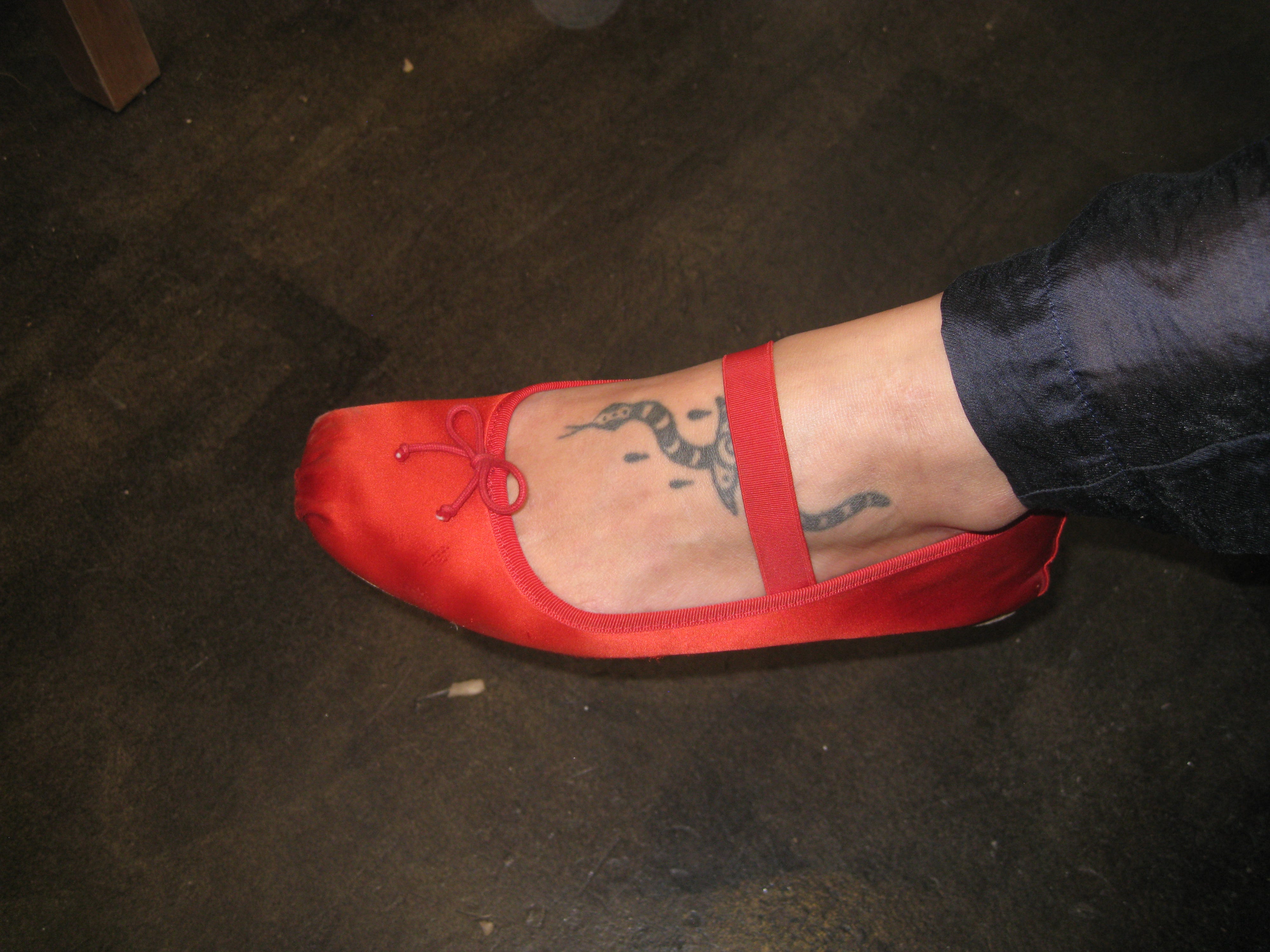
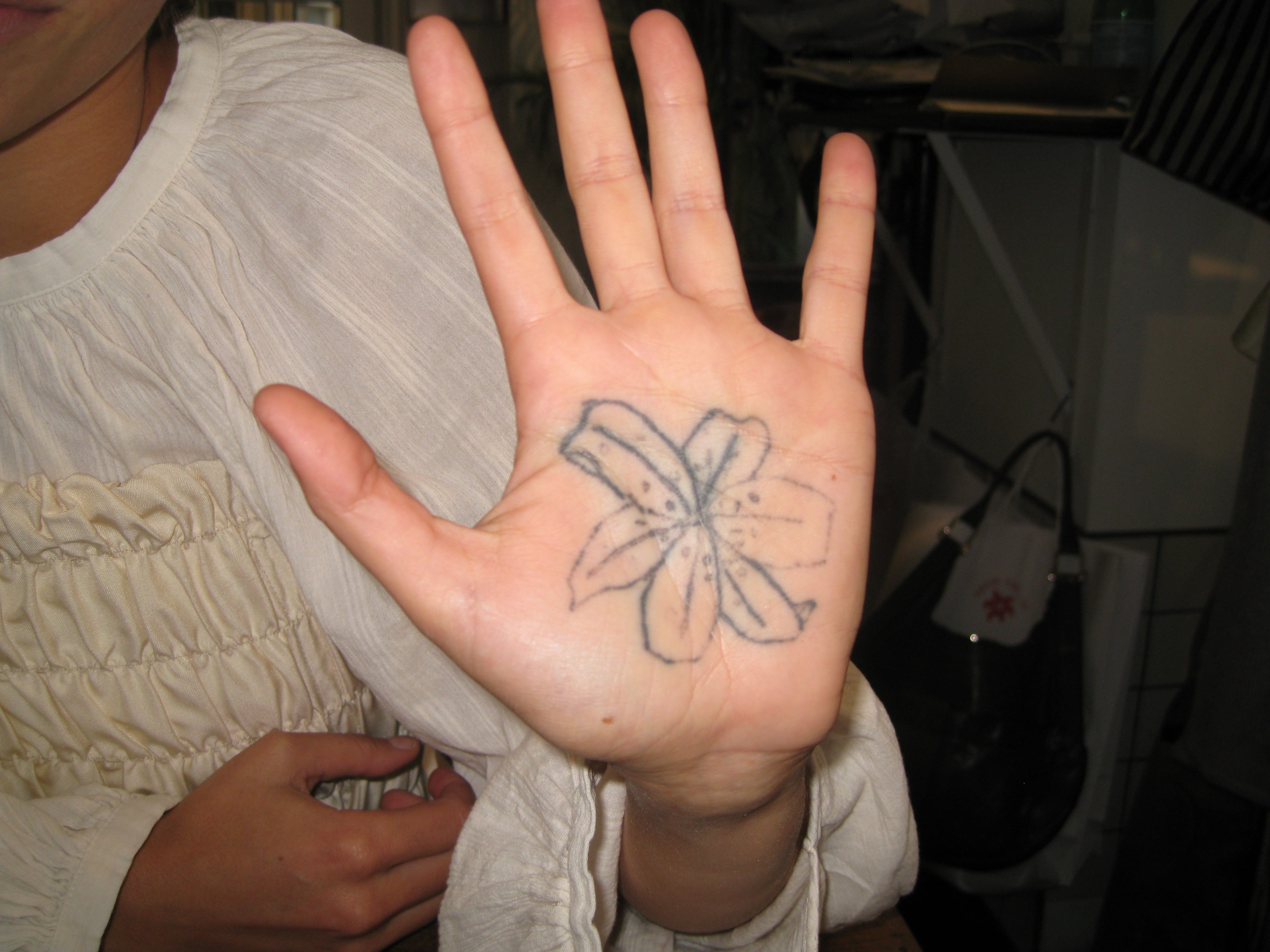
Y: Is that a tattoo?
C: Yes. It’s a lily, obviously.
Although it turned out quite badly.
Y: When did you get it?
C: About three years ago. A guy who worked at my favourite vintage shop in Milan did it at his house.
Y: Did it hurt?
C: So much. Which is why, as you can see, I never really finished it.
Y: I love silly little tattoos, though. The slightly strange ones that don’t necessarily have some grand meaning.
C: Me too.
Making Something Out of What Already Exists
As the conversation comes to an end, Carlotta shows me some of the fabrics she has brought to Paris. We move between colours, textures, and pieces that don’t yet exist.
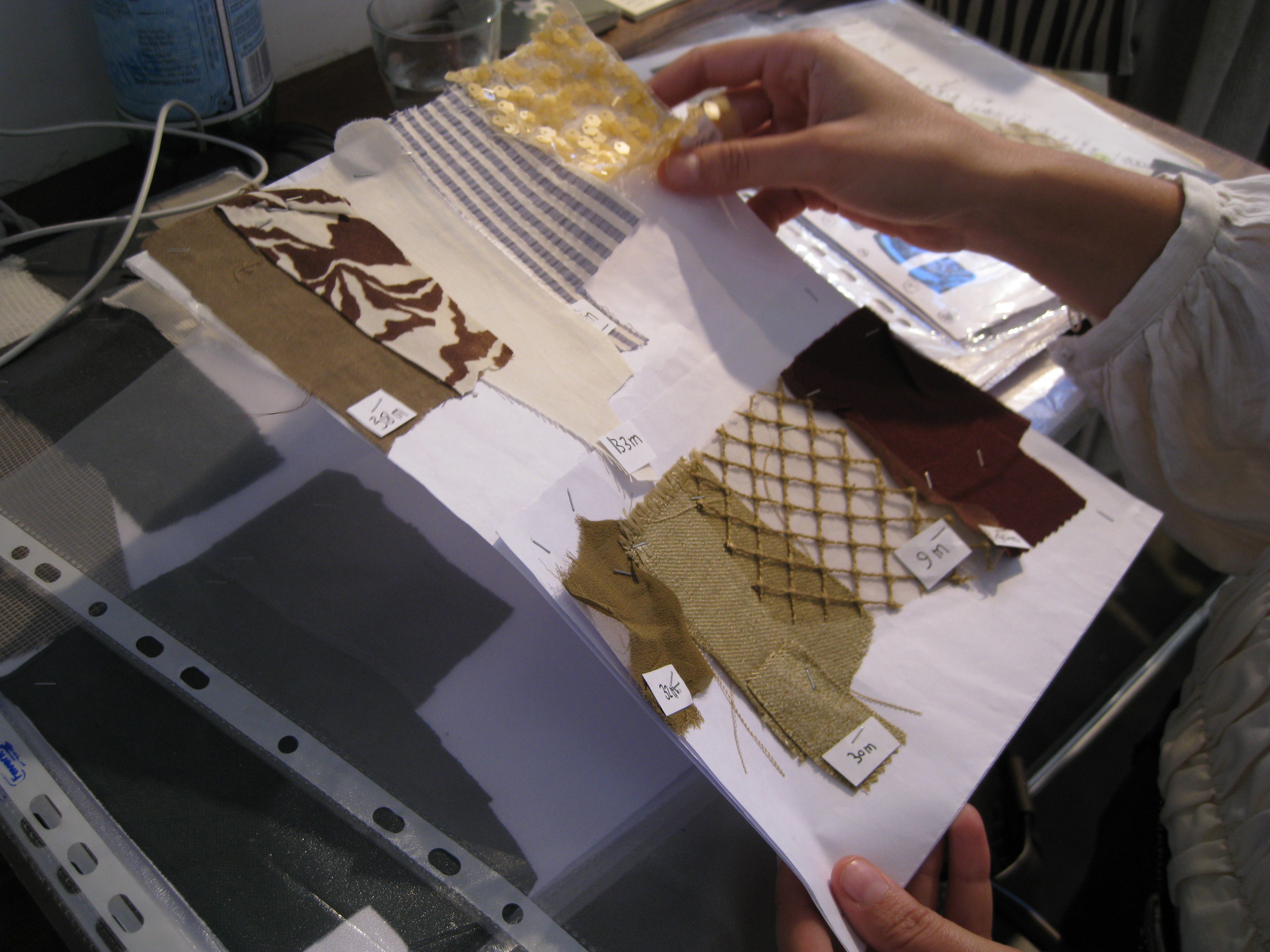
Y: When you put fabrics together, is it completely spontaneous or do you already know what you want to make?
C: It’s spontaneous, but also considered.
When I put certain fabrics together, I can already imagine what they could become.
Maybe I see a soft pair of trousers, a top with another layer over it, or two materials that could work together.
Sometimes I love combining colours that aren’t supposed to match, like different reds and pinks.
I organize my fabrics by colour, but also by weight and texture.
I usually take one day almost every month to visit suppliers, often around Como or Veneto, to look for deadstock.
With deadstock, you never know what you’ll find.
Something might be there today and gone tomorrow because somebody else has bought it.
So sometimes I’ll buy fabric without knowing exactly when I’ll use it. Maybe it’ll become part of the next collection, maybe the one after that.
I currently produce around four hundred pieces per season, so I have to be conscious of how much material I’m buying.
But I love that no two searches are ever the same.
Y: So every collection begins with something you discover rather than something you’ve already imagined.
C: Exactly.
And sometimes you find something so beautiful that you immediately know you have to make something out of it.
That’s one of my favourite parts of the job.