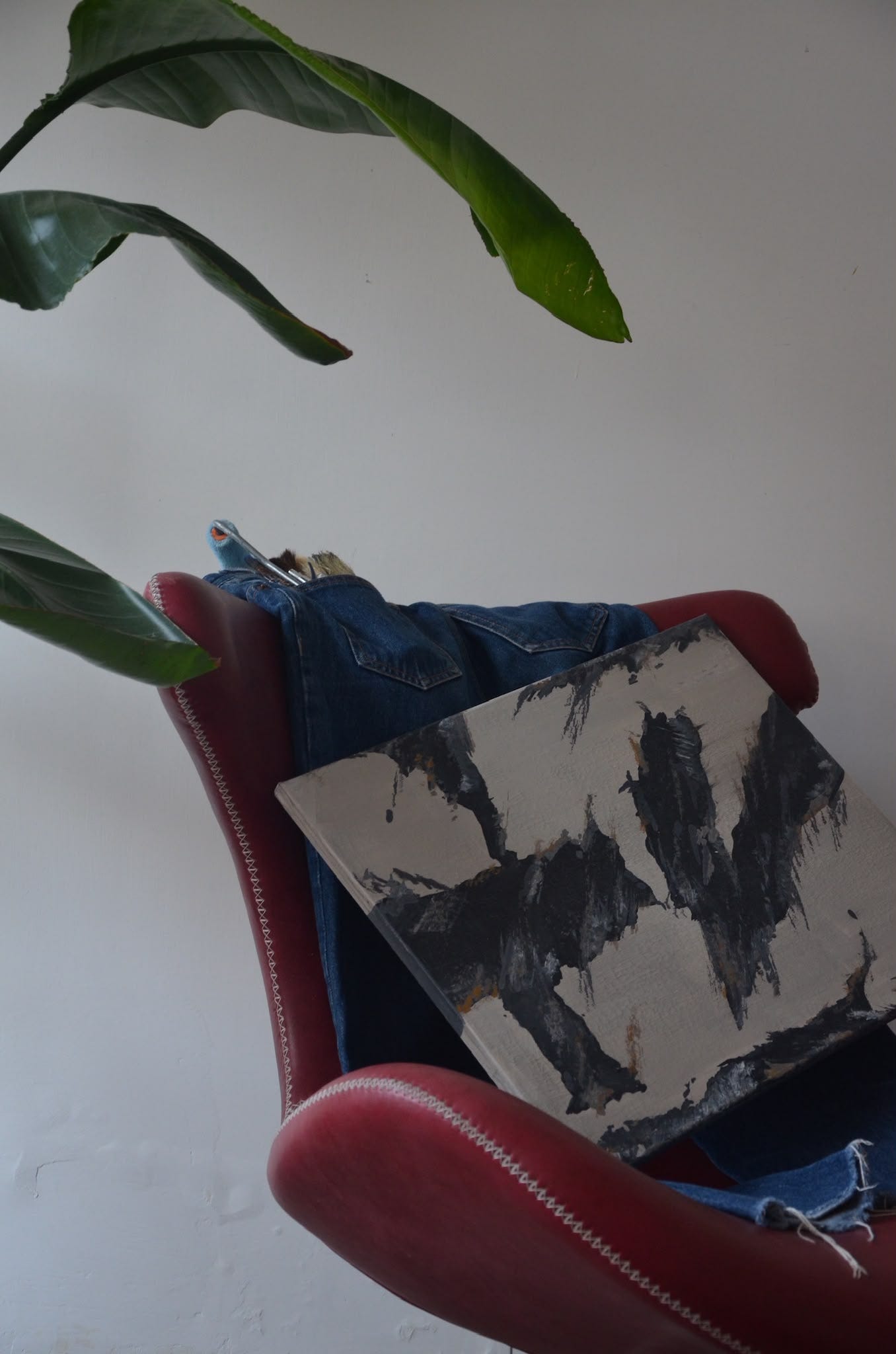

I met Fabiola at university in Rome, where we were both studying international relations. Back then, our lives were organized around lectures, deadlines, exams, and the vague understanding that eventually we would become adults with proper jobs and proper routines. Which, as it turns out, is a slightly ridiculous expectation to place on people in their early twenties.
A few years later, I’m in Paris and Fabiola is in Rome. We both have jobs, but we also have other things we care about, things that exist outside our working hours and feel, in some ways, more personal.
For Fabiola, that thing is painting.
She started almost accidentally, alone in Rome one August, when everyone had left the city and there was very little to do. Three years later, her paintings have begun leaving her bedroom, appearing at events and workshops, and becoming part of a life she’s slowly constructing for herself.
We talk about the strange business of being young and employed, why she refuses to wait until Friday to enjoy herself, the difference between being alone and feeling lonely, and what happens when you start showing strangers something you’ve made.
There are conversations about psychology books, the importance of notebooks, a particular shade of electric blue, and whether Rome is actually as small as it sometimes feels.
Somewhere along the way, Paloma interrupts us, we get distracted by herbal tea, and Fabiola tells me something I find particularly interesting: she’s not the same person she was a few months ago.
Neither am I, probably.
Anyway, this is Fabiola.
A Life Outside Office Hours
Y: How have you been? What’s happening in your life at the moment?
F: I’m trying to change jobs, actually.
I don’t necessarily want to spend my entire life sitting in front of a computer from nine to six.
I think it’s important to find ways of stepping outside the ordinary.
Y: That’s actually a perfect place to start. How do you step outside the ordinary in your own life?
F: Because otherwise every day starts feeling exactly like the previous one, which I think is one of the biggest problems with working nine to six.
I have my routines, obviously. I also have two days when I can work from home, so I try to use those to organize things I don’t normally have time to do.
But I’ve realized I need to dedicate time to things I genuinely enjoy.
For me, painting is one of the ways I maintain that part of myself.
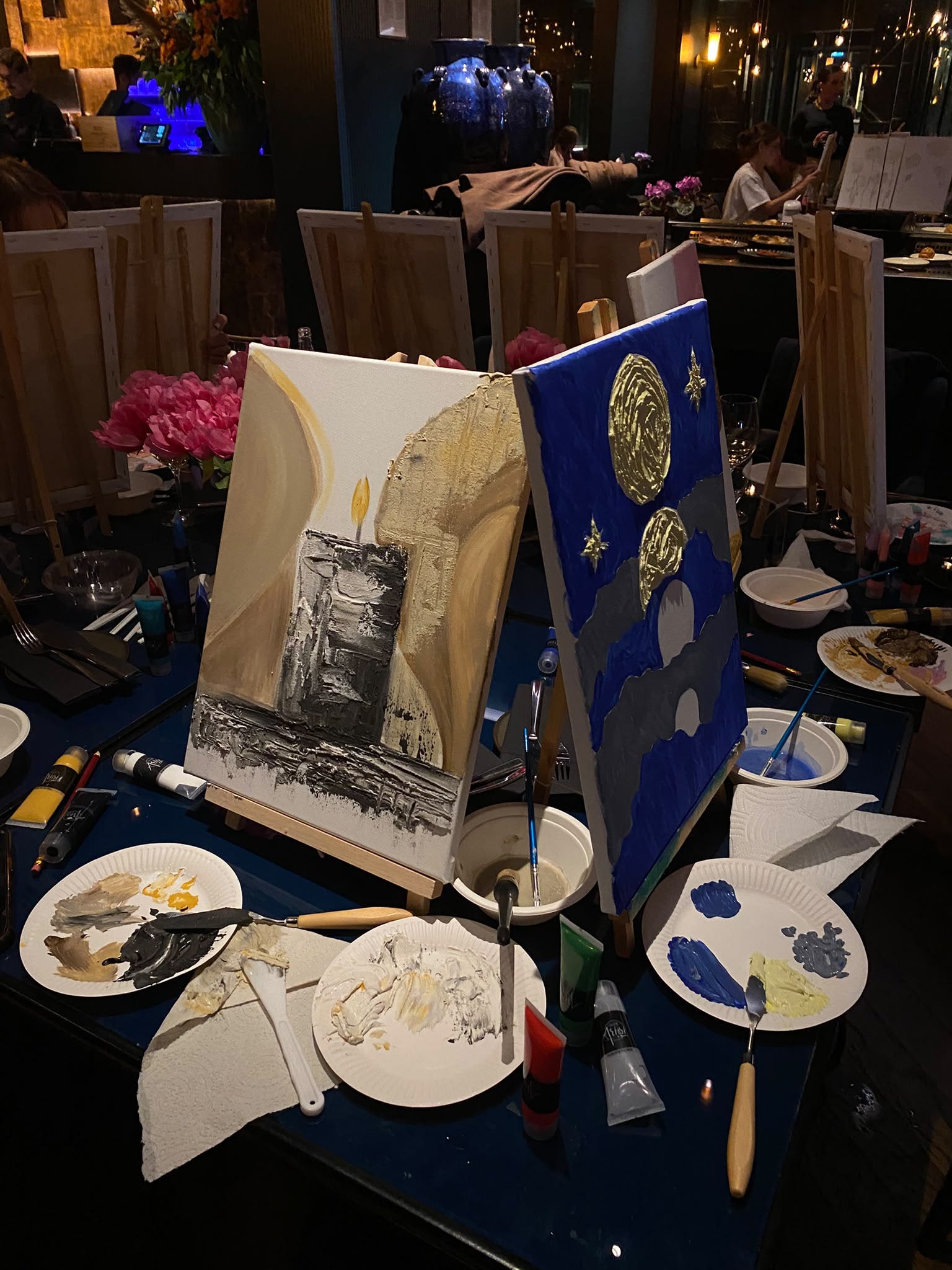
I paint, I participate in events where I can exhibit my work, and recently I’ve started organizing painting workshops.
Those things make me feel alive. They remind me that there are other directions I want my life to take.
I don’t think we’re only one thing.
I don’t want to do just one thing. I want to do a thousand different things.
The difficulty is finding the time.
Don’t Wait Until Friday to Be Alive
Y: I’m obsessed with routines, partly because I’m terrible at maintaining them. I feel like I’m constantly trying to do as much as possible, but I don’t necessarily have a healthy morning routine or even a consistent bedtime. You always struck me as someone quite organized, but not rigid. Is that actually true?
F: It’s something I’ve been learning over the years.
When I was doing my bachelor’s degree, I was a completely different person.
Actually, I’m not even the same person I was a few months ago. We’re always changing.
I’m much more flexible now, but I still need certain habits.
I know, for example, that I want to go to the gym three or four times a week. Sometimes I don’t feel like going, but I go anyway because I know I’ll feel better afterwards.
And I’ve made a rule for myself: at least once during the working week, I have to do something I genuinely enjoy.
It could be going out, seeing someone, doing something different.
I refuse to spend my entire week waiting for the weekend.
Because then Friday arrives, you’re exhausted, and sometimes you don’t even feel like doing anything.
I think we need to build things we enjoy into our ordinary days.
Someone said something to me recently that really made me think: maybe you don’t like your reality because you haven’t built a routine you actually like.
And I thought, that’s true.
You might not be able to choose your job at this particular moment, but you can choose what you do afterwards.
You have the gym, groceries, all the practical things you need to do, but you also have to make space for something that’s yours.
Y: I completely agree with the idea of doing things even when you don’t feel like them. Sometimes I really don’t want to go running, but I know that if I go for even half an hour, I’ll come home feeling better. The same thing happens with writing. I don’t necessarily want to open my computer, but once I’ve spent an hour working on an article, I’m so happy I did.
F: Exactly.
Eventually, those things become habits.
It’s really just that initial moment when you think, I don’t want to do this.
But then you ask yourself, what would I actually be doing otherwise?
Sometimes you’d just be lying on the sofa scrolling through your phone.
Although I also think moments when you’re tired and want to do absolutely nothing are sacred.
The Sacred Art of Being Alone
Y: Do you make time for yourself every day?
F: Yes. I really need it.
I’m a sociable person, but after a while I have to recharge my social batteries. I like having half an hour or an hour when I’m completely alone, not speaking to anyone. Especially after a full day at work or a day spent around lots of people.
I love getting home and thinking, finally, I’m alone. I can relax and do my own things. I think time you spend with yourself is sacred. I need it, and I’ve become very comfortable being alone.
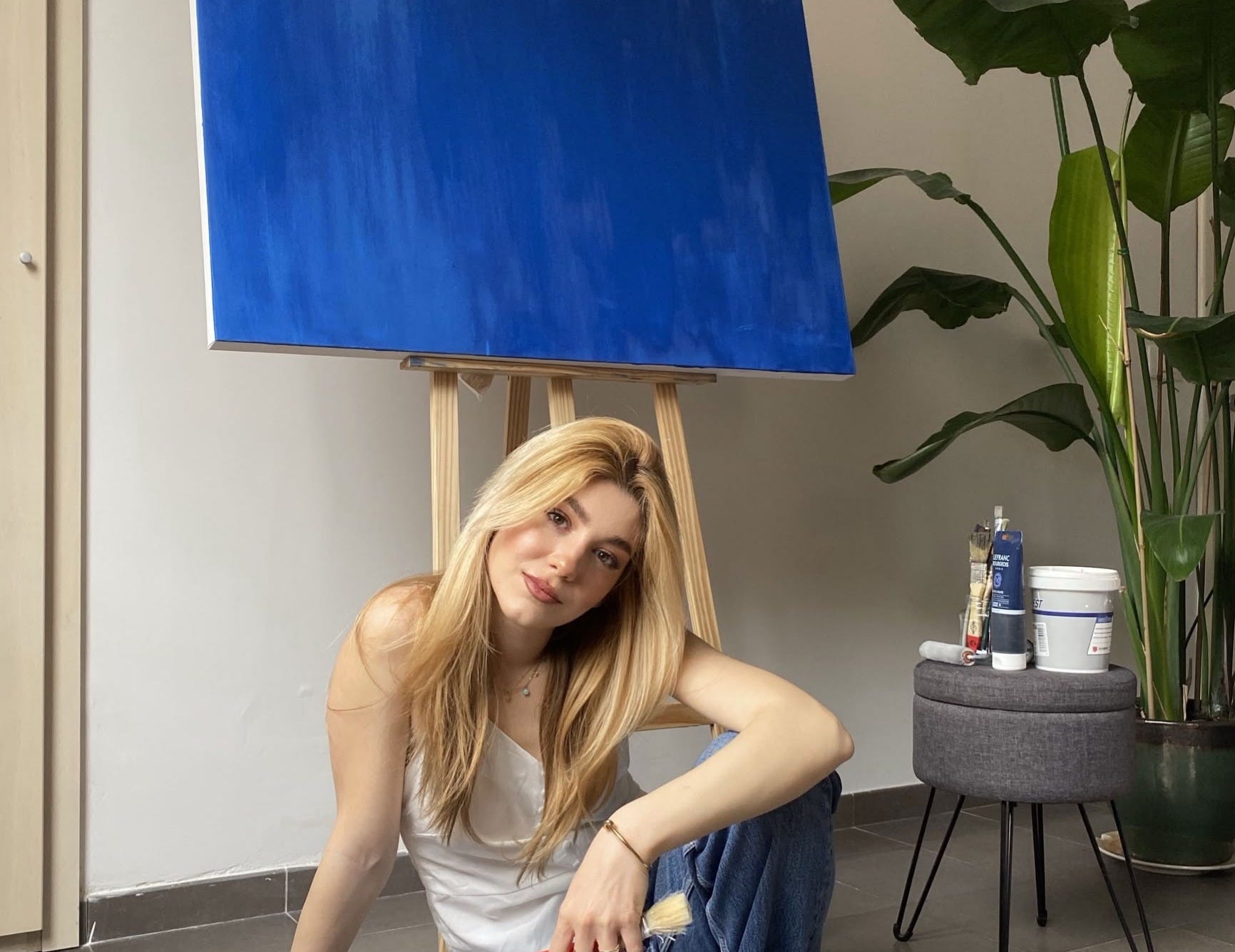
Y: Is painting part of that time?
F: Almost always. I usually paint alone, in my own little world.
And the funny thing is that I only started painting about three years ago.
It was August in Rome, and there was absolutely nothing to do. You know what Rome is like in August. Everyone disappears.
I’d seen this artist on Instagram, Nuria Maria, whose paintings I really liked. I remember thinking I’d love to have something like that in my house.
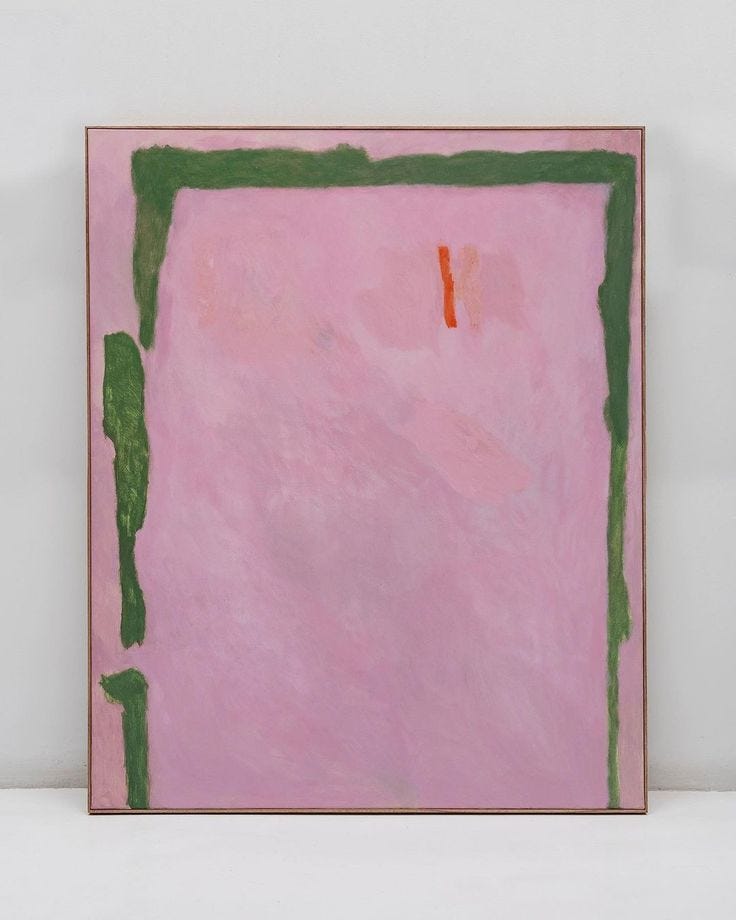
So I decided to try making something myself.
I bought some paints and started experimenting, taking inspiration from her work.
That’s how it began.
August in Rome, With Nothing to Do
Y: Do you remember what those first painting sessions were like?
F: I was just experimenting. Even now, I don’t really have a fixed amount of time it takes me to complete a painting.
Sometimes it takes three days. Sometimes two weeks.
There have been paintings I’ve left untouched for months because I wasn’t inspired or didn’t like where they were going.
Then I’ll come back to them much later and finish them.
I don’t force myself to paint if I’m not feeling it.
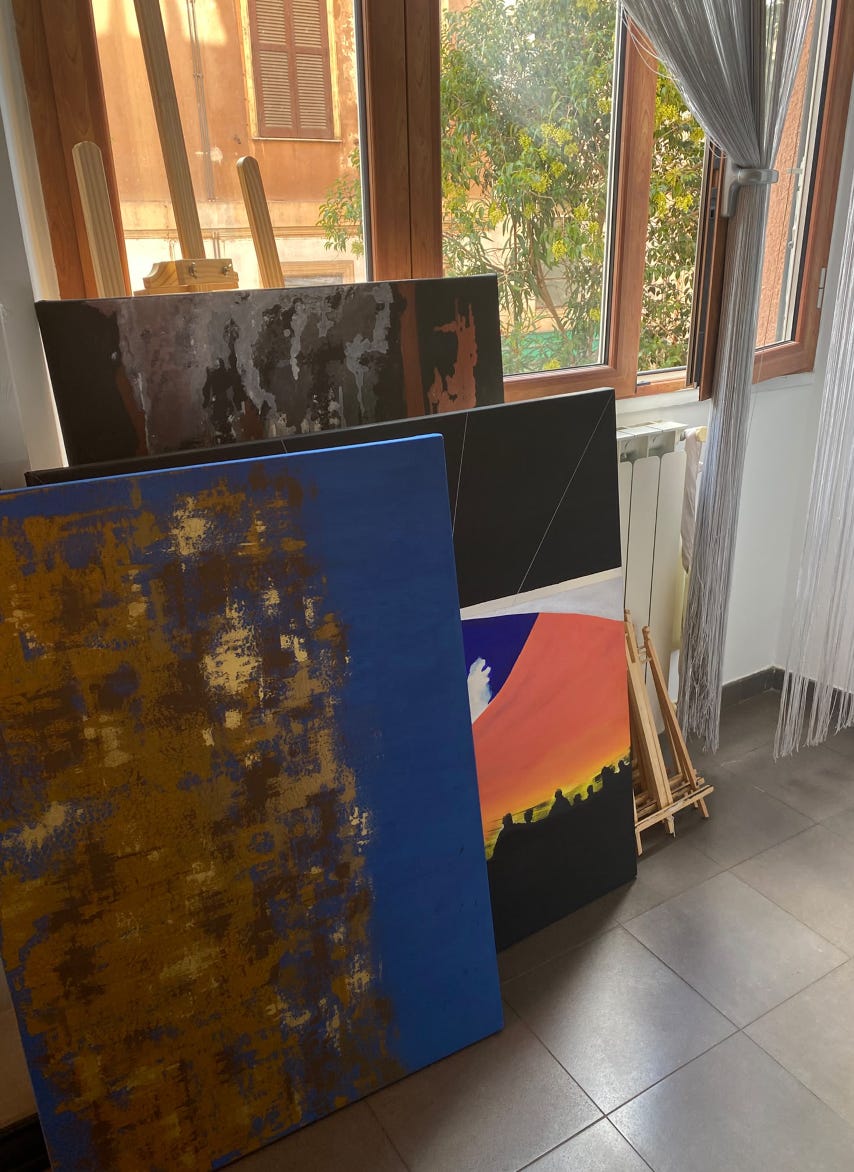
Y: Have you ever started a painting, looked at it, and thought, absolutely not, this isn’t working?
F: Definitely.
There are paintings I’ve worked on and reworked so many times that eventually I start making them worse.
I add something, decide I don’t like it, try something else, and suddenly the whole thing becomes a mess.
That’s usually when I know I need to leave it alone.
I put it aside and come back when I’m feeling calmer or have a fresher perspective.
Y: So you don’t really throw paintings away?
F: No.
I might paint over something or change it completely, but I don’t usually throw away the canvas.
I work quite a lot with layers, so it’s not as though I’m following one precise shape or image that has to remain exactly as I imagined it.
I can change things as I go.
Sometimes I begin with an idea and then the painting becomes something completely different.
There are definitely paintings I’ve made that don’t represent me anymore, though.
Some of them I’d happily sell tomorrow.
Who Decides When Something Is Good?
Y: When did you realize that painting could become something you wanted to share with other people, or potentially even sell?
F: Quite recently, actually. Most of my paintings were just at home. I’d sold a few, but for a long time I wasn’t really showing them publicly.
Some friends had seen them and kept encouraging me to share my work. And I’ve always been open to criticism.
Art is subjective. If someone looks at one of my paintings and doesn’t like it, that’s completely fine.
There are paintings of mine that I don’t like anymore either.
Y: But does someone else’s opinion influence how you feel about something you’ve made? Because I’m definitely someone who can be influenced by other people’s reactions.
F: Not particularly. If someone tells me they like a painting, I’m happy. If they don’t like it, that’s fine too. What matters is whether I’m happy with it.
Until I feel that a painting is finished and I like what I’ve made, I’ll keep working on it. But if someone tells me I should add gold somewhere, and I don’t want to add gold, I’m not going to do it.
Unless it’s a commission and someone has specifically requested something, of course. Otherwise, I have to like it myself.
Y: What was it like the first time you actually posted your work?
F: Terrifying! A friend of mine sometimes helps me make videos and content, and when I posted one for the first time, I felt so exposed.
I kept thinking, what are people going to think? Then I realized that if I wanted to share my work, I had to start somewhere.
So I made a separate Instagram account for my paintings. It took me a really long time to do that because I was embarrassed to put myself out there. But eventually I thought, who cares?
It’s my page. I can put whatever I want on it. And now I genuinely enjoy sharing things. It’s become something I want to do rather than something I’m afraid of doing.
Y: I think that’s such an important part of creating anything. I always try not to focus too much on likes or the immediate response when I publish something. Otherwise you start thinking about who might dislike it before you’ve even finished making it.
F: Exactly.
And I think sharing your work becomes a personal exercise in itself.
You learn to become less afraid of being judged.
Electric Blue Is a State of Mind
Y: Do you think your emotional state changes the way you paint? Can you see different periods of your life reflected in your work?
F: Absolutely. I have to feel inspired to paint. Otherwise I don’t really know where to begin. There are months when I don’t paint anything, and other periods when I feel very productive.
I usually start because I’m feeling positive, or because I’ve seen something that inspires me. And I think my moods definitely influence the colours I choose.
In the beginning, I used much darker colours. Now I’m much more attracted to bright colours.
My favourite colour is electric blue. It’s funny because a few years ago I probably wouldn’t even have worn it, but now it gives me so much energy.
I’ve started making paintings with electric blue, and I don’t think I’d choose to make the same very dark, black paintings I was making before. I’m looking for colour now.
Different shades, combinations, things that give a space character and energy.
Y: Do you wear electric blue too, or does it only appear in your paintings?
F: I wear it too, especially in summer. I even like it in jewellery.
And I think about how my paintings will interact with interiors. I’m very interested in design, so I like creating pieces that can work within different spaces.
A painting can completely change the atmosphere of a room.
Y: Are there particular images or places in your visual archive that have stayed with you recently? Things you think might eventually appear in a painting?
F: Brazil, definitely.
I went in August, and the landscapes were incredible. Everything was so immense that I felt absolutely tiny. The colours were extraordinary. I know there are other parts of the world with similar landscapes, but being there and seeing everything in person was something else.
I brought those colours back with me, in a way. And there’s also a very particular shade of bright green I remember seeing in Canada. I’d never seen anything quite like it before.
Sometimes a colour stays in your head long after you’ve left a place.
A City That Feels Smaller Than It Is
Y: Let’s talk about Rome. I’ve been away for so long that I sometimes feel like I’ve lost touch with its younger cultural scene. You’re beginning to exhibit your paintings and organize workshops there. What’s it like being a young creative in Rome right now?
F: I think Rome is a strange city in that respect. It’s enormous, very touristy, and full of history, but in certain ways it can feel quite closed and not particularly international.
Which is paradoxical. I’ve always felt that I’m a better version of myself when I’m abroad.
Not because I’m idealizing other places, but because I genuinely feel more comfortable in certain environments. I feel less judged.
In Rome, there are social circles where everybody seems to know everybody else. You know someone, who knows someone else, and somehow you end up encountering the same people all the time. I don’t particularly like that.
I love my friends, but I also love meeting new people and having conversations with people who come from completely different worlds.
And sometimes, in Rome, you really have to make an effort to step outside your usual circles.
Of course, the city offers an enormous amount. There are so many initiatives, exhibitions and things happening.
You just have to look for them.
Y: How did you start becoming involved in painting events?
F: Very spontaneously. I knew someone who organized events, and they proposed doing something together.
Another event came about through a conversation where someone needed something and I suggested an idea. Then with the workshops, I actually approached the organization myself.
I wanted to try something different, something I’d never done before.
It was a way of challenging myself. I did my first workshop recently, and I loved it.
Getting Out of the Bedroom
Y: What was the most satisfying part of that first workshop?
F: Sharing the experience with other people. Because I started painting alone in my bedroom. For a long time, it was just something I did for myself. But at a certain point I felt the need to share it.
Social media is one way of doing that, even though I’m still not particularly consistent about posting. I want to move beyond the screen. I want to meet people, speak to them, exchange ideas.
And I think workshops are a lovely way to do that.
Not everybody who comes paints regularly. Some people have completely different jobs and have never tried painting before.
Which is actually similar to my situation, because painting isn’t my full-time profession either.
I’d love for it to become a second job eventually.
But for now, I really enjoy that exchange.
Y: How does the workshop actually work? Are you teaching people how to paint?
F: Yes, although it’s quite informal.
People sign up, and I provide the materials.
I also bring visual references, prints, colour combinations and images they can use as inspiration.
I thought that would be helpful, particularly for people who have never painted before.
Some might want to work from a landscape or a particular image.
Others might have an idea of their own, and we can develop it together.
I show them how to begin and help them throughout the session.
At the end, they take their paintings home.
And honestly, I think I enjoy it just as much as they do.
Y: That’s such a beautiful evolution, from painting alone in August to helping other people make something of their own.
F: Yes, exactly.
And it’s still very new.
I’m discovering this side of painting at the same time as the people who come to the workshops.
The Rome Address Book
Y: Let’s move on to your address book. First of all, an overrated neighbourhood in Rome?
F: Parioli.
Y: What about an underrated neighbourhood?
F: San Giovanni.
I live around that area, and I think it’s incredibly liveable. It’s central, well connected, and has everything you need. I also really like the area around Manzoni. People sometimes dismiss it, but there are some beautiful little streets and corners that people don’t necessarily know about. And San Saba is lovely too.
It’s quiet, residential, and very pleasant.
Y: A café where you enjoy spending time alone?
F: Casa Dante, in Piazza Dante. I love that place.
It’s not necessarily because they serve something extraordinary. I just love being there.
It makes me feel calm.
I practically wrote my master’s thesis there.
I also like Saba, Cucina e Caffè, in San Saba.
When I lived abroad, I had this habit of going out for breakfast alone. It became a little sacred moment for me.
I don’t do that as much in Rome, but on Sunday mornings I really enjoy going out for coffee and trying different places.
Y: A restaurant that reminds you of growing up?
F: La Caraffa, near my house.
It’s a neighbourhood trattoria that’s been there for more than twenty years.
I’ve been eating there practically my whole life.
I order from them all the time, sometimes on Sundays, sometimes during the week.
They make wonderful Roman food.
I love their pizza and their vegetables with breadcrumbs.
It’s one of those places you probably wouldn’t discover unless you happened to walk down that street.
For me, it’s a constant.
Y: If you could recommend just one museum or gallery in Rome, which would it be?
F: I really love the Galleria Nazionale d’Arte Moderna.
Partly because of the collection, but also because of the architecture.
I love museums where you can experience both permanent works and temporary exhibitions.
And I always pay attention to the building itself, not just what’s exhibited inside.
That’s something I connect to my interest in design.
I also really like MACRO, particularly as a space.
Y: I feel like MACRO is an experience regardless of what happens to be on display.
F: Exactly.
And Rome is full of smaller galleries and unexpected places to discover.
I particularly like Monti.
Sometimes you go into a bar and discover that there’s a space downstairs exhibiting artwork.
Or the owner has a relationship with artists or galleries and displays different pieces.
I love stumbling across things like that.
There are also galleries around Via dei Banchi Vecchi and so many other places I haven’t discovered yet.
I keep lists of places I want to visit.
I think there’s still a lot of Rome I don’t know.
Y: Where do you buy books in Rome?
F: There’s a Feltrinelli near my house, which is probably the most obvious answer.
But I also love looking through books at vintage markets.
You never know what you’ll find.
At the moment, I’m particularly interested in psychology books.
Reading has become a kind of personal reflection for me.
The Things We Write Down
Y: What are you reading at the moment?
F: Haha; I’m quite embarrassed but it’s a psychology book called Dentro di me c’è un posto bellissimo.
It explores different phases of a person’s life and the experiences we go through.
What I like is that it also contains exercises.
You don’t just read about something. You have to stop and think about yourself.
There are things I know I’d like to change about the way I approach certain situations, and I think books like that can help me look at them from another perspective.
Y: I love books that make you participate. Especially when they give you little scenarios or exercises that force you to recognize your own patterns.
F: Exactly.
And I always have my notebook with me.
Y: So you’re a notebook person, rather than someone who writes everything directly in the book?
F: I underline things in books, but when it comes to my own thoughts, I write them in a notebook.
My psychologist has also encouraged me to write things down.
Sometimes writing feels almost like composing a letter to someone you’re not actually going to send it to.
You can put your thoughts somewhere without necessarily having to share them.
And I think that’s much better than constantly being on your phone.
Y: I’ve been trying to reduce the amount of time I spend on my phone, but also the amount of background noise I have in my life. I listen to music while walking, cooking, cleaning, doing practically everything. Sometimes I wonder whether I ever let myself exist in silence.
F: I understand that.
I actually love making my evenings feel calm.
Candles, soft lighting, being at home.
Sometimes I work better that way, especially in the evening.
Y: And tea. I think tea deserves to be included in this conversation.
F: Absolutely. I make herbal tea almost every night.
I love red-fruit tea.
Y: Me too! It tastes like warm juice, in the best possible way.
F: And cinnamon. I love cinnamon in everything.
You Are Allowed to Change Your Mind
Y: I wanted to come back to something we have in common. We both studied international relations, but neither of our careers has followed a completely straight line. Does your current job have much to do with what you studied?
F: Not really.
My long-term goal has always been to work in international organizations, particularly in defence and security.
That hasn’t changed.
But when I finished studying, I was in a hurry to start working.
I don’t really know why.
Sometimes I think that if I’d waited another month, I might have ended up somewhere completely different.
But I wanted to get experience.
I’d already done internships in the public sector, so I thought it would be interesting to try the private sector.
And it has been useful, even if I’ve realized that this particular role isn’t for me.
At least now I know something I don’t want to do.
Y: Do you feel pressure to find the perfect job immediately?
F: Not anymore.
I want to change jobs, but I don’t want to change simply for the sake of changing.
I want to move towards something that genuinely interests me.
I’m continuing to apply for opportunities in international organizations and in defence and security, but I’m also open to discovering other areas.
Communication is something I’ve become interested in that I hadn’t really considered before.
And communication exists in practically every organization, including the international institutions where I’d eventually like to work.
I think at our age it’s normal to experiment.
You might spend two or three years somewhere, learn something, and then move on.
You don’t necessarily need to stay in the same place for six years just because you started there.
And working in a field different from the one you studied doesn’t mean you’ve abandoned your ambitions.
Sometimes you’re simply taking a different route towards them.
Somewhere Else, Another Version of Yourself
Y: You’ve said you often feel more like yourself abroad. Do you think you might leave Rome again?
F: Definitely.
I don’t dislike Rome, but I wouldn’t mind living somewhere else.
I think the environment you’re in makes an enormous difference.
Your job, the people around you, the places you visit.
I’m convinced that if I worked in a more international or institutional environment in Rome, I’d probably experience a completely different side of the city.
It’s not that Rome doesn’t have interesting people or interesting things happening.
Sometimes you just need to change your surroundings to see them.
And I love the feeling of meeting people from different countries, with completely different experiences.
I feel freer in those environments.
Maybe some of that is in my head, but it’s how I feel.
And anyway, if I leave, I can always come back.
Y: Exactly. We’re young. We’re allowed to try different places, different jobs, different versions of ourselves.
F: I think that’s really important.
You don’t have to decide where you’re going to be forever.
Y: Do you think you’re selective when it comes to the people you let into your life?
F: Very.
Sometimes I think I’m too selective.
I look around and wonder how other people seem to meet someone they like so easily.
For me, that doesn’t happen very often.
I need to feel something particular about a person.
Y: But isn’t that a good thing? Being selective?
F: I think it depends on what feels right for you.
I’ve learned to trust my instincts.
Usually, when I meet someone, I get a feeling quite quickly about whether we’ll get along, whether I’ll feel comfortable with them, or whether there’s something that interests me.
I try not to judge people superficially.
Someone might be incredibly attractive or seem interesting on paper, but that doesn’t necessarily mean I’ll feel a connection.
And the opposite can happen too.
I trust that feeling a lot.
It’s something I’ve learned to pay attention to.
A Few Things Without Thinking Too Much
By this point, we’ve been talking for almost an hour. Paloma has begun demanding attention, apparently unimpressed by the amount of time I’ve spent on the phone.
Y: Right. Rapid fire. You don’t have to think too much. A colour you associate with childhood?
F: Light blue.
Y: Your favourite hour of the day? An actual hour.
F: It depends on the season.
In winter, around four or five in the afternoon. I like the light.
In summer, around six-thirty.
Y: A painting you wish you owned?
F: Something by Andy Warhol.
Y: A smell that reminds you of Rome?
F: That’s difficult. I need to think about that one.
Y: Something you collect without really noticing?
F: Paintbrushes.
I have so many.
And cameras, apparently, because I have two identical ones.
Also candles. I love candles.
Y: If you were leaving Rome tomorrow, where would you spend your final evening?
F: I’d go to Monti.
And then I’d probably take a ride around the city on a scooter.
I love being on a scooter in Rome, especially in summer.
I don’t actually drive one. I love being the passenger.
There’s something about moving through Rome that way that feels like freedom.
Y: Do you use Vinted?
F: Constantly.
Y: What would I find on your Vinted feed right now?
F: Oversized men’s jackets, belts, suede pieces, brown boots.
I love boots.
They’re probably my favourite kind of shoes.
Y: Any advice for finding good things on Vinted?
F: You have to train the algorithm. I open Vinted two or three times a day, almost like WhatsApp. I scroll, save things, search for particular keywords. At first, you open it and think there’s absolutely nothing interesting.
But once the algorithm starts understanding what you like, it gets so much better. You begin finding pieces you’d never see in a shop. I send things to my friends all the time, and they’re always asking me how I manage to find them.
Y: So essentially, replace your Instagram doomscrolling with Vinted doomscrolling.
F: Exactly.
Y: A city you could move to tomorrow?
F: Paris.
I love Paris.
I’m not always completely convinced by Parisians themselves, but I think it’s a city that reflects so many parts of my personality.
I’d love to live there.
One Word for Everything
Y: One word for Fabiola.
F: Complex.
Y: I love that. One word for me?
F: Versatile.
Y: And your favourite word, in any language?
F: Empathy.
Because I think empathy is connected to the ability to put yourself in someone else’s position.
You have to understand how other people experience the world.
In a way, you become a little bit of all the people you’re trying to understand.