


file 12
episode 1
I met Armand during our university years, when we were studying similar things in different cities: him at Sciences Po in Paris, me in Rome.
My earliest memory of him is seeing him on a bus, completely absorbed in a huge Gabriel García Márquez book - I can’t remember if it was Love in The Time of Cholera or One Hundred Years of Solitude. I thought, “impressive”, partly because I get nauseous if I try to read in a moving vehicle, but mostly because for some reason something about Arrmand reading on the bus felt impossibly French.
Years later, when I came back to Paris in 2023, I stayed at his apartment. Through him and that house, I discovered a part of Paris I barely knew: the 11th arrondissement. Until then, my Paris had mostly been the Paris I knew through my family, around the 1st and the 6th. Armand’s Paris was different. Faster, younger, more lived-in. I remember being completely useless in the métro and him essentially telling me that if I wanted to live in Paris, I had to learn to move.
He grew up in Brittany but, somehow, I have always associated him with a certain kind of Parisian man. He reads philosophy, cares about clothes, thinks entrepreneurially, knows his city, and seems permanently interested in ideas and in what can be built from them. We took a class together on Business and Political Economy of the Middle East and remember thinking how smart he was.
So I wanted to return to the apartment where I rediscovered Paris and ask him about all of it.
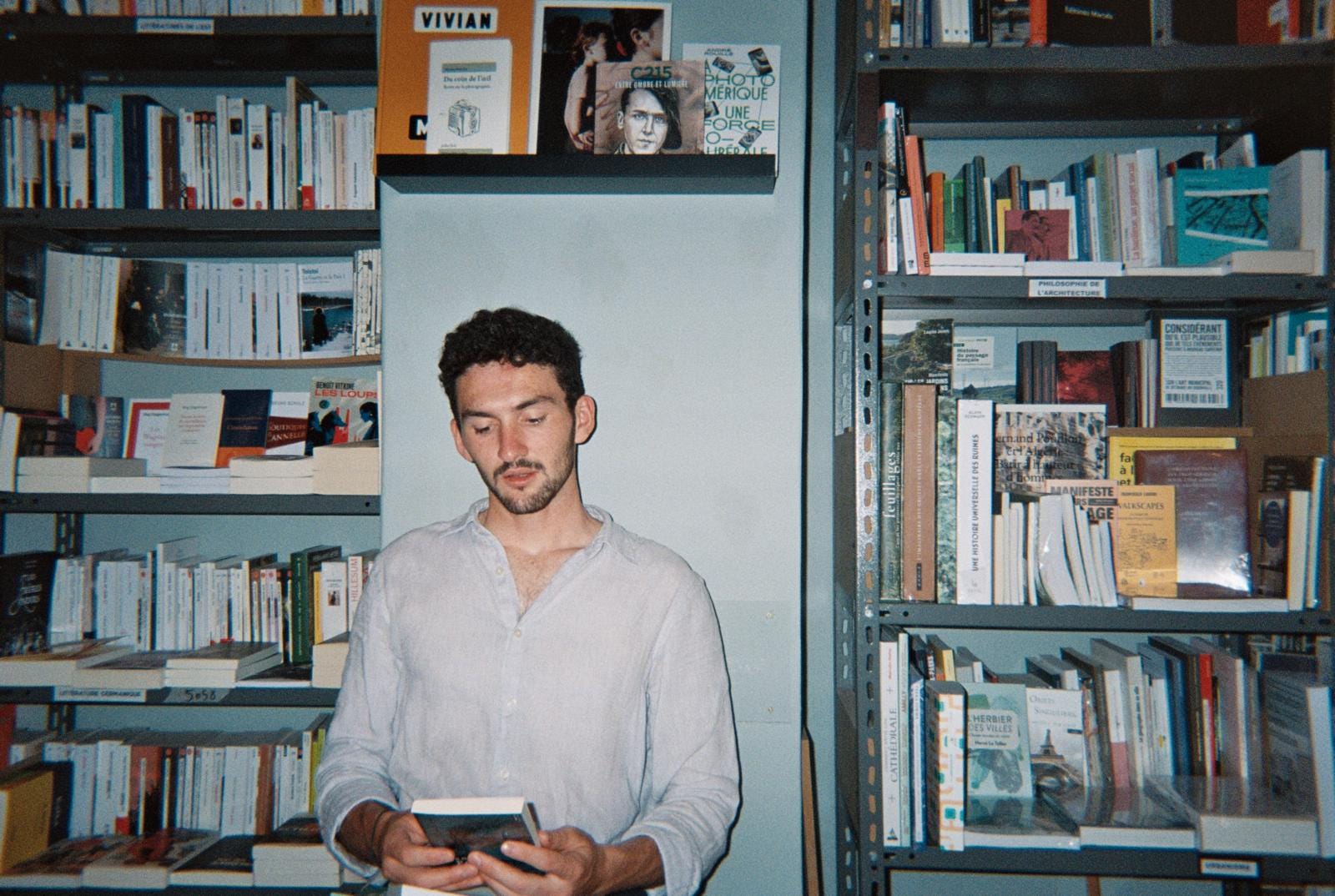
We meet at Les Acolytes, in the 10th arrondissement. It’s where I had my first breakfast alone in Paris, back in October 2023, when I came for a little trip and was staying at Armand’s place.
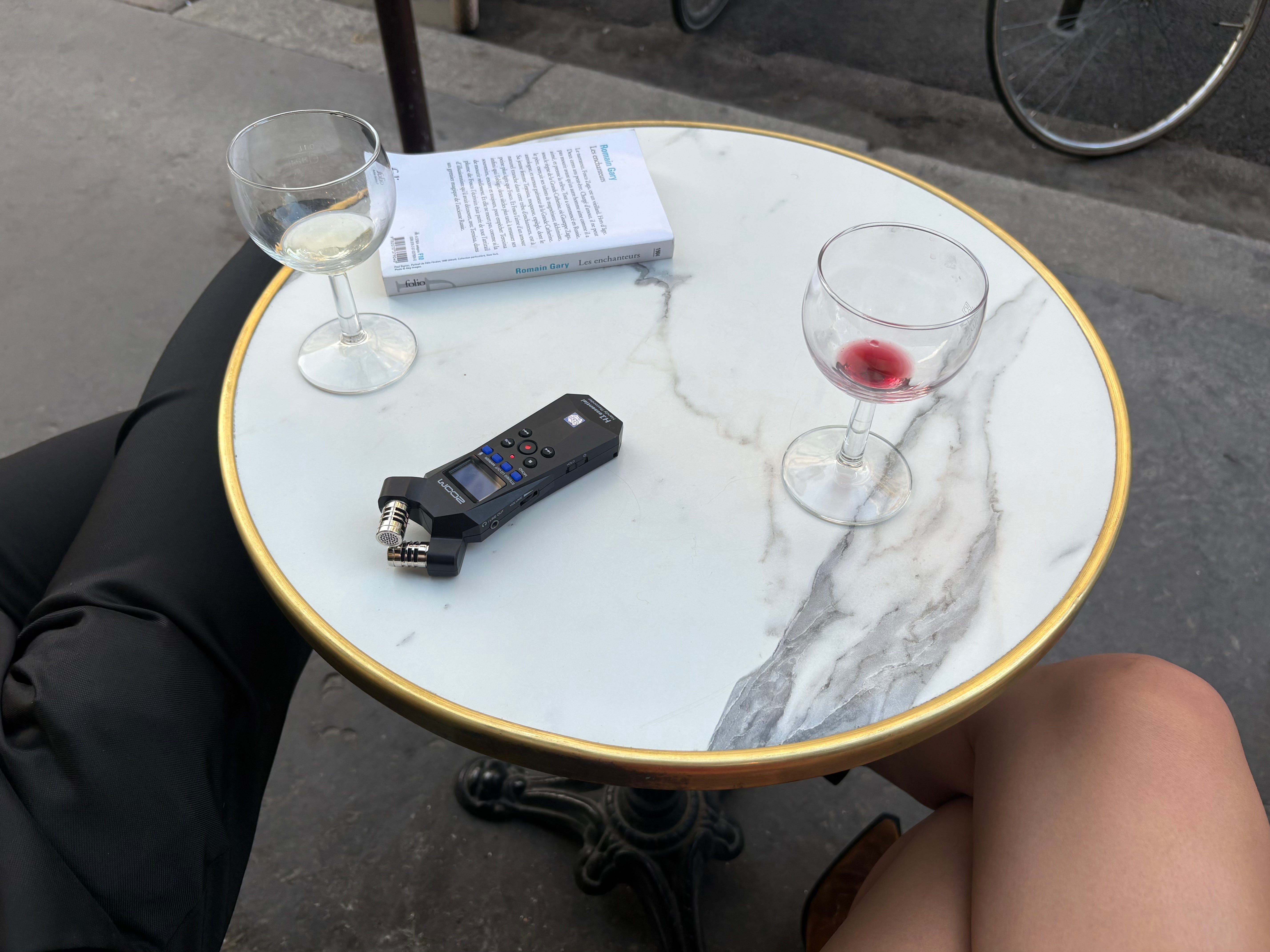
Y: Okay, we’re recording.
A: I love it. Allez. Sorry - I still haven’t sent you the photos, but I needed to be at Margaux’s. There’s nothing at my place that I actually like.
Y: It’s okay, take your time.
A: But I already have loads of ideas. Tell me first, where did all of this come from? Honestly, it’s the most brilliant thing I’ve heard about in a long time.
I order a glass of red. He orders “a mineral, slightly dry white wine.”
Y: Where did it come from? I don’t know. It’s not going to become my job, at least not now. I’ve spoken to people who told me it was brilliant, but also told me not to quit my job just yet. I give a different answer to this question every single time.
A: And that’s very good.
I explain to him that I’ve always loved reading interviews.
Y: I spent so much time listening to interviews from this programme on France Culture, or maybe France Inter, I can never remember, called Remède à la mélancolie, by Eva Bester. It was basically about remedies for melancholy. People would talk about their routines, their cultural references, the things that helped them. Unfortunately, she doesn’t do it anymore.
He writes the name down. Meanwhile, I pull out my printed copy of the questions I prepared for him.
Y: Do you remember when we first met? We were on a bus with other people from university, and you were sitting behind me. I remember you were reading this book, this huge tome, and I was there thinking, fuck, if I try to read on this bus I’m going to throw up. And he was just sitting there like this, completely fine. Then I looked at the book and realised it was in French, and I thought, okay, well, that explains it.
A: It does explain it.
Paris just isn’t that
Y: It felt impossibly French to me. And it’s funny that we ended up seeing each other again in Paris a few years later. You know, I always say that I’ve known Paris in two different periods, almost two different seasons. First when I used to come here with my parents as a child, and then when I came back as an adult. And that second version really started in October 2023, when I was living in Brussels and staying at your apartment. I remember arriving in the 11th like that, and I didn’t know the neighbourhood at all. For me, Paris was Saint-Germain and the Marais…
A: Yes, I understand. Which is nice, but Paris isn’t just that.
Y: I wanted to ask you about that. You’re not originally from Paris, so what was your first encounter with the city like?
A: I used to come quite often with my parents, but we came to visit museums. The big museums. And it was an absolute nightmare for me. I remember this one day when we had just finished visiting the Louvre, and we stopped for coffee somewhere. I can’t remember exactly where, maybe Café Marly, anyway. My mother asked me if I’d enjoyed it and I said, “Mum, this is the worst day of my life.” I must have been six or seven, something like that. So no, I don’t think I liked Paris that much. But later I rediscovered it through my brother Gabin, who brought me here. Honestly, I think I adapt quite easily and quite quickly to whatever environment I find myself in, so moving here didn’t change that much for me.
Y: You came here for your studies…
A: Yes, straight to Sciences Po. And straight into that apartment! We bought it when I started school, and it became a flatshare with my brothers, which was pretty extraordinary. Especially because they’re very important to me. Gabin is the brother I’m going to start my company with, so he’s obviously a very important person in my life.
Y: To me, you feel very Parisian. Did you read my question on the métro?
A: Yes! I read your reflection about the métro and I found it extremely interesting, because I’d never really asked myself, okay, am I Parisian or not? And then I realised that actually, I have asked myself that question before, but more as a social question than a geographical one. First of all, I don’t really know what “being Parisian” means. I was with a subcontractor recently who, geographically speaking, is much more Parisian than I am. He grew up in Aubervilliers, but at the same time, he doesn’t necessarily have all the codes people usually associate with what they mean when they say “Parisian.” I’ve even eaten at Chinese restaurants in Belleville that are way more Parisian than I am!! More broadly, I think the question is whether I fit the codes of the image we have of a Parisian. Thinking about it, the image we have of a Parisian is basically that of a bourgeois person who perhaps dresses a little better than everyone else. Overall, I think I identify more with a kind of highly educated bourgeoisie that lives at a pretty fast pace. It’s more that than being Parisian.
Do you live fast?
Y: When you say “lives at a fast pace,” you mean in everyday life?
A: Yes, in terms of rhythm.
Y: That’s what I was thinking about. When we took the métro, you told me, “Yasmina, you have to move,” and you grabbed me by my coat! You were like, you have to move, you have to weave through people, you have to go, you have to push. If you don’t push, they’ll push you. But now, I have to admit, I’m completely there. I bike, I run, I have lunch while rushing somewhere, quick pee break for Paloma, and then straight back to the office!
A: There you go.
Y: Do you live fast?
A: My life is basically a permanent race against the clock. Right now, technically, I’m unemployed. I’m supposed to have empty days, but in reality I’m already putting pressure on myself over what I’m building, my entrepreneurial project, before it’s even started, and I fill up my days. My life is about fitting as much work as possible into the hours I have, and whenever I have free time, I spend it socialising. And I squeeze in as much sport as I can.
Y: Off topic, but I think you need to give me an AI course. Although I’m completely avoiding it here for Palomita Office.
A: I think it’s extraordinary for structuring things. For structuring your thoughts first, and then developing them, it’s incredibly powerful.
Y: Can you tell me again about your entrepreneurial project?
A: I have two projects. I’m going to launch a plumbing business, and secondly I’m looking to acquire a company in the construction industry. Basically, all the guys who come to your house to fix something technical… that kind of thing. I’m doing it with my brother.
La Bretagne
Y: How many brothers do you have again?
A: I have four brothers. We all grew up together in Brittany. And actually, I find that fascinating too, because I grew up in a very close-knit family, but we lived in this absolutely hideous peri-urban suburb, basically the worst thing urban planning can produce. The questions you asked me about Brittany made me realise that my relationship with Brittany was mostly connected to holidays. We had a family house in Cancale, on the northern coast, which is absolutely extraordinary, and that’s where I spent my holidays. That’s really Brittany in my experience. Sure, there were galettes, okay, but in reality, where I actually grew up was just a peri-urban suburb. It could have been outside Montpellier and, apart from the difference between heat and rain, it would basically have been exactly the same. And that’s also where there’s a connection, or maybe a tension, with Paris. When I talk about my Parisian friends, it’s more about a kind of social experience than a geographical one. For me, “Parisians” are really people from a very privileged bourgeois background, whether they’re from London, Brussels, Beirut, wherever. Whereas what I associate with being Breton is having grown up in a middle-class environment where there was a bit of money.
Y: Let’s get less serious. A food, a smell, a place for Brittany?
A: Food, obviously, galettes. The smell of butter cooking. And if I think of Brittany as a place, I think more about Breton villages. I was there last week, in northern Brittany, and I love it. There are towns that are absolutely magical. Incredibly beautiful.
Y: I’ve never been to Brittany.
A: That’s okay, you have other qualities.
Armand’s Paris address book
Y: A café?
A: Off the top of my head, I’d say the café at the Maison de Victor Hugo, in the 4th. And Café Détours, which just opened in the 11th!
Y: For drinks?
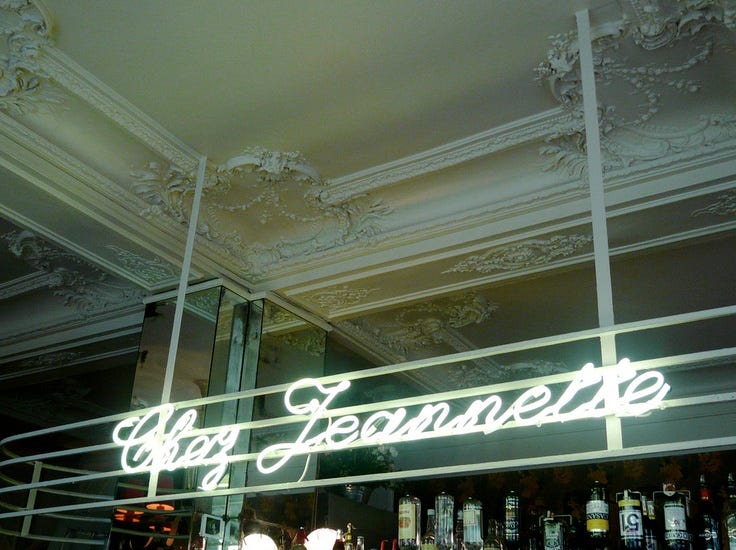
A: Chez Jeannette.
Y: A bookshop?
A: Every few months, maybe every three or four, I go into a bookshop and buy ten books completely at random. I’d say the bookshop just downstairs from me, because I can go there so easily. Otherwise, I really like Librairie Gallimard on Boulevard Raspail, and L’Écume des Pages in the 6th!
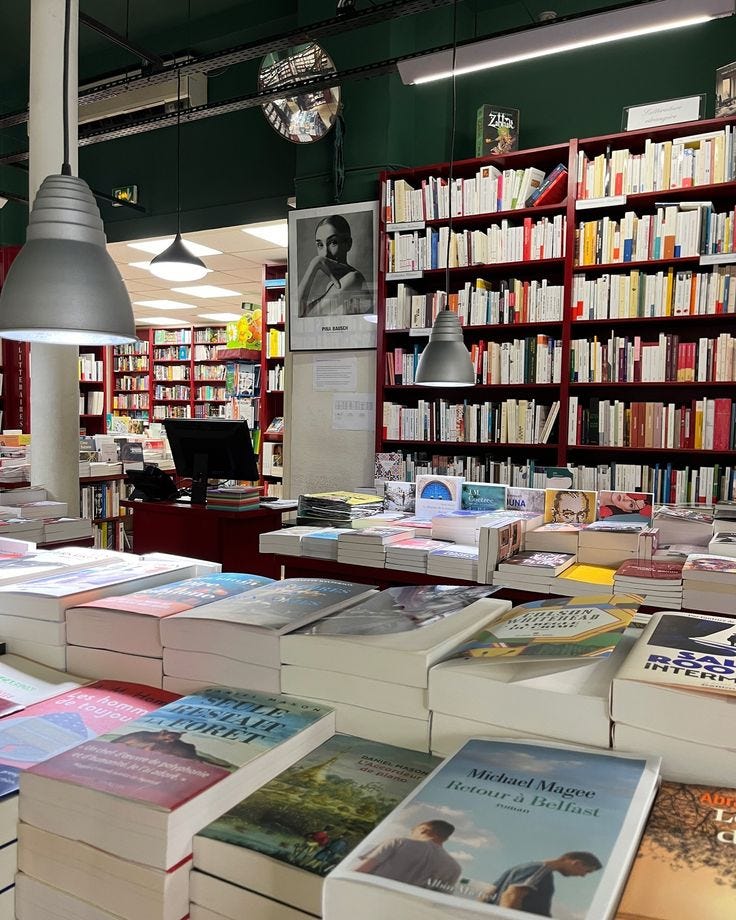
Y: I do that too. I feel like I come back to life when I get home with ten books. Another thing I did recently was join the American Library in Paris, in the 7th, and you can get a membership. It’s near my place.
A: Amazing. But I love buying books. I just can’t… The idea of having to return them would feel like giving away a piece of my heart.
Y: I have loads of books and I need to get rid of some of them, so I’ve started giving them to my Palomita Office guests. For you, I thought of this one. I hope you haven’t read it!
I pull out a very well-worn copy of Les Enchanteurs by Romain Gary.
A: I love it!
Y: This book reminds me a little of Gabriel García Márquez.
A: I love Romain Gary. He’s a man who lived a thousand lives, he’s extraordinary.
Y: Last question about Paris… your ideal Sunday in Paris?
A: Waking up after a night out, ideally make love first thing in the morning, except my girlfriend is currently in Cambodia, then complaining because she’s moving around, then actually getting ourselves moving, going out for lunch, and definitely not brunch. I’m not anti-brunch, but it kind of annoys me. What’s the point? Ideally, I’d have lunch in the sun at Chez Jeannette. That would be amazing. Then in the afternoon I’d do a bit of sport, either go for a run or play tennis with a friend in the 18th. With Loup-Neal. Then finish with a long, lingering coffee on a terrace, feeling just a little low on energy, the kind of tiredness you’ve earned. Or go to mass with my friend.
Y: What have your Sundays looked like lately?
A: I’m away every weekend and I’m not working, so I have absolutely no idea what day it is. For all I know, today could be Sunday! As it happens, last Sunday I was out running in Brittany with a friend. It rained like crazy and it was brilliant.
If youl like reading this you can tell Armand he’s so cool by texting him on Instagram it’s armand.beaudor !
Episode 2 coming soooooooon :)