


Ansh and I first got to know each other through our families, usually over long dinners where our parents would talk and we would eventually find ourselves discussing politics, history, books, or whatever else had caught our attention. I remember leaving those conversations with an almost ridiculous number of references to look up, authors to discover, and ideas to think about. He’s one of those people whose curiosity seems genuinely limitless, and whose enthusiasm for the things he loves is wonderfully contagious.
Now studying Philosophy, Politics and Economics at Warwick, Ansh has built an intellectual universe that extends far beyond the classroom. Between Bangkok and England, his bookshelves have become something of a personal archive, filled with everything from Russian literature and political theory to childhood favourites he refuses to part with. For our first proper conversation without our parents around, we moved between those books, the objects he holds on to, his family, music, identity, and the increasingly complicated relationship between technology and the way we think.
What I love most about Ansh is that he doesn’t seem interested in knowing things simply for the sake of knowing them. He wants to understand how they connect, how they shape the world, and how they might change the way we live. This conversation is, in many ways, a little journey through his mind, one book, one memory, and one unexpected tangent at a time.
Our Mothers, and Sisters, Have Opinions
Y: When I started Palomita Office I thought of you instantly. Because every time we would meet with our parents for dinner and talk, I remember I would go back home with so many references of stuff I had to catch up on, read, podcasts to listen to…
But we’re starting easy. You know how I work in fashion, so a fashion question is a must.
A: My mother and my sister are the ones who style me. I have no fashion sense, like, at all.
When I first moved to the UK, I was still wearing, like, skinny jeans and all of that. And my sister looked at me and she was like - okay, stop it. We’re going to buy you some new jeans right now.
Y: I remember we talked about this! And you started wearing a baggier stuff, right?
A: Yes. So now all of it is just super baggy. My sister was like “I’m not letting you walk into my boarding school unless you don’t have good fashion style”. So everything I’m wearing now is a byproduct of her, mostly, or my mom.
I never really cared too much about how I dressed, you know? It was always like whatever. I’ll wear a football shirt or something.
Y: How old is your sister?
A: Ava, she’s 14 now.
Y: 14 and already dictating your fashion style. I love that.
A: Oh, yeah.
Y: I’m always so curious about these fashion questions, because as someone who works in fashion, I feel like my fashion style is still not defined.
It’s actually very much related to the places where I work.
What happened to your old clothes? Do you still own them somehow, as a memory of the past, skinny jeans Ansh? Or do you secretly wear them?
A: I don’t wear them, that’s for sure.
I have a pair or two in my closet back there, actually. I mean, I just, like, I haven’t dealt with it.
A lot of the stuff, which I just do not touch anymore, it gets donated.
Y: I used to have a hard time letting go of my stuff. Lately I don’t. I won’t go into the details of why because I’ll bore you. I mean, I had this necklace that my first boyfriend ever gifted me when I was like 19 or something. I always thought, whatever happens, I’m never getting rid of it. Recently I have, not because it reminds me of him, but just because it’s not my style anymore you know? It’s like yellow, I hate yellow.
How would you describe your, like, object attachment style?
A Bookshelf Is a Biography
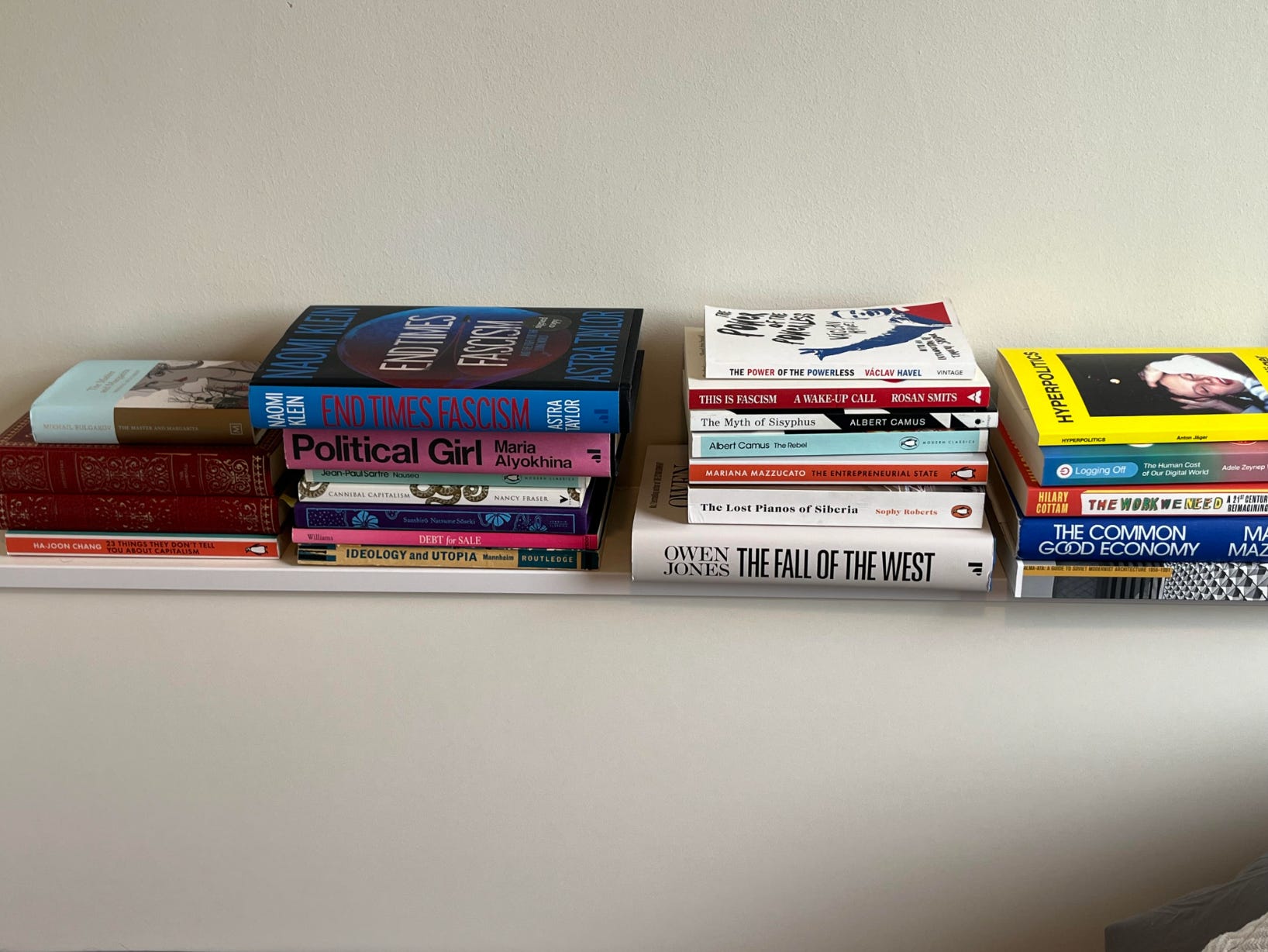
A: It’s very dependent on stuff, the objects we’re talking about. One non-negotiable thing I will not get rid of? Books.
Every book I’ve read, I’m not giving anything away. I don’t care if it’s been eight year or more.
My sister Ava once came into my room and pulled out some of my really old books. And they have mold on them. They’re changing color. The pages, the exterior. She said you have to get rid of these.
No, I don’t care. They can be black with mold. I’m not getting rid of my books.
Y: I think I’m the same. I’ve lived in so many places, I couldn’t bring all my books with me but they’re all safe in Rome. Right now here in Paris I’m the luckiest girl alive because I currently have my landlord’s incredible philosophy books collection. There’s everyone on that shelf you see in the background. Foucault, Derrida, which I love.
A: I forbid anyone from touching my shelf. I would hate it if someone rearranged it! I feel like I’m generally quite calm but that’s one thing that would get me quite mad.
Mostly because I love to arrange them them in a specific way: I’ll have politics, philosophy, economics, history, critical theory, all that stuff, on one side. Then my Thai novels and stuff, then all my series, all the Star Wars trilogy books, all the Lord of the Rings etc.
You’ll even find biographies of basketball players, all the Nat Geo magazines I have, or some of my parents’ really old books. There’s everything.
Y: Is Ava also a big reader?
A: I am trying to force her to be because I am so scared about the lack of critical literacy and critical thought that is coming from her generation because.
Ultimately, she’s the first generation that had an iPad since she was a kid. And, I guess, for us, the first half of our childhood, we didn’t have screens, right? I remember I was in year seven and I had a Blackberry, pretty much. I had Snake on the phone. That was it.
I buy her books like The Anxious Generation that show you the psychological impact of social media as you’re becoming an adolescent. She reads a lot of fiction and she’s starting her own collection which is nice. But, I feel that half of it is performative and half of it is, like, actually wanting to read. But I’ll take what I can get. As long as she’s reading.
Before I forget, I’ll show you my bookshelf here.
Pussy Riot, Russia, and Other Obsessions
Y: I love that.
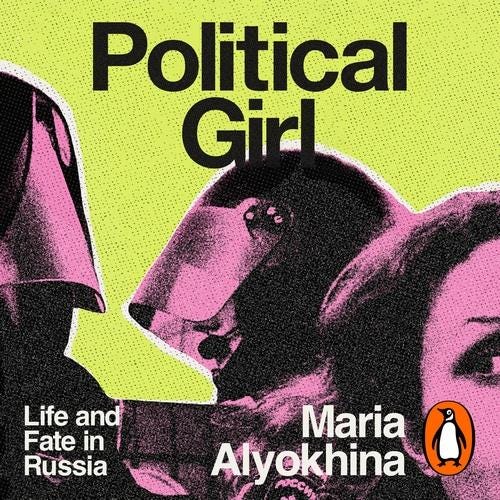
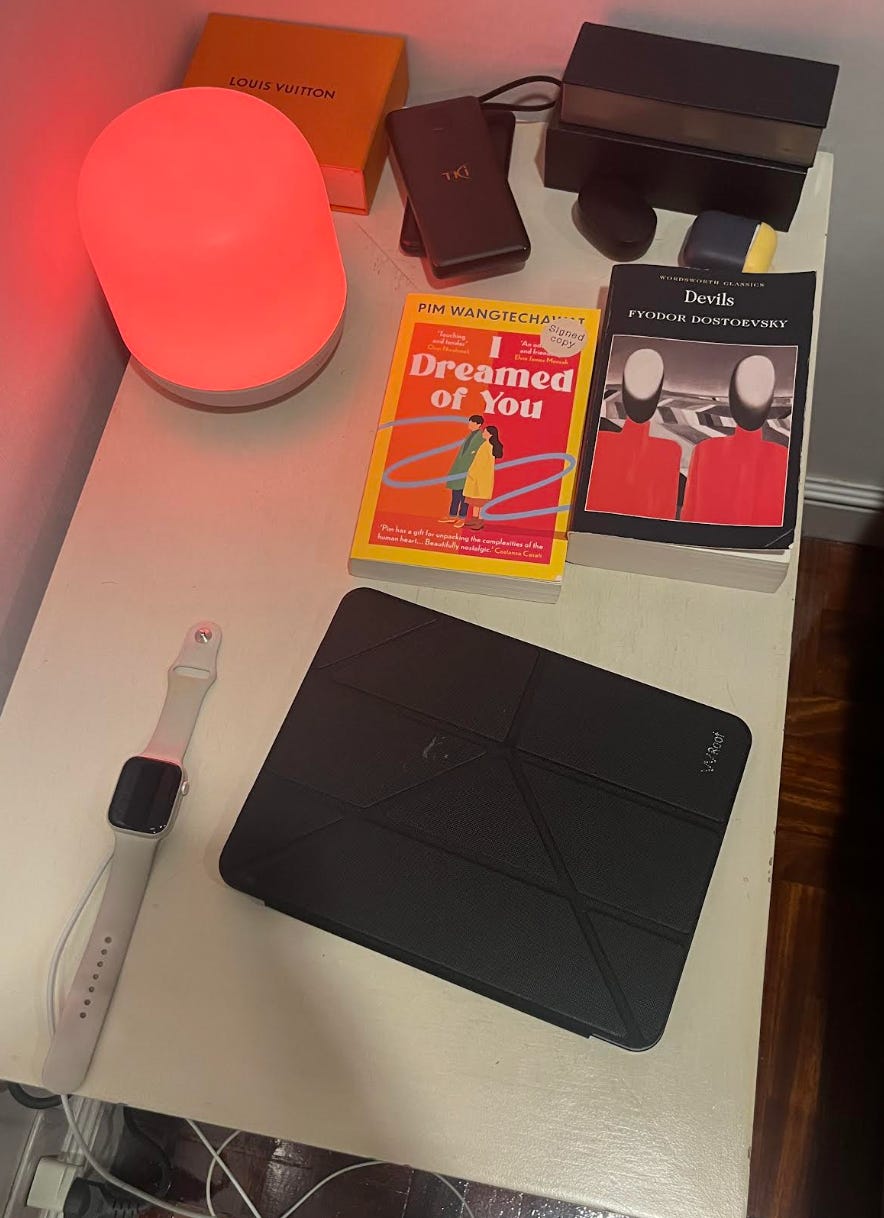
A: On top, I have the lot of stuff I’m reading. This is Political Girl, probably one of my favorite books I’ve read.
This is a book that I started in June during my exams. It’s written by Maria Alyokhina. She was part of the political group Pussy Riot in Russia.
Y: I got so obsessed with them at a certain point.
A: Yes, they actually came back into the news this morning, which is actually really interesting.
I love how the book is written, it’s very free-flowing, in a way, because she has very rebellious. I’d say open she’s a soul that I think cannot be contained, and she’s a very explosive, vibrant person.
She also mentions reading the Master and Margarita by Mikhail Bulgakov.
Y: It’s my favorite book ever.
A: Is it? I just read it as well. I’ll show you as well. I have this really cool version.
Y: I have a copy in every language.
A: Really?
Y: Yes.
I know you read so much. How do you choose what you read next? Do you go through obsessive spirals where you’re, like, I want to read about this topic?
The Accidental Bookshop Purchase
A: Okay, there’s a number of ways.
I generally never have a set idea in my head unless there’s a specific book I’m waiting for. Yesterday, I went to Waterstones again because there’s this new book by Naomi Klein and Astra Taylor, End Times Fascism. I knew this was coming out for ages. I love Naomi Klein. I’ve read Doppelganger. I’ve read The Shock Doctrine. And I follow a lot of her work. And I agree with a lot of her critiques of Western capitalism and Western hegemony and how the global South has been impoverished or necessarily kept in a way of economic subordination to the core countries.
In Doppelganger, she went through the rise of conspiracy culture during COVID - and how everything kind of felt like an alternative reality. All meaning was kind of being stripped of its original basis and everything sort of started to feel quite jarring.
Y: How often are you at Waterstones?
A: Not so often. I’m not there every day, because I actually live in the middle of nowhere, in a way. Like, where I’m staying is not in Coventry, it’s very much in a nature-based area.
Like, I went to buy this coffee, but there’s no coffee within a 30-minute walk of where I am. But that’s fast walking.
I went Thursday though and as I always do I went around the Critical Thinking, Politics, and Economics sections. And I found these two books, which I ended up buying.
On Fangirling Over Academics
He shows me his copy of Hyperpolitics by Anton Jäger.
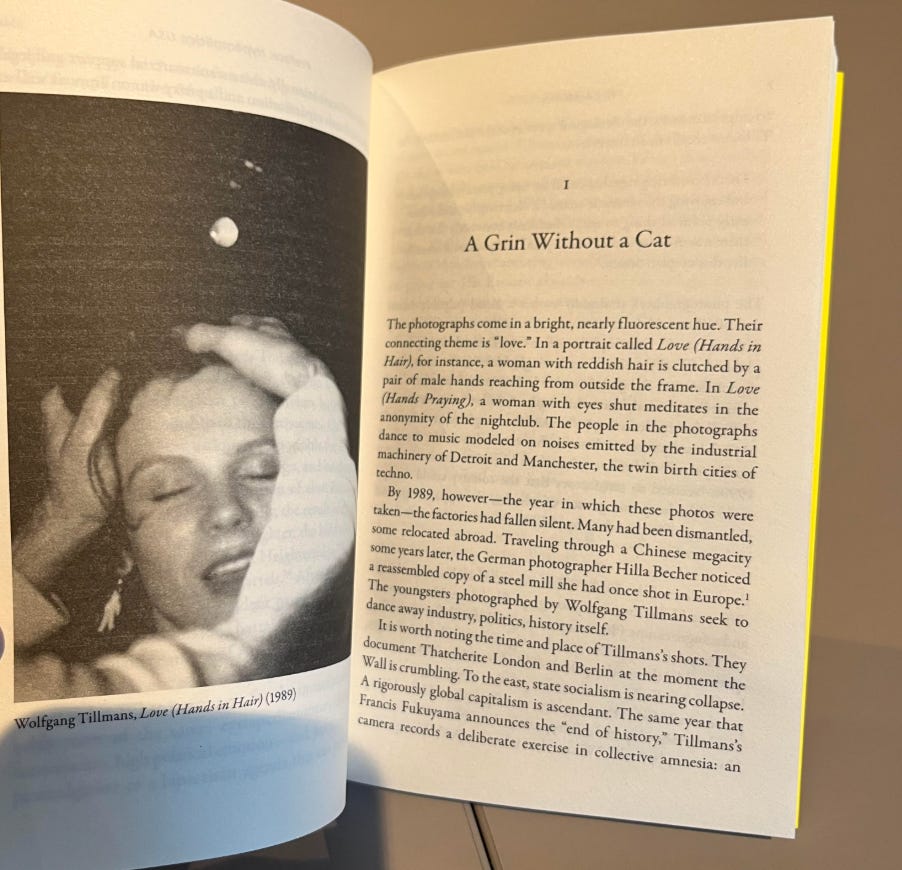
Y: I would buy this for the cover, because, wow.
A: Oh, yeah. The cover is really cool.
I also feel like mentioing one of the critical theorists online I love. Her name is Louisa Munch. She graduated from her Ph.D. at Warwick. She is one of the few people I fangirl over, because I don’t really get celebrity culture.
I understand why people feel so attached to certain celebrities. Because academics, who I’m very fond of, I end up fawning over to some degree.
So, I was eating at the student pub, it’s called the Dirty Duck, and she was right there. And I actually went up to her, and I was like, okay. I’m sorry if it’s a bit weird, but I started praising her, I was talking about how I really like her take on critical theory, and how a lot of the phenomenon we experience in our day-to-day lives is a direct consequence of the material realities we face, and the trends within neoliberalism.
And then she was like, you’re going to stop. You’re going to make me start crying, or whatever. And it was really nice. Anyways, I look up to her. So, on her Instagram, she had actually talked about Hyperpolitics.
The premise of the book is that politics is everywhere around us. Like, it’s never been easier to read about what’s happening since every time you scroll on social media, it’s always some form of polarized politics.
Y: You don’t read multiple books at the same time, or do you?
A: I generally try not to, because I feel that it’s very difficult to grasp the ideas or to stay focused on something.
Y: A lot of people that I know do, like, one fiction, one non-fiction.
One P, One P, One E
A: For me, I like the idea of just getting on with whatever you’re reading, being fully immersed and engrossed in it.
I do have some exceptions. Occasionally, I do try to change it up and read something that’s not strictly PPE, but, like, 99% of the books I read are to do with philosophy, politics, or economics somehow.
Y: When do you read in your day? Because, I mean, I imagine you read every day, right? Like, how’s your reading schedule?
A: I have a routine where I wake up in the morning, shower and everything, get ready. When I’m eating breakfast, I’m always reading the news, like, perpetually.
It generally takes me maybe, like, 45 minutes to an hour in the morning. I block this hour out for myself. If I have a class at 10, I’ll get up at 8 just so I can have my hour to read.
One thing that’s really important and I try and emphasize and I try and stick to is to read absolutely diverse range of sources.
But yes, I always do this never without fail.
Y: cause of discipline. I love that.
A: Yeah, so, so in the morning, I always do this never without fail.
When it comes to books, when I’m in the middle of uni, it’s actually quite difficult to find time to read because of how much PPE reading I have to do for my uni. But in between classes, I’ll try and find time to read or if it’s the weekend, I’ll block out a few hours in the afternoon or in the evening just to read.
One thing I always do is I read before bed like 30, 40 minutes just because I can’t really sleep without reading whereas, like, reading does relax you.
Even if I’m reading this book about Trump’s fascism or whatever, I still feel that I’m, like, more relaxed and able to sleep because I can’t really sleep after being on a screen.
Y: Yeah, I love that. Okay, I think we can switch to another media because it’s also related to what you sent me. You sent me the photo of your record player and your broken record player, right?
A: Oh, yeah, it’s busted, yeah.
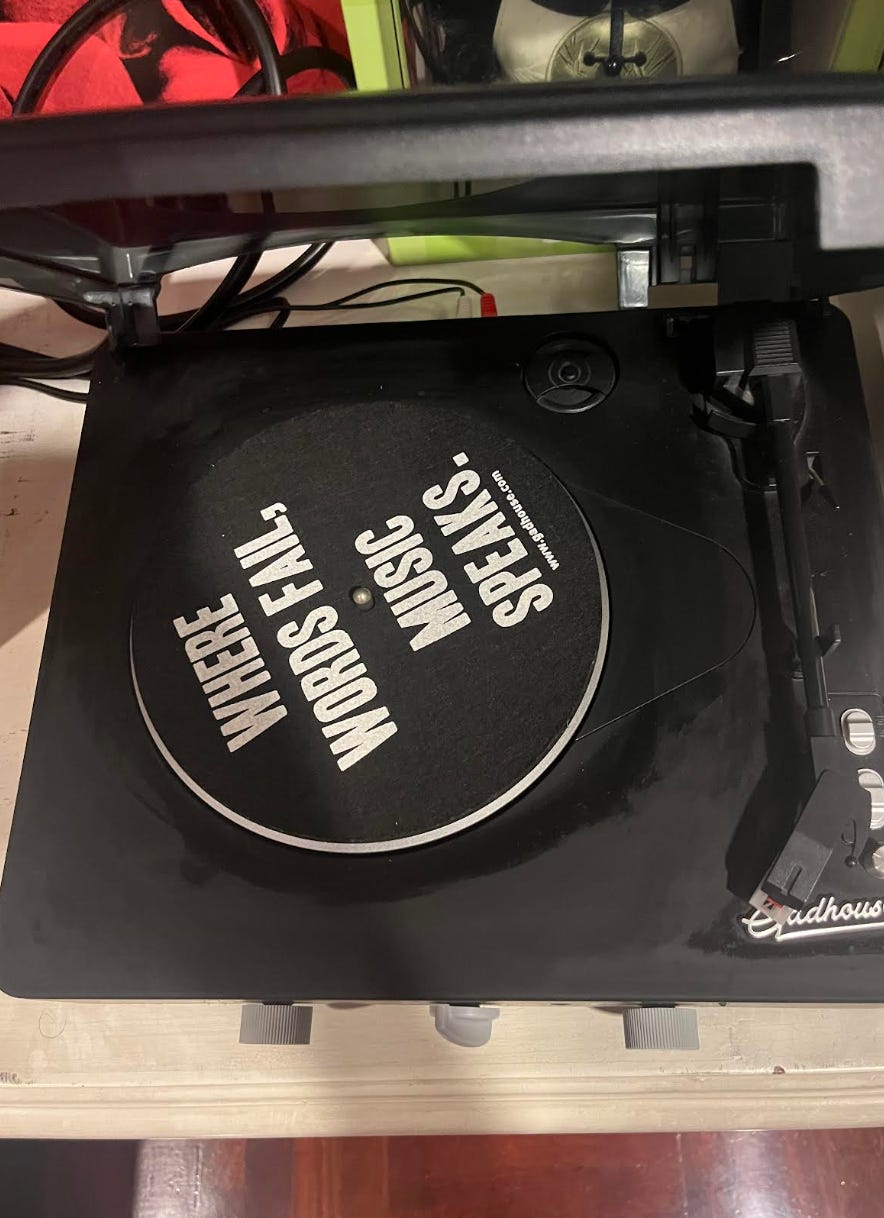
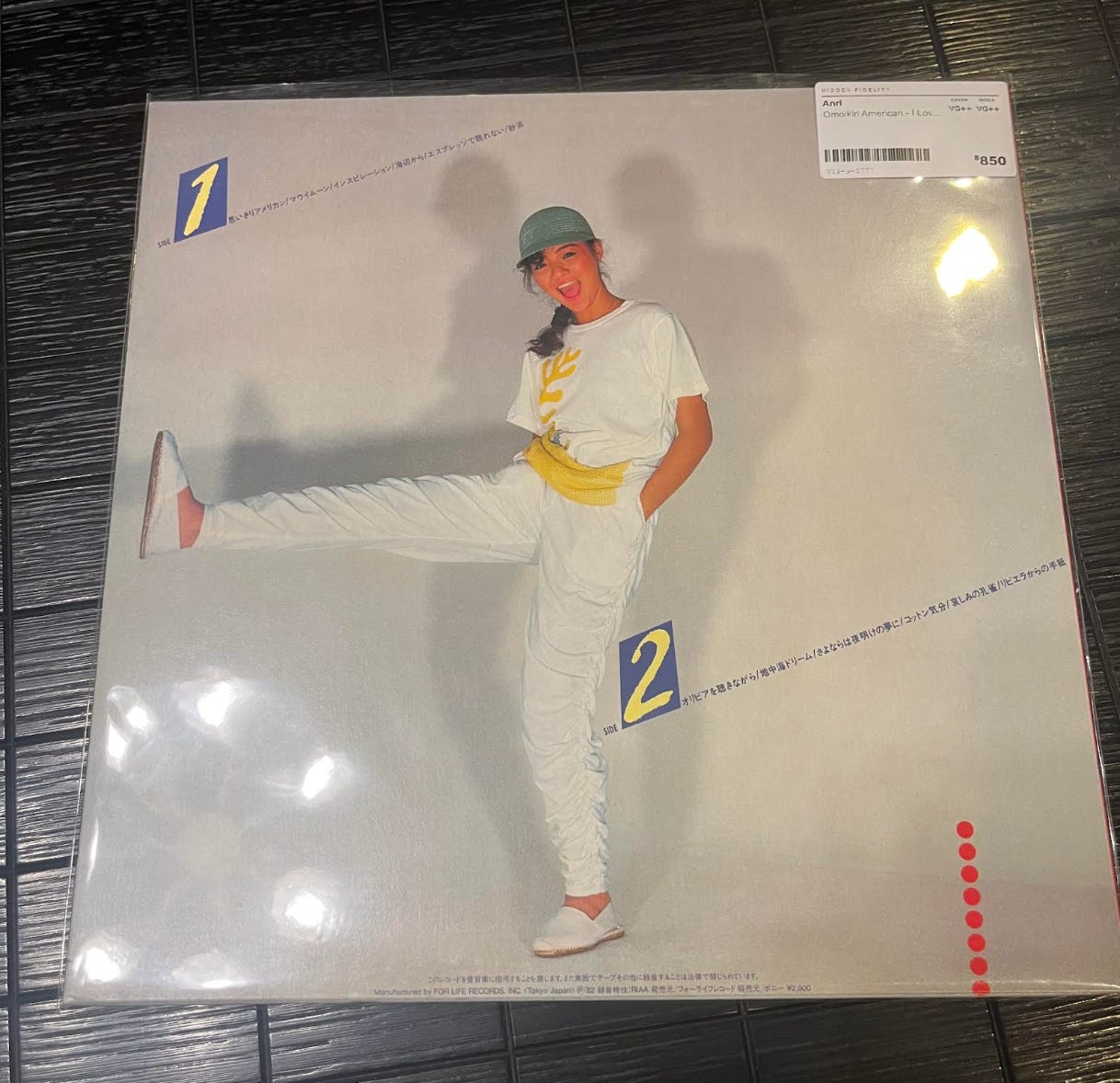
Y: Why this object?
A: I mean, honestly, I just felt that, like, it’s kind of a frustration with the digital as well.
And I think that since the rollout of AI that feeling in me has just become ever stronger where it’s like I’m sick of this constant necessity and expectation to just be online and with all the detrimental effects it has on our minds, on our physical.
A few years ago when I wanted to get into record collecting, I had bought this record player. It’s a really shitty record player to me, but I love it.
Y: I think everyone’s first record player is shitty.
A: Like, it’s like the cheapest one I found. It was like 100 euros
I do have a very nice speaker in my room. So, like, I thought, okay, I can buy a bad record player because I have a nice speaker.
Y: Yeah.
A: But anyway, it broke down in, like, a year and, like, damaged some of my records which is exactly what happens with a not so good record player.
So, it’s been broken for years and the lid is broken. Everything’s broken. The needle’s broken. Everything’s busted. You know, the wires are breaking down. But it’s sitting in the same place underneath my bookshelf. I just don’t want to get rid of it. Yeah. Just because, to me, it’s very symbolic and I guess it’s very, like, I don’t know, I just feel like it’s very symbolic of being able to escape the digital in one sphere.
The Broken Record Player and the Wish to Log Off
A: And now we have a better one. It’s in Ava’s room.
Y: How does music fit in your daily life? L
A: I am, like, 30 minutes from my campus by walk around. So it is quite a far walk.
I used to never really listen to music. I was listening to podcasts on the way to stuff. Very political. I also try and listen to hai podcasts. I feel that my Thai is atrophying here and I feel so bad about that.
But in terms of music, it’s something that I think I don’t necessarily have time to listen to so much. Like, in the morning if I’m getting ready, I’m showering, yeah, I have the speaker on and I’m listening to music.
Y: What’d you listen to in the morning?
A: I love the Marías. I also love TV Girl. They’re like my favorite band for the past five years. I try to collect all the records for every album they have. I love TV Girl.
I found this band, the The Bilinda Butchers. They’re pretty good. I also ike Sombr. I went to his concert.
Y: I love Sombr. I love Sombr so much.
A: It’s really good. He loves throwing things.
Y: Do you listen to music when you read?
A: Very occasionally, but that is more for fiction. I can. And it’s only like piano.
Where Do We Go After University?
Y: Are you planning on going back to living in Bangkok after your uni?
A: I have no idea yet. I think it’s something I have to kind of explore more this year.
Should I just go straight for my master’s? Because I don’t want to stop studying. I love academia. I love education. I think that it’s, in fact, the most important thing that people can access now, especially in this age where AI and AI companies are trying to destroy every book on this planet. You know, like, it’s where intellectualism and where critical thought is under assault in various ways. I feel that it’s very important.
Y: I was really interested in something about Bangkok that you wrote to me and you said that certain experiences at university could simply never have happened had you still been living in Bangkok.
Is there a version of you in this case that became possible only because you left? What is this version?
A: I think it’s the idea or the necessity of having to meet more people, be more extroverted. Because I would describe myself as an extroverted introvert.
Here, I try and make the most of the campus. I try and go out to other cities. Like, I try and go out to Leamington a lot. I go out to pubs with my friends. I do activities. I’m always trying to do something.
And I feel that if I was in Bangkok, I wouldn’t necessarily be this liberated version whereI’m always out and about. I’m always trying to socialize. I’m always trying to meet new people.
I want to be able to, you know, expand run into new groups which I never thought I’d be a part of and just kind of have more variety and diversity than people I meet. So, like, and in fact, I have a lot of interesting stories, like, from being a new version of myself here that I wouldn’t have been in Thailand.
And I like that. Like, I like the transition a lot. That’s why I feel, like, I think I alluded to this in the email, is that it’s two different worlds for me where I feel like I come in here and I feel like I’m in a literal world of myself, like, like a completely different, yeah, sphere of reality I’ve been here.
I think I made myself on my own here.
Becoming Someone Else, Somewhere Else
Y: To some extent it makes me think of one time I had this exchange over LinkedIn; at some point I was considering doing another master’s in fashion to just have some extra experience. I messaged this girl who had done a master’s I was considering, she was very blunt about it.
She was like, don’t do another master’s, but stay in Paris - she said, “I made myself on my own”.
And that sentence, it struck me so much, like, I made myself on my own too here in Paris and I think we should all be trying to be making ourselves on our own because it’s just through learning and failing, which is the best thing ever I think, the best gift you can give yourself is just trying to be and being independent, you know?
A: I just finished Camus. He writes about how can one fail to realize that in this vulnerable universe, everything that is human and solely human assumes a more vivid meaning.
This idea of needing to stay very authentically human and to make mistakes and to, you know, explore.
Also this idea of transition that the beauty of a lot of things is only amplified when you realize that everything is within transition. I guess it applies it in a very existentialist way, but I guess you can apply it to a lot of what, you know, what we do in our, like, day-to-day lives, so it often, like, enhances my ability to kind of observe stuff around me, especially when it comes to nature or, like, trees and stuff.
A Bed Is Not a Desk
Y: You might have read about this, but I’m so obsessed with beds, you know?
A: Like beds, like B-E-D-S?
Y: Yes, like, just the concept of a bed, and I’m obsessed with it in so many of its forms, both as an object, but also as a concept! It’s weird, but I’m the most productive ever on my bed. I wrote all my dissertations from my bed(s). Where are you your most productive self?
A: Definitely not on the bed. I think we’re quite different in that regard. Like, I just associate my bed with trying to get a bit of relaxation and normality in my life that. Not necessarily normality, but just trying to unwind and kind of shut down. So for most of the day, I’m just not on it. And I’m just always working on, like, a table or, like, in library at uni.
Y: Oh, I love libraries.
How to Read the World Without Drowning in It
Y: Do you remember everything you read or do you, keep track of everything you read?
A: I used to try and do that. But the issue I have with that is that you begin to approach reading not as something where you can critically develop your ideas or to engage in different perspectives, but it’s something that you try to, like, hyper fixate on and hyper memorize every single text. And I think this is an issue more broadly that people have with their expectation of reading, where reading should not, like, so for example, if I read a book like Dostoevsky, for example, a book that he’s written, it’s really long, it’s really dense, I shouldn’t be able, like, I shouldn’t be expected to remember what was said in, like, chapter 36, where this character went on, like, a rant about this topic.
When I’m trying to read something, or, like, more generally, I’m trying to, like, move away from, like, remembering what was said all the time.
The Things We Save
Y: Do you ever feel like we’re becoming obsessed with tracking everything? What we read, how much we exercise, even how well we sleep?
A: Absolutely. And that’s why I’ve tried to stay away from a lot of these platforms. When you’re constantly tracking and optimizing every aspect of your life, you end up in this cycle of commodification. You start doing things not because you enjoy them, but because there’s something to measure or achieve.
Take reading, for example. I don’t have a Goodreads account. I’ll occasionally look at reviews before buying a book, but I don’t want reading to become another performance. I’d rather spend weeks on a short book and engage profoundly with its ideas than rush through ten books just to update my progress.
I see it with my sister sometimes. She measures how much she’s gained from a book by how far she’s gotten into it. I always tell her that reading is important, but reading for the right reasons is just as important.
What’s fascinating is how closely this relates to our economic systems. I recently came across this idea that our obsession with self-improvement and optimization is turning virtue into vice. We’re told to wake up at four in the morning, take cold plunges, track our sleep, optimize our bodies and our brains. But at what point does the pursuit of well-being become detrimental to our actual well-being?
There’s almost an inversion happening, where traditional vices, like having a cigarette or a midweek drink, start looking like small acts of resistance against this relentless culture of optimization.
It reminds me of Byung-Chul Han, a Korean philosopher whose work I’ve studied and taught in philosophy classes. He writes about how contemporary economic and political systems exercise control, not necessarily through overt authoritarianism, but through the pressure we place on ourselves to be productive.
We internalize the demands of the system until constant consumption, achievement and self-optimization become forms of self-imposed control.
Reading his work made me realize that many of the frustrations I experienced weren’t simply individual failures. They were symptoms of something much larger.
Do We Have to Optimise Everything?
Y: It’s everywhere. We track our periods, our food intake, our running, our cycling. Everything is measured in the name of productivity and well-being.
A: Exactly. And so much of it has very little to do with actual well-being.
I’ve been trying to become more conscious of that, but I still struggle with switching off. I constantly feel like I should be doing something, even if it isn’t work. I feel compelled to engage with something intellectual all day.
Sometimes I’ll sit down to watch a television show I genuinely enjoy, and after an episode I’ll start feeling guilty, as though I should be doing something more productive.
Y: You mentioned vices earlier, and I think we all have them. What’s your biggest vice?
A: That’s a difficult question. I wasn’t prepared for it!
I suppose it’s probably food cravings. Sometimes I’ll watch an old BuzzFeed food video late at night and suddenly crave everything I’m seeing. I’ll end up eating far more than I intended and regretting it the next morning.
It’s quite a basic answer, but it’s the first thing that comes to mind.
Y: I used to love BuzzFeed. I actually dreamed of working there. Their articles were so random, and those quizzes at the end were incredible.
A: I remember doing those quizzes too. They were hilarious.
The People We Actually See
Y: I want to come back to social interactions. Why do you think they’re so important? And, on a more personal level, who are the people you see every day?
A: I think our generation is defined, to some extent, by loneliness.
So much of our communication happens online, through interactions that are fleeting, superficial and require very little commitment. We’re increasingly confined to digital spaces designed to maximize our attention, often by appealing to our most negative emotions.
But those interactions don’t come close to replacing the value of communicating with someone in person.
That’s why I think the smallest everyday encounters matter. Speaking to the barista who makes your coffee, exchanging a few words with someone in the morning, seeing a familiar face. These interactions accumulate. They give structure and meaning to our days, especially as the digital world becomes increasingly all-encompassing.
At university, I try to see my close friends every day. There are professors I see several times a week whose conversations I really value.
And despite everything I’ve just said about digital communication, I call my parents every day. Even if it’s only for a few minutes, that connection is essential.
But I probably see my barista more often than most people.
Y: Same. My barista is usually the first person I see in the morning. The coffee shop opens at seven, and I go almost every day. Shoutout to Artur. If I don’t see him, the whole day feels strange. And he knows it.
A: Exactly. Those little routines become much more meaningful than we realize.
Being Twenty, Feeling Older
Y: Palomita Office is expanding into small artistic experiments, from participatory projects to dinners where guests take on fictional identities. I’ve always been interested in creating these little worlds.
When I was a child, my sister and I had three friends who were also sisters. We used to pretend that all five of us were siblings. We’d tell people we were one big family, and I’d write plays for us to perform for our parents.
Somewhere in my parents’ house in Bangkok, there’s still a notebook full of those plays.
I think I’ve always had that kind of childhood energy. Which makes me wonder: is there still a child inside you?
A: That’s a difficult question, because I often feel much older than I actually am.
I’m twenty, but sometimes I feel as though I carry the worries of someone considerably older. My parents tell me I stress too much. I even have grey hairs already, which probably doesn’t help.
I think part of it comes from feeling disconnected from what people my age are supposed to enjoy.
At university in the UK, for example, there’s a huge expectation to go clubbing. But the idea of queuing for ages just to enter a crowded room with sticky floors, loud music and the same songs playing over and over doesn’t particularly appeal to me.
I’ve tried it, both here and in Bangkok, but I’ve never really understood the attraction.
Y: I actually hate clubbing most of the time. Fashion Week is probably the exception, because you end up meeting interesting people through work.
But my ideal evening is a good dinner, especially one where everyone cooks together. I love inviting two or three friends over, preparing a meal and spending hours talking.
A: That’s exactly it. For me, a good night out might be spending seven hours talking with one person, or going to five different pubs with a group of friends.
Sometimes I wonder whether I’m strange for not enjoying the things other people my age enjoy. Not that I necessarily want to change, but I do wonder what it would feel like to experience those things in the same way.
At the same time, I think I’ve retained something quite childlike: my curiosity.
As a kid, I loved reading anything I could get my hands on, whether it was fantasy, science fiction or something completely different. That intellectual curiosity has stayed with me.
When an idea enters my head, I find it almost impossible to let go of it until I’ve explored it fully.
Where Ideas Go When We Have Them
A: Sometimes I’ll be sitting in a lecture and suddenly have an idea that has nothing to do with what’s being discussed. I’ll completely tune out for ten or fifteen minutes and start writing.
I have to capture the entire thought while it’s there, because I know that five hours later I won’t be able to reconstruct it in quite the same way.
Y: Is writing how you record your ideas? I’m always interested in how people preserve their thoughts.
For me, it’s usually my Notes app, voice memos or a notebook. Sometimes I’ll even take out my recorder in the middle of doing something and start talking.
Some ideas are terrible. Some are good. Sometimes I delete them. But I like knowing they’re there.
How do you capture that moment when you suddenly think, fuck, I have an idea?
A: It depends on where I am. Ideally, I’ll have my iPad and can write everything down. Otherwise, I’ll open a Google Doc.
I don’t like writing down just keywords. I need to capture the entire chain of reasoning, because that’s where the interesting part lies.
I remember sitting in a philosophy lecture when I suddenly had an idea for an entirely different essay.
I started writing all over the handout, connecting arguments, implications and contradictions. I was writing from the bottom of the page upwards, across the margins, everywhere.
I’d start with a thesis in political philosophy and ask myself: if this is true, what follows from it? What tensions does it create? What does that imply for another argument?
By the time I returned my attention to the lecture, I had absolutely no idea what the professor was talking about. But I had the foundation of an essay.
Later, when I discussed the draft with my seminar tutor, she told me she’d never seen anyone argue quite that way. It was unorthodox, and not what they’d expected, but she encouraged me to pursue it.
That’s what I love about philosophy. You can follow an idea somewhere unexpected and see what happens.
Y: I love that. And I’d love to see that handout, especially because the ideas were written somewhere they weren’t supposed to be.
A: I’m sure I still have it somewhere. I’ve got stacks of papers covered in random thoughts.
Notes From a Walk
A: The problem is that ideas don’t always arrive when you have somewhere to write them down.
I’ve had moments when I’m walking home and suddenly think of something that feels incredibly important. I’ll tell myself I’m only ten minutes away, so I’ll write it down when I get back.
And then I get home and it’s completely gone.
Y: That’s exactly why I love carrying a recorder. You don’t have to depend on your phone, and you can capture something the moment it happens.
I’ve literally gotten out of the shower, still dripping wet, because I needed to write an idea down before forgetting it.
A: I know that feeling.
I walk about half an hour to university, so I spend at least an hour walking every day. Sometimes I’ll be listening to a podcast, or just thinking, and suddenly something clicks.
It might be an idea for an essay or something entirely unrelated to my studies. But for a couple of minutes, everything feels connected. I can almost see the whole argument unfolding in my head.
And I know that if I don’t capture it, I might never arrive at exactly the same thought again.
I think I need to start recording those moments, even if it’s just a voice memo while I’m walking.
Y: Next time you find an idea scribbled somewhere completely unexpected, send me a photograph. I love seeing where people’s thoughts end up.
A: I will. Especially with philosophy, I try to work through ideas on my own, without relying on AI or anything else to do the thinking for me.
I’m sure there are pages everywhere with thoughts that shouldn’t be there, written in the middle of something completely unrelated.
I’ll find one and send it to you.
The Bangkok Address Book
Y: Bangkok. Somewhere to start the morning.
A: This coffee shop called Pacamara. It’s really nice.
Y: Somewhere you go for food and you’ve been away and have missed Thai Food.
A: Ros'niyom. It’s difficult spelling.
I also love this amazing restaurant called Coda. It’s so hard to get a booking, but, like, their 10 courses are so good.
Y: Where do you buy your books in Bangkok?
A: I have yet to find small indie bookshops. I’m just gonna go for the classic Kinokuniya for now.
Y: Which one?
A: The one in Siam Paragon I really like!
Y: Yeah. Honestly, I love that bookshop.
Okay. Somewhere to walk with absolutely no objective.
A: Benjakitti Park.
Bangkok, Beyond the Postcard
Y: Somewhere visitors in Bangkok completely misunderstand. And by visitors, of course.
A: Oh, misunderstand. I would definitely say just what you can really get out of Bangkok.
There’s so much more to Khao San Road.
There’s so much art and culture to discover.
Y: What’s a place that reminds you of growing up?
A: This diner called Took Laa Dee. It’s super cheap. Everything is like, two or three euros there; and they’ll cook you really nice fried rice. Open 24-7. I could go at 3am, 5am after, aftergoing out at night. And they’re just open. It’s always consistent.
Y: And, somewhere you would take me?
A: I’d probably take you record collecting. I love that. At, like, secondhand record shops.
Y: Ready for the rapid fire?
A: Okay, yeah. This should be, I guess, somewhat easier, because I don’t have to, like, agonize over it.
Y: It’s more like this or that. Okay. PPE. P or E?
A: Definitely the P for philosophy. The most interesting aspect to me.
Y: Book or podcast?
A: Book. 100%.
Y: Fiction or essays?
A: You’re tearing me apart. I would say fiction, like, philosophical fiction.
Y: Notes in the margin or in a separate place, like, in a separate place?
A: I like notes in the margin, usually. Or, like, around, like, scattered around the page.
Y: Do you write in books, right?
A: Mostly on my iPad, but if they’re giving me a handout, I’ll write physically.
Y: Pen or pencil?
A: Pen.
Y: Okay, I love that. Me too. Like, keep it permanent. Yeah, 100%.
A: If you make a mistake, like, scribble it. It’s fine.
Y: Yeah.
A: I like that.
Y: Okay. 20 open tabs or a terrifyingly organized browser?
A: 20 open tabs.
Y: Vinyl or Spotify?
A: For the experience, vinyl. For sure.
Y: Album, you listen to it. Front to back or shuffle?
A: Shuffle.
Y: Morning or night?
A: Used to be night, but mornings now.
Y: Plan everything or improvise?
A: Plan, generally.
Y: One thinker you’d have dinner with.
A: Naomi Klein.
Y: Palomita is about conversations with people whose brains I desperately want access to for one hour. One person whose brain you’d desperately want access to for one hour?
A: Oh my god, Dostoevsky, for sure.
One Word for Everything
Y: One word for Bangkok.
A: Unique.
Y: One word for economics.
A: Anachronistic.
Y: One word for politics.
A: Hope.
Y: And for philosophy.
A: Mind bending.
Y: One word for Ansh two years ago.
A: Nervous.
Y: For Ansh now?.
A: Confident.
Y: One word for me?
A: Fascinating.
Y: Thank you! And last question, and be careful with this, because this also makes it into a collective archive. Your favorite word.
A: My favorite word. God. I’d probably just go for compassion.
As a Warwick alumni, tell him to move to Leamington Spa if he wants nice coffee and a good stroll to the park to read his book :) lovely piece, Yas